

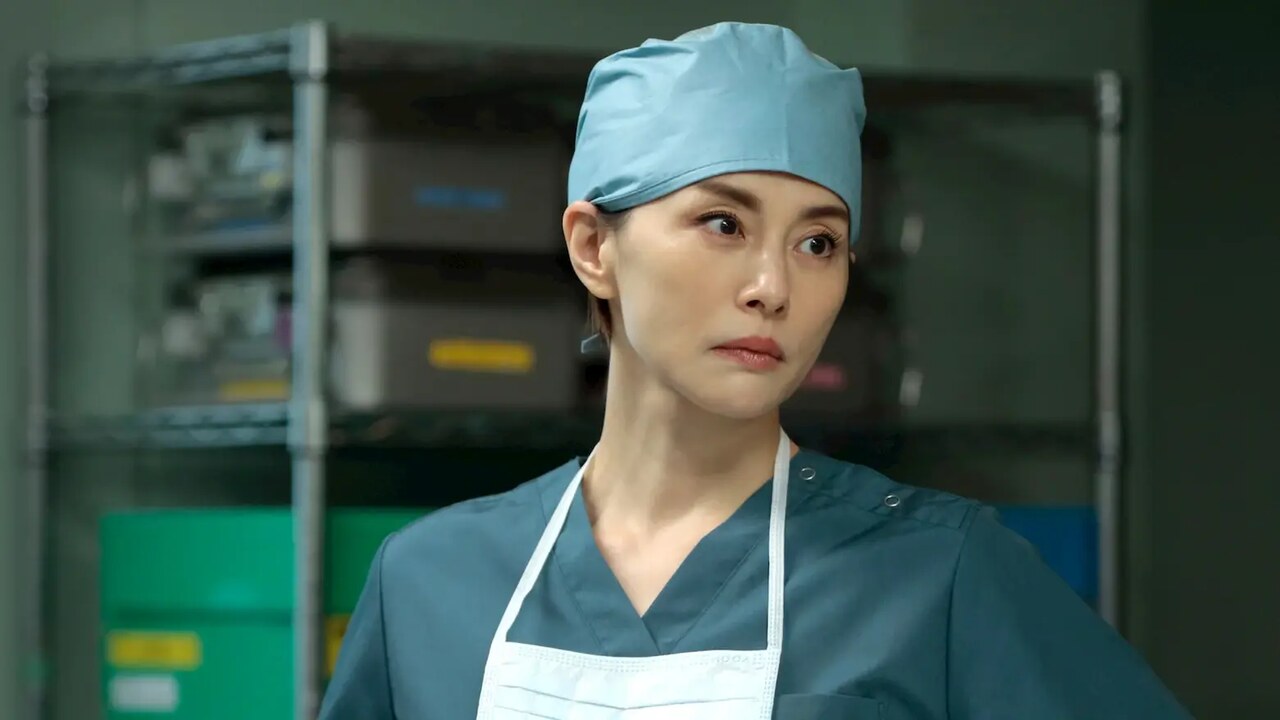
As old allies return and long-buried truths about Michiko's past finally surface, Doctor-X the Movie serves as the concluding chapter to one of Japan's most beloved medical dramas. There are television finales. Then there are victory laps. Doctor-X the Movie is unapologetically the latter. For over a decade, Ryoko Yonekura's Michiko Daimon has walked into hospitals, ignored bureaucracy, performed surgeries everyone else considered impossible, and casually reminded anyone questioning her methods, "I never fail." By now, that's less of a catchphrase than a legally binding contract. Thankfully, the film understands exactly why audiences kept returning to her. It was never simply because she was the smartest surgeon in the room. It was because she refused to play by rules designed to protect egos instead of patients.
Yonekura slips back into the role so effortlessly that it feels like she never left. Michiko remains one of television's most quietly iconic protagonists because she isn't written as an inspirational superhero. She's blunt, stubborn, socially awkward when she wants to be, and almost pathologically allergic to hospital politics, which makes her wonderful company. The film wisely resists reinventing her. Instead, it asks what happens when someone who's spent years saving everyone else is finally forced to confront her own story.
That emotional thread gives Doctor-X the Movie considerably more weight than a feature-length episode. Without sacrificing the procedural pleasures that made the series famous, the screenplay gradually peels back layers of Michiko's past, giving longtime fans the character development they've been waiting years to see. The returning ensemble also feels like coming home. Yuki Uchida, Kei Tanaka, Kenichi Endo, Ittoku Kishibe and the wider cast immediately fall back into rhythms that only long-running series can achieve. The banter, rivalries and alliances feel lived-in rather than manufactured, making the hospital itself feel like a place with genuine history.
The medical sequences remain as gripping as ever. Doctor X has always balanced heightened drama with procedural momentum remarkably well, and the film continues that tradition. The surgeries are tense without becoming absurdly sensationalised, while the hospital politics remain just entertaining enough to stop the operating theatre from carrying the entire film. Visually, it looks appropriately cinematic. The larger scale never overwhelms the intimate character work, and director Naoki Tamura understands that audiences aren't here for flashy filmmaking. They're here to watch Michiko Daimon calmly ruin another arrogant executive's afternoon. She rarely disappoints.
Thematically, the film continues the franchise's longstanding critique of institutional medicine. Reputation, hierarchy and profit remain recurring obstacles, while Michiko persistently insists that medicine should concern itself with exactly one thing. The patient. It's a familiar message. But it's one the series has always delivered with conviction rather than preachiness.
If there's one limitation, it's that the film occasionally leans a little too heavily on nostalgia. Certain callbacks feel designed primarily to reward longtime viewers rather than strengthen the story itself. Newcomers can certainly follow the plot, but they'll inevitably miss much of the emotional significance attached to returning characters and relationships. The pacing also softens during the middle act.
Several emotional scenes linger a touch longer than necessary, and while it's understandable that the filmmakers wanted to give every major character a meaningful farewell, the result is a film that occasionally pauses its momentum to admire its own legacy. That's forgivable. Less forgivable is that some supporting characters receive farewell moments that feel noticeably thinner than others. Given the size of the ensemble, a few fan favourites inevitably end up standing quietly in the background while the narrative concentrates elsewhere.
Still, these are relatively small criticisms. Because Doctor-X the Movie succeeds at the one thing every franchise finale must accomplish. It reminds you why you cared in the first place. This isn't trying to redefine the series. It's celebrating it. And after so many seasons, that's exactly the right decision. By the closing scenes, I was simply happy to spend one last operation with Michiko Daimon. Some television characters become memorable because they're constantly changing. Others become memorable because, in a changing world, they refuse to. Michiko belongs firmly in the second category.
Doctor-X the Movie is a heartfelt and satisfying conclusion to one of Japan's most enduring medical franchises. Ryoko Yonekura once again commands every scene as the brilliantly uncompromising Michiko Daimon, while the returning ensemble, engaging surgical drama, and thoughtful exploration of her past provide longtime fans with a rewarding send-off. Although the film occasionally indulges in nostalgia and its generous ensemble means a few characters receive less attention than they deserve, it remains a fitting celebration of a series that always understood the best medical dramas aren't really about medicine—they're about the people stubborn enough to keep fighting for others.
Final Score- [8/10]
Reviewed by - Anjali Sharma
Follow @AnjaliS54769166 on Twitter
Publisher at Midgard Times

Hi Everyone, after a due consideration, we have decided that we will be open for donations to help us in managing our website. We will be greatful for any kind of amount we receive. Thanks!
— Midgard Times 🎬 (@Moviesr_net) January 4, 2026
PayPal- [email protected] pic.twitter.com/DlNNz5Npm5
Get all latest content delivered to your email a few times a month.
Bringing Pop Culture News from Every Realm, Get All the Latest Movie, TV News, Reviews & Trailers
Got Any questions? Drop an email to [email protected]



 © Copyrights MOVIESR.NET All rights reserved