

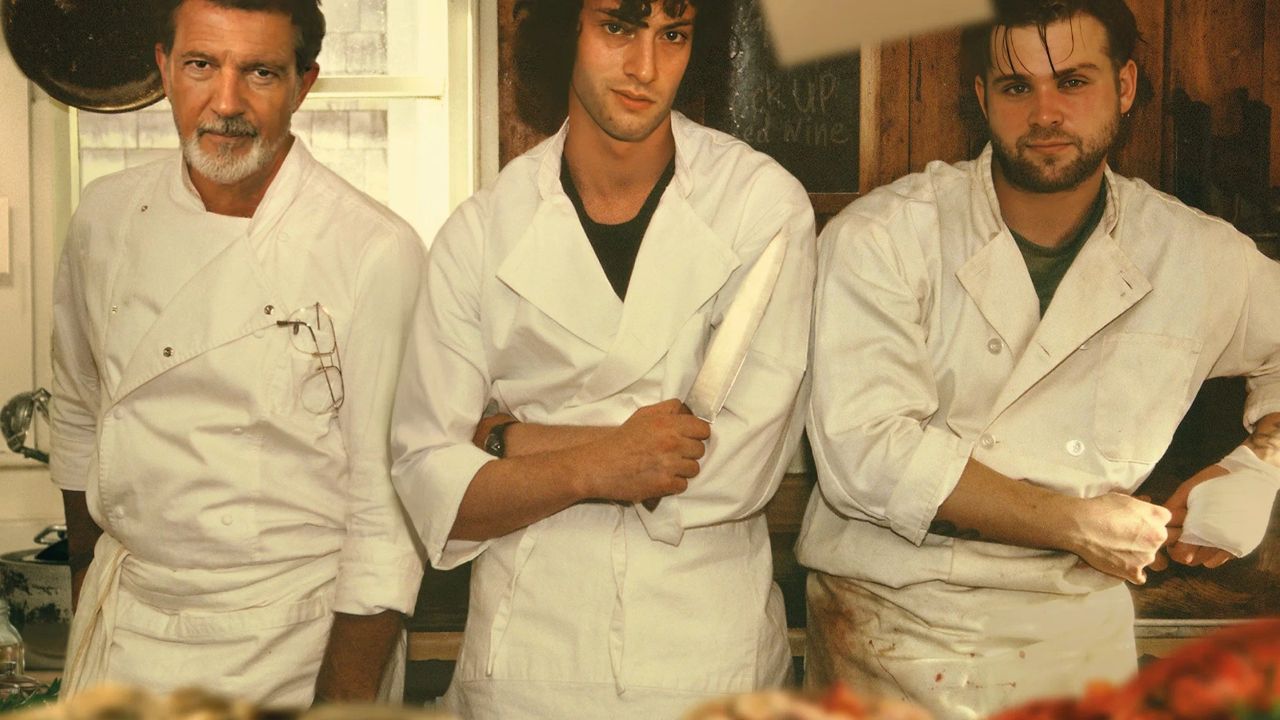
I went into Tony expecting a biopic about Anthony Bourdain, and came out realising that it is much more interested in the person who existed before Anthony Bourdain became Anthony Bourdain. That distinction is important, because Matt Johnson's film deliberately refuses to give us the version of Bourdain we already know: the globe-trotting television personality, the writer, the cultural icon, the man whose voice and worldview became instantly recognisable. Instead, it finds him at nineteen, restless, arrogant, directionless and still trying to work out what he might actually be good at. And, surprisingly, that works.
Dominic Sessa is excellent in the lead. He doesn't attempt an impression of the older Bourdain, which is probably the smartest decision the film could have made. Instead, he plays a young man who hasn't yet acquired the confidence or vocabulary to understand himself. There is swagger, but also insecurity underneath it; intelligence without much discipline; charm that can turn into irritation within seconds. Sessa makes Tony feel like someone who could either grow into something extraordinary or spend the rest of his life making terrible decisions. That uncertainty gives the film its appeal.
Tony is essentially a coming-of-age story disguised as a culinary biopic. The kitchen is where the transformation happens, and the film understands that professional kitchens can be their own strange ecosystems: hierarchical, exhausting, vulgar, funny and occasionally brutal. There is a rhythm to the work that Johnson captures particularly well. The preparation, shouting, repetition and sheer physicality of kitchen life become part of the storytelling rather than simply background decoration. And then there is Antonio Banderas. He is fantastic.
As Tony's chef and mentor, Banderas gives the film its strongest adult presence. His character could easily have become the standard cinematic Tough Chef™ who screams at young people until they discover the meaning of hard work, but Banderas gives him enough warmth and restraint to make the relationship considerably more interesting. The dynamic between the two gradually becomes the emotional centre of the film, and some of the best scenes are simply watching Tony figure out that talent is considerably less useful without discipline.
There is also a recurring joke involving Tony getting a bucket of cold water dumped on him, which somehow becomes one of the film's funniest running gags. It sounds ridiculous written down. It is considerably funnier when you see it happen. Sessa apparently had to endure the stunt repeatedly during production, which makes the fact that I found it hilarious feel slightly cruel in retrospect.
What I particularly liked is that the film doesn't try to turn every unpleasant thing Tony does into evidence of his future greatness. There is no constant look, this is the moment the legend was born! signalling. Johnson seems much more interested in the messier process of becoming a person. That also means the film occasionally feels frustratingly small. Anthony Bourdain is an enormous subject. There is his writing, his addiction, his career, his travels, his television work, his relationships, his politics, his influence on food culture and, inevitably, his death. Tony chooses to leave almost all of that outside the frame. We are watching a very specific chapter rather than receiving a comprehensive life story. I respect the decision. I also occasionally wanted more.
The film stops just as Tony's life is beginning to take shape, and that gives Tony an oddly incomplete quality. It is less interested in answering how Anthony Bourdain became famous than in asking what kind of person might have become Anthony Bourdain? That distinction makes the film much more thoughtful than the average celebrity biopic, but it also means anyone expecting a greatest-hits compilation of Bourdain's life may leave wondering where the rest of the movie went.
The romantic storyline with Nancy, played by Emilia Jones, is where I felt this limitation most clearly. Jones brings warmth and intelligence to the role, but the relationship never becomes quite as substantial as the film seems to want it to be. It is important to Tony's development, but sometimes feels more like another ingredient in his coming-of-age than a fully developed relationship in its own right. Leo Woodall, meanwhile, is very good as the volatile young chef around Tony. He brings exactly the sort of unpredictable energy the kitchen needs, although I occasionally found myself more interested in the professional relationship between the men than in the film's romantic material.
Visually, Tony isn't trying to be grand. Thank God. No sweeping montages are announcing the arrival of a genius. No dramatic orchestral cue every time someone realises Tony can write. No suspiciously photogenic kitchen where nobody appears to sweat. The film feels relatively intimate and grounded, which suits its subject. The world is sweaty, cramped and occasionally unpleasant, but there is also a real affection for the camaraderie that develops in those environments. And seeing this in a theatre actually helped.
This isn't necessarily a film that requires a giant screen, but the sound and atmosphere of the kitchen benefit from being experienced with an audience. There is something satisfying about watching a film about food in a cinema and spending nearly two hours surrounded by the sounds of chopping, sizzling, shouting, and cooking while knowing you cannot actually eat any of it. Cinema remains committed to finding new ways to torture us.
The biggest challenge for Tony is inevitably the audience's existing relationship with Bourdain. If you know his work well, every moment carries an additional sadness because you know what this young man eventually becomes — and you also know where his life ends. The film doesn't exploit that knowledge for easy sentimentality, but it can't entirely escape it either. That gave some of the quieter moments an unexpected weight for me.
What I appreciated most, ultimately, is that Tony doesn't treat Bourdain as a finished product. It allows him to be young, difficult, funny, selfish, talented, and occasionally lost. The film isn't interested in making him inspirational every second, and that makes the eventual possibility of his transformation feel more convincing. I did, however, leave with the feeling that I had watched a very good first chapter rather than a completely satisfying biography. Maybe that's the point. Tony isn't really about the legend. It's about the period before the legend had any idea that he was going to become one.
Dominic Sessa carries the film beautifully, Antonio Banderas is terrific, and Matt Johnson makes the unusual decision to tell a famous man's story by keeping the fame almost entirely out of it. I admire that restraint even when it makes the film feel slight. It is warm without becoming sentimental, funny without turning Bourdain into a caricature, and interested in the ordinary mechanics of becoming someone rather than the mythology of having already arrived. I just wish there had been slightly more meat on the bone. Which, considering the subject, feels like a particularly unfortunate complaint.
Final Score- [8/10]
Reviewed by - Anjali Sharma
Follow @AnjaliS54769166 on Twitter
Publisher at Midgard Times





Hi Everyone, after a due consideration, we have decided that we will be open for donations to help us in managing our website. We will be greatful for any kind of amount we receive. Thanks!
— Midgard Times 🎬 (@Moviesr_net) January 4, 2026
PayPal- [email protected] pic.twitter.com/DlNNz5Npm5
Get all latest content delivered to your email a few times a month.
Bringing Pop Culture News from Every Realm, Get All the Latest Movie, TV News, Reviews & Trailers
Got Any questions? Drop an email to [email protected]



 © Copyrights MOVIESR.NET All rights reserved