

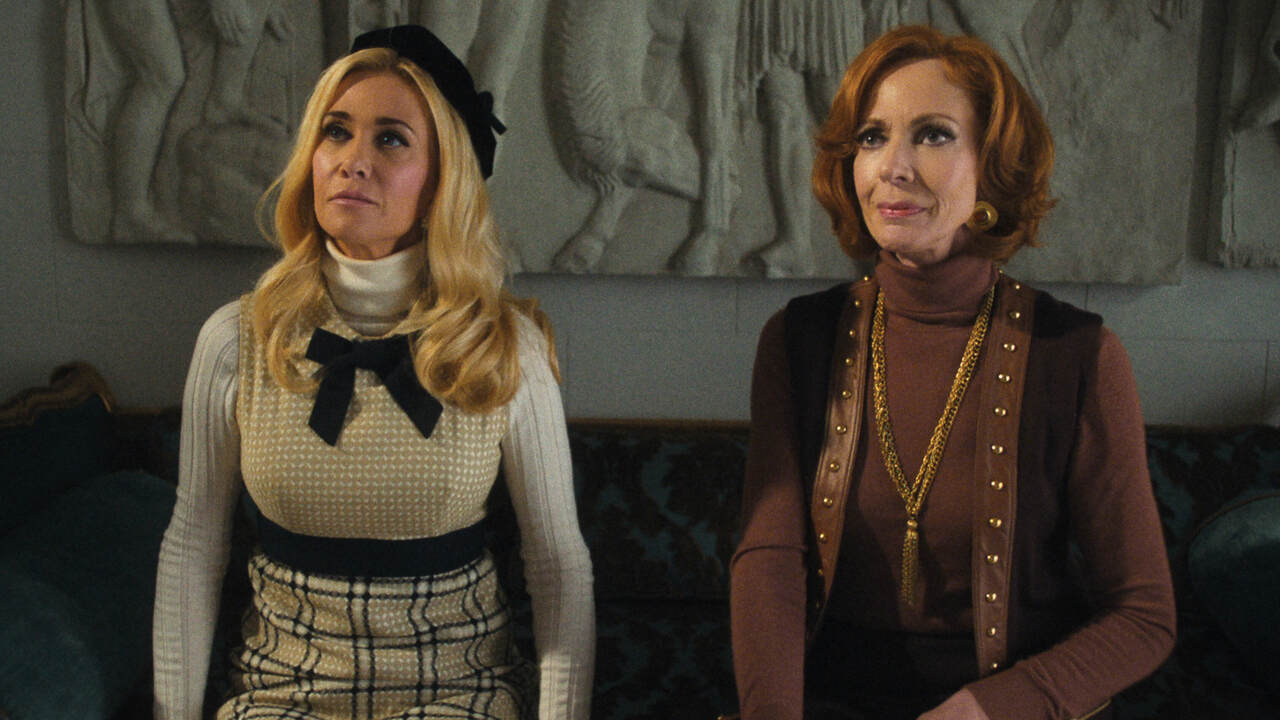
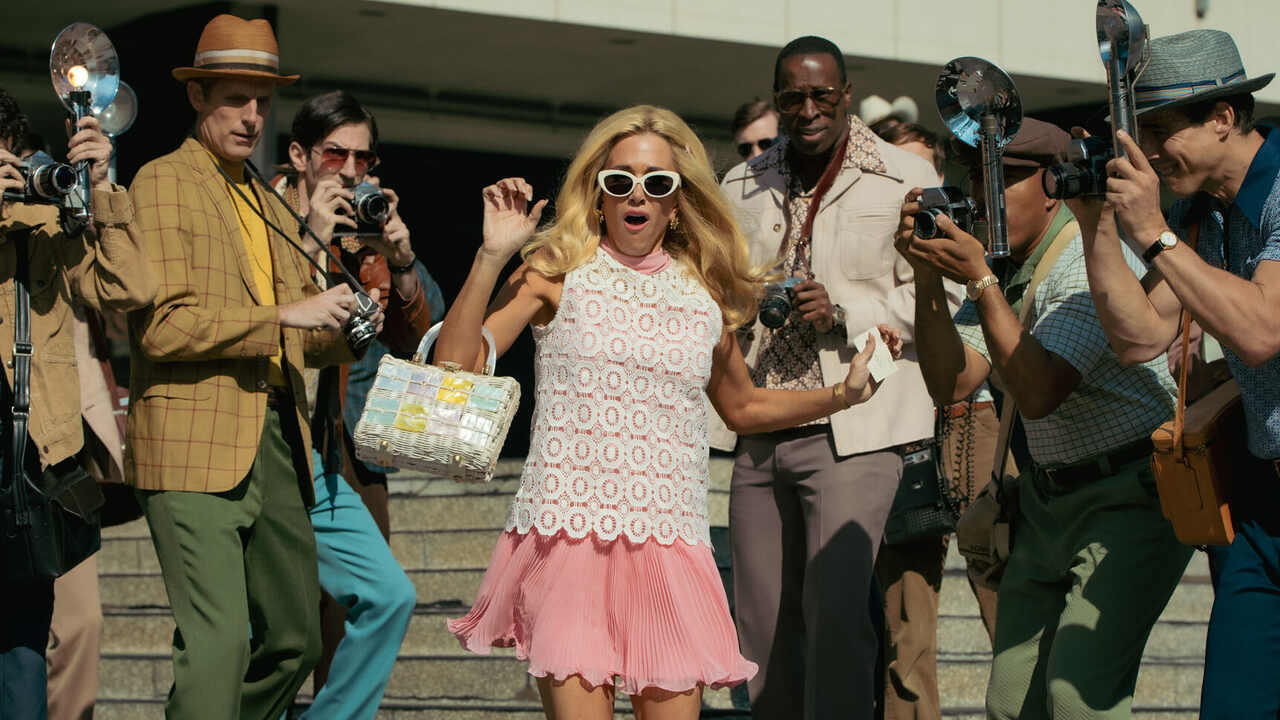
I watched “Maxine Does Something Good” with a blend of satisfaction and irritation, and as someone who’s followed Palm Royale from the first season’s raucous highs through this sophomore arc’s wild detours, it’s an ending that feels like both a culmination and a missed opportunity. This episode places Maxine Dellacorte-Simmons (Kristen Wiig) once more at the center of an elaborate social event that doubles as a crucible for character and consequence. From the opening moments, the tone is unmistakably Palm Royale — bright costumes, immaculate 1969 Palm Beach sets, and dialogue that snaps with witty precision even as it pivots into deeper emotional territory. That polish is one of the show’s greatest strengths: production design and cinematography have always made the world feel specific and immersive, and here those elements support the narrative’s big stakes rather than merely decorating them. The framing of Maxine and Evelyn (Allison Janney) managing the logistics and optics of a wedding that stands to unravel at any second underscores how much more layered this show has become beyond its early scheming. At its best, these sequences remind you why Palm Royale captured attention — there’s wit in the chaos and real dramatic weight when the laughter stops.
Wiig anchors all of this with an expert turn. Her Maxine is always ambitious, often ridiculous, and in moments like those in this finale, genuinely vulnerable. She carries the emotional heft of the story here, balancing bravado with that well-earned sense of insecurity the season has been teasing out. Watching her wrestle with guilt — both personal and public — is compelling precisely because it has been building organically across nine episodes. There’s no simple one-scene payoff; instead, Wiig layers reactions in a way that feels lived in.
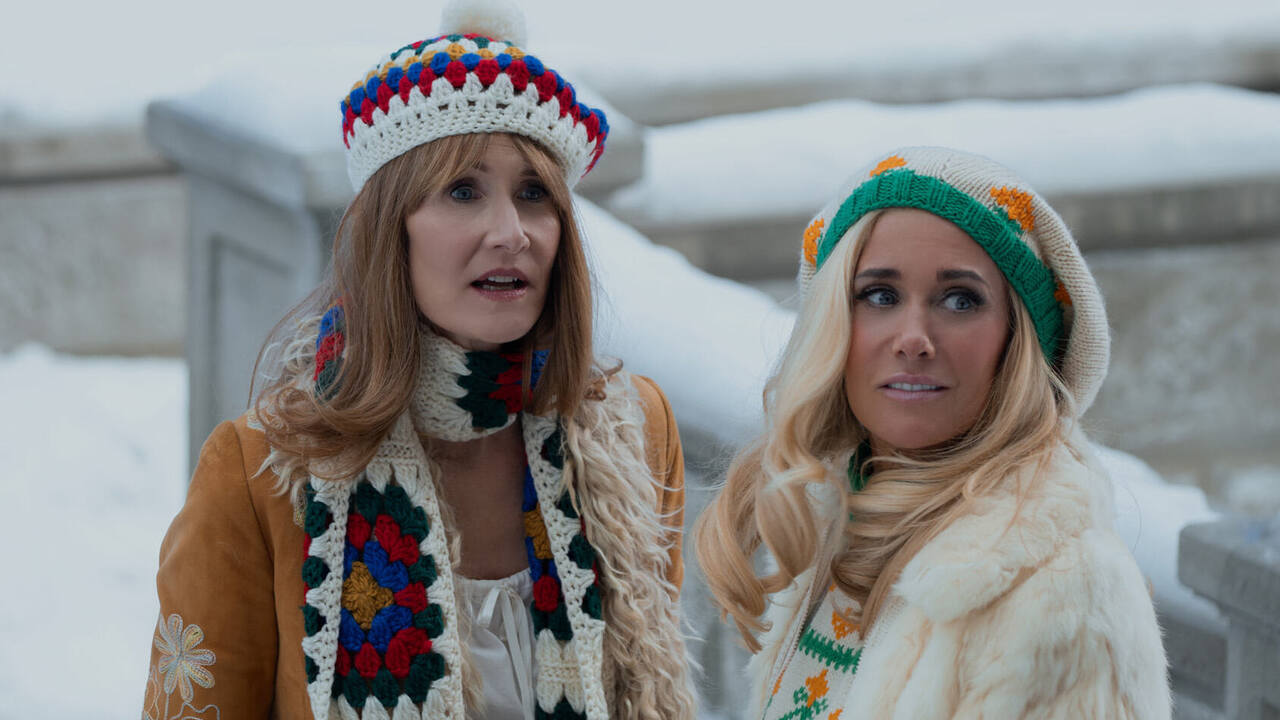
The interplay between Maxine and Janney’s Evelyn remains a high point. Their uneasy alliance in this episode — driven by practical necessity but underscored by genuine, if reluctant, respect — provides some of the sharpest writing in the finale. Evelyn’s barbed comments, delivered with Janney’s characteristic precision, are both funny and insightful, and shape the arc of the episode more than any single plot twist. Supporting performances also shine: Laura Dern and Leslie Bibb, in particular, inject nuance into characters who could easily have been reduced to stereotypes, giving the ensemble a dimensional texture that’s rare in this genre.
However, where this finale falters is in its narrative clarity and structural payoff. The show’s press description states that Maxine and Evelyn are working to protect a wedding from collapsing under weighty personal issues. That setup is intriguing in theory, but the execution here feels like the script is trying to serve too many masters at once: personal atonement, social satire, big party logistics, legacy concerns, and unresolved entanglements from earlier in the season. Some of those threads merge in compelling ways, but others feel tacked on or underdeveloped, diluting the emotional impact rather than strengthening it. There were moments during the episode when I was genuinely pulled in — certain character beats, emotional reveals, and shifts in alliances were satisfying — but they were frequently undercut by an avalanche of additional complications that cluttered the core story.
One of my main frustrations is how the episode juggles Maxine’s guilt and personal growth with the ongoing social ambitions that have defined much of her journey. When the character does something genuinely good — or at least tries to — it’s a welcome shift from her usual self-serving schemes. But that payoff never quite lands with the clarity or resonance it deserves because the narrative keeps shifting focus before the emotional thread can be fully tied together. In several scenes, I found myself asking whether the writers were more committed to spectacle and social juggling than to satisfying character arcs that have been developing all season.
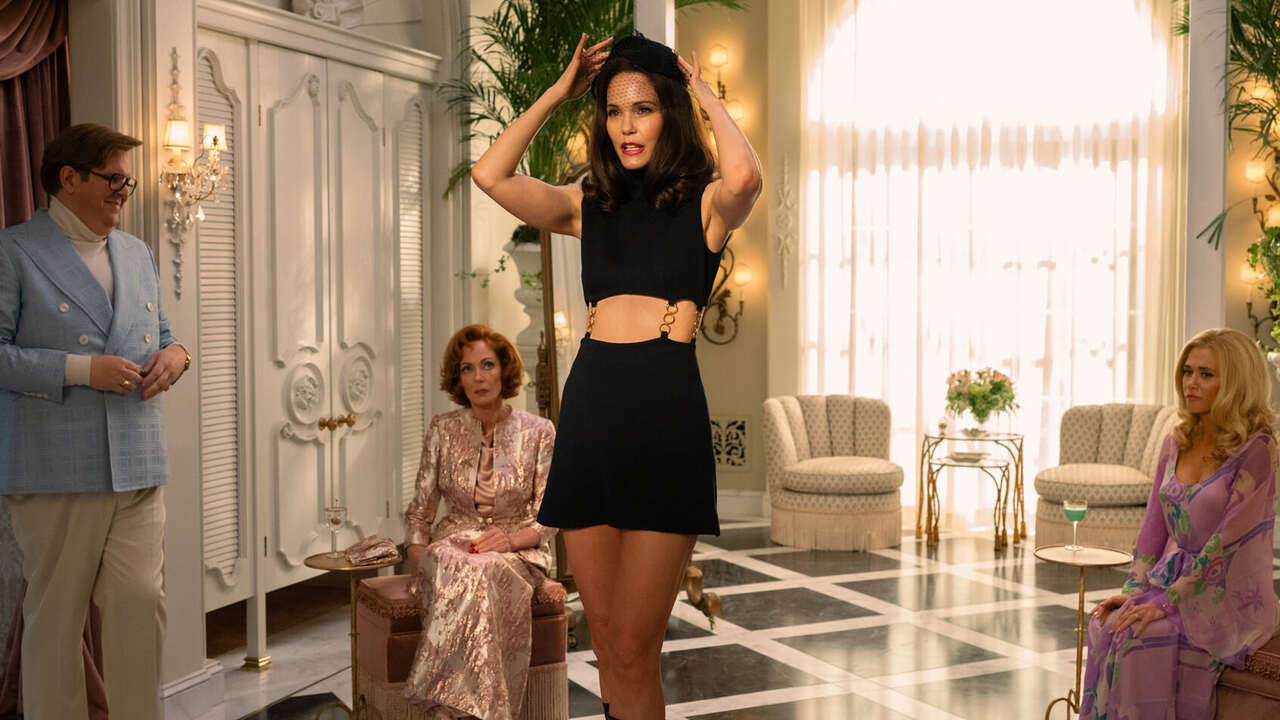
That said, the direction remains assured. The show doesn’t lose its visual and rhythmic drive even when the writing stumbles a bit. Director Tate Taylor and his team handle the large ensemble well, and they maintain momentum through crowded ballroom sequences and more intimate emotional beats alike. The show’s aesthetic pleasures — costume design, framing, music choices — never feel incidental; they consistently reinforce character and tone. Even in moments that felt overloaded, there was a clear design and purpose, which kept the episode engaging rather than exhausting.
On the critical side, the finale’s attempts to tie up loose ends result in an ending that feels both abrupt and unresolved. There’s a certain boldness in refusing to neatly resolve every plot line, and I appreciate that risk; television doesn’t always need to deliver tidy conclusions. But here, the balance tips too far toward ambiguity without enough connective tissue to make that ambiguity feel intentional rather than simply underwritten. By the time the credits rolled, I was left with a strong sense of appreciation for individual elements — the performances, the production, the ambition — but with lingering questions about narrative coherence and thematic focus.
Still, Palm Royale remains a distinct voice in the crowded landscape of prestige television. It blends satire with genuine feeling in ways few series attempt, and even when it missteps, it does so with a confidence and flair that’s rare. This episode is emblematic of the show’s best and its shortcomings: meticulously crafted worlds inhabited by vivid characters, but sometimes at the expense of crisp storytelling. Ultimately, watching “Maxine Does Something Good” was an experience that felt true to the show’s spirit — unpredictable, engaging, visually sumptuous, and occasionally maddening — and while it didn’t entirely satisfy in its final moments, it left me thinking about these characters and their messy, hilarious, heartfelt lives long after the screen went dark.
Final Score- [7/10]

Hi Everyone, after a due consideration, we have decided that we will be open for donations to help us in managing our website. We will be greatful for any kind of amount we receive. Thanks!
— Midgard Times 🎬 (@Moviesr_net) January 4, 2026
PayPal- [email protected] pic.twitter.com/DlNNz5Npm5
Get all latest content delivered to your email a few times a month.
Bringing Pop Culture News from Every Realm, Get All the Latest Movie, TV News, Reviews & Trailers
Got Any questions? Drop an email to [email protected]


 © Copyrights MOVIESR.NET All rights reserved