


From the moment Season 3 of Shrinking opens, it’s clear this is a show committed to emotional truth and grounded human storytelling. The central conceit hasn’t changed: Jimmy (Jason Segel) continues to dispense tough-love honesty to his clients and loved ones, wrestling with his own unresolved grief following the death of his wife while trying to show up as a father to his daughter, Alice (Lukita Maxwell). Yet this time, the stakes have shifted. Rather than dwelling in grief or forgiveness as in earlier seasons, the narrative pulse here is about moving forward, and that new direction is compelling even when the episodes don’t always stick the landing.
I found the overall arc of Season 3 to be immensely engaging because the writers allow characters to evolve in ways that feel earned rather than perfunctory. Jimmy’s tentative attempts at dating again, something hinted at across promotional material and interviews leading up to this season, are handled with nuance and honesty. His vulnerability in these scenes struck me as one of the most authentic aspects of the season, and Segel delivers those moments with just the right balance of humor and sincerity. He’s still that slightly chaotic, deeply caring therapist willing to bruise a few egos for someone’s long-term benefit, but now there’s a more mature, reflective edge to his choices that feels appropriate for where this character is in his life.
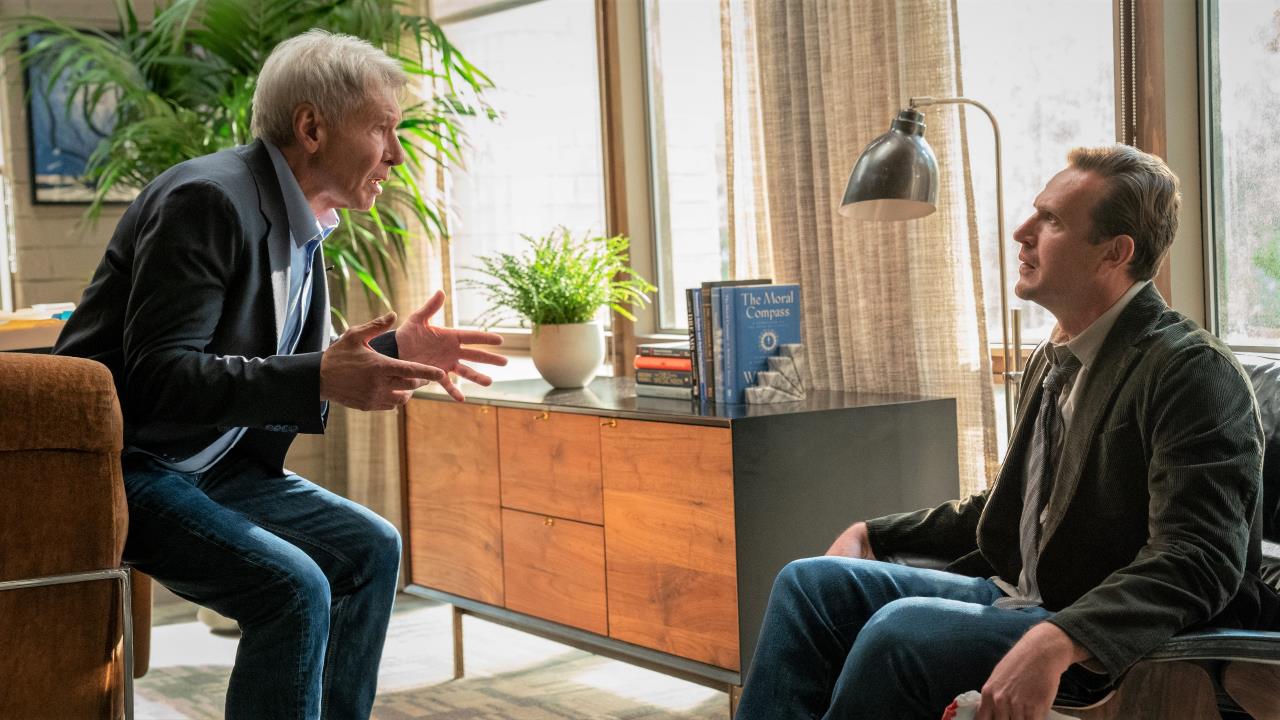
A major strength of the season is the ensemble work. Harrison Ford returns as Paul Rhoades, whose Parkinson’s diagnosis continues to inform his worldview and daily life. Ford’s performance is quietly powerful and remains one of the show’s emotional anchors; he finds humor and grace in Paul’s limitations without ever reducing the character to a caricature. The addition of Michael J. Fox in a guest arc adds even more depth to this exploration. Their scenes together are thoughtful and sometimes moving, offering fresh perspectives on identity, illness, and agency that aren’t typical in network comedy. It’s a casting choice that enriches the season without feeling gimmicky.
Jessica Williams as Gaby, Christa Miller as Liz, and Ted McGinley as Derek bring warmth and levity that frequently undercut heavier themes without diminishing their impact. Gaby’s own relationship arc this season offers sharp, funny writing and grounded emotional beats, even if at times it feels slightly secondary to the main thrust of Jimmy’s journey. I also appreciated how the season touches on life transitions, Alice heading to college, Brian and Charlie navigating parenthood, and even smaller character arcs like Sean and the broader office dynamic, which makes the ensemble feel like a real community grappling with real growth.
That said, there are moments where the season’s pacing feels uneven. With 11 episodes, certain narrative beats stretch longer than they need to, and the central theme of “moving forward” sometimes reads as a mantra instead of an organically integrated dramatic arc. Particularly midway through the run, some episodes felt episodically disconnected from the larger character objectives, as if the writers were experimenting with breadth over narrative tightness. These detours are usually enjoyable in their humor and wit, but they dilute the momentum just enough that I occasionally lost forward narrative focus.
There are also moments where the show’s tonal balancing act—between comedy and more serious emotional ground—doesn’t land as deftly as it should. Shrinking has always thrived when it juxtaposes humor with heartfelt reflection, but this season occasionally leans too hard into sentimentality, especially in scenes meant to be comedic but which play more as bittersweet monologues. The risk of emotional overinstruction is that it can minimize the audience’s own interpretive engagement, and that happens here at times.
Directorially and visually, the season maintains the crisp, unobtrusive style that has become Shrinking’s hallmark. The camera work doesn’t draw attention to itself, allowing performances and dialogue to carry the weight. There’s a clean clarity in the shots of therapy sessions, park benches, and everyday domestic spaces that keeps the world grounded. It’s not flashy, but it serves the material well, ensuring that viewers are always invested in the emotional currency of each scene.
Writing across the season continues to be sharp, with dialogue that feels natural without veering into quirk for its own sake. The humor is intelligent and patient, finding laughs not through cheap jokes but through authentic character reactions and surprising honesty. There are moments I laughed out loud, not at exaggerated punchlines but at the awkward, human unpredictability of these characters trying to do their best.
The new characters introduced this season integrate well, and I enjoyed how the show didn’t treat big names like Jeff Daniels or Michael J. Fox as window dressing but wove them into meaningful moments. That said, the season occasionally juggles so many subplots that a few character journeys—particularly peripheral ones—don’t get the resolution they deserve. A couple of arcs feel truncated or sidelined, leaving me wishing for a bit more payoff given the time invested.
In the end, what resonates most about Shrinking Season 3 is its willingness to grapple with the messy, ongoing process of healing and change. It’s a show that refuses simplistic resolutions, and I respect that commitment even when the execution isn’t flawless. The emotional highs are genuinely affecting, the performances consistently strong, and the writing sincere without being cloying. If the season stumbles in places, it’s usually in service of ambition rather than negligence.
I walked away from this season with a stronger sense of where these characters are and where they might still go. Jimmy’s willingness to open his heart again, Paul’s evolving acceptance of his life, and the broader ensemble’s assorted transitions all leave the door open for future stories—perhaps even beyond what the creators originally planned. Shrinking remains one of Apple TV+’s most thoughtful and genuinely human series, and Season 3 reinforces that reputation even as it wrestles with the inherent challenges of telling a story about forward motion itself.
Final Score- [8.5/10]
Reviewed by - Anjali Sharma
Follow @AnjaliS54769166 on Twitter
Publisher at Midgard Times



Hi Everyone, after a due consideration, we have decided that we will be open for donations to help us in managing our website. We will be greatful for any kind of amount we receive. Thanks!
— Midgard Times 🎬 (@Moviesr_net) January 4, 2026
PayPal- [email protected] pic.twitter.com/DlNNz5Npm5
Get all latest content delivered to your email a few times a month.
Bringing Pop Culture News from Every Realm, Get All the Latest Movie, TV News, Reviews & Trailers
Got Any questions? Drop an email to [email protected]



 © Copyrights MOVIESR.NET All rights reserved