


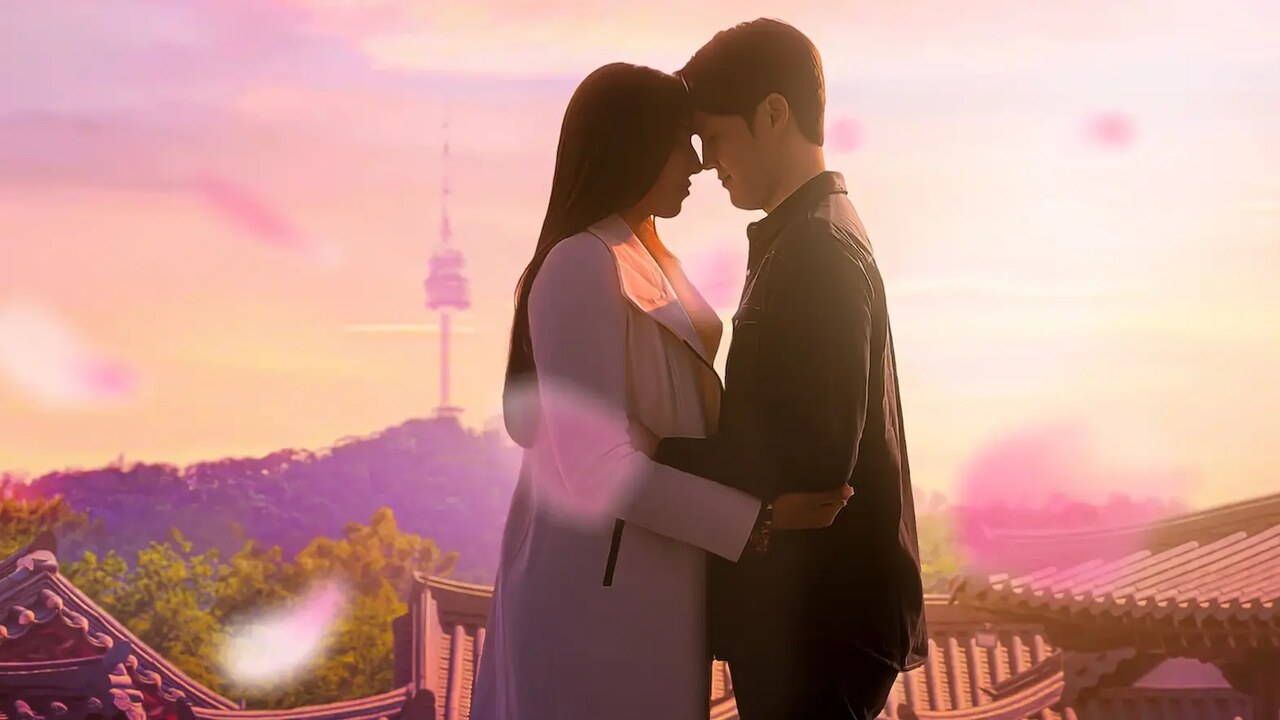
I went into Boyfriend on Demand expecting a standard K-drama romantic comedy with a tech gimmick, and to my surprise, it actually commits to the gimmick. The show takes a simple idea, what if you could subscribe to the perfect boyfriend the way you subscribe to streaming services, and stretches it into a playful exploration of loneliness, burnout, and the slightly embarrassing ways adults try to cope with both.
The story centers on Seo Mi-rae, played by Jisoo, a webtoon producer who is extremely tired of everything. Her job is stressful, her dating life is nonexistent, and her energy level suggests she has not slept since 2017. When she stumbles upon a subscription program called “Monthly Boyfriend,” she does what any rational person would do: she signs up to date several artificially perfect men in virtual reality.
In this program, Mi-rae goes on elaborate dates with men who seem custom-designed by someone who studied romantic fantasies in a laboratory. One is a charming doctor. Another is a mysterious celebrity. There are fancy galas, dreamy restaurants, and dramatic declarations that would make even the most confident person slightly suspicious. The virtual world delivers exactly what it promises: romance with zero risk.
Of course, this being a romantic drama, the real complication appears outside the headset. Park Gyeong-nam, played by Seo In-guk, is Mi-rae’s colleague and occasional rival at work. He is practical, blunt, and inconveniently real. While Mi-rae spends evenings interacting with flawless virtual boyfriends, her everyday life keeps pulling her back toward someone who is far less polished but much more genuine.
The show gets a lot of mileage from this contrast. The digital relationships are glossy and exaggerated, while Mi-rae’s real world is messy, awkward, and sometimes frustrating. That tension becomes the central joke of the series. Every time Mi-rae exits the virtual dating simulation, she returns to deadlines, arguments, and the mildly annoying presence of Gyeong-nam.
Jisoo carries the series with a surprisingly relaxed performance. She plays Mi-rae with a mixture of sarcasm, exhaustion, and curiosity that feels believable. Her character is not overly naive, which helps the story avoid becoming too childish. Mi-rae knows the virtual boyfriends are fake, but she still enjoys the emotional escape they provide. That self-awareness gives the show its most relatable moments.
Seo In-guk is equally effective as Gyeong-nam. His character is not trying to compete with the digital fantasy men, which is a smart writing choice. Instead, he remains stubbornly normal. He works hard, complains about things, and occasionally shows unexpected kindness. The show clearly wants viewers to notice the difference between scripted romance and real human behavior.
Visually, the series looks great. The virtual dating environments are colorful and intentionally extravagant. One episode places Mi-rae in a high-society gala filled with cinematic lighting and dramatic music, while another scene turns a hospital setting into a strangely romantic stage. The contrast between the dreamy digital spaces and the ordinary office scenes is handled very well.
The direction by Kim Jung-sik keeps things moving at a comfortable pace for most of the season. Episodes often jump between Mi-rae’s real life and the simulation, creating a rhythm that feels playful rather than confusing. The editing makes sure the audience never loses track of which world they are in, which is impressive considering how frequently the story shifts between them.
However, the show is not entirely consistent. Some episodes feel slightly overloaded with ideas. The writers clearly enjoy experimenting with different romantic scenarios inside the simulation, but occasionally those scenes stretch longer than necessary. A few of the virtual dates feel like extended sketches rather than meaningful parts of the story.
There is also a small pacing issue in the middle portion of the season. Around episodes five and six, the plot temporarily stalls while Mi-rae explores more variations of the digital boyfriend concept. These sequences are visually entertaining, but they do not always push the emotional story forward. At times, it feels like the series is too amused by its own premise.
Another minor weakness is the supporting cast. Several side characters appear briefly and then vanish before making a strong impression. Given the workplace setting and the ambitious virtual dating concept, the show had plenty of opportunities to expand the ensemble. Instead, many secondary characters remain lightly sketched.
Even with those flaws, the series maintains a charming tone. It never takes its futuristic technology too seriously, which helps the story stay grounded in human behavior. The real theme of the show is not virtual reality or artificial romance. It is about how people protect themselves from disappointment.
Mi-rae initially prefers the simulation because it removes uncertainty. The boyfriends are predictable. The dates are perfect. There is no possibility of rejection. Watching her slowly confront the limitations of that system becomes the emotional backbone of the series.
The writing does a nice job showing how comfort can quietly become avoidance. Mi-rae enjoys the digital relationships, but she also begins to notice that they never surprise her. Everything is designed to please her, which eventually makes the experience feel oddly hollow.
That realization leads to some of the show’s best scenes between Mi-rae and Gyeong-nam. Their conversations are awkward and sometimes argumentative, but they feel genuine. The show clearly believes that messy communication is more meaningful than scripted romance, and it makes that point without becoming overly sentimental.
I also appreciated how the humor stays relatively natural. The jokes usually come from Mi-rae’s reactions to absurd situations rather than exaggerated slapstick. Watching her try to maintain emotional boundaries with virtual boyfriends is consistently amusing.
At the same time, the show occasionally pushes the comedy a bit too far. Some of the fantasy scenarios feel slightly repetitive, and a few jokes rely on the same premise of “perfect boyfriend behaving perfectly.” Those moments are still entertaining, but they lack the cleverness of the earlier episodes.
By the time the series reaches its final stretch, the story settles into a more focused rhythm. The emotional stakes become clearer, and Mi-rae’s choices start to carry real weight. The contrast between virtual perfection and real connection finally pays off satisfyingly.
Overall, Boyfriend on Demand is an entertaining, slightly uneven romantic comedy that succeeds because it understands its own absurdity. It knows the idea of subscribing to a boyfriend is ridiculous, and it leans into that ridiculousness while still telling a sincere story about loneliness and connection.
I laughed quite a bit, rolled my eyes occasionally, and stayed curious about where the characters would end up. That combination is exactly what a modern romantic comedy should aim for. The show may not reinvent the genre, but it definitely finds a clever new angle on it—and sometimes that is more than enough.
Final Score- [6/10]
Reviewed by - Anjali Sharma
Follow @AnjaliS54769166 on Twitter
Publisher at Midgard Times



Hi Everyone, after a due consideration, we have decided that we will be open for donations to help us in managing our website. We will be greatful for any kind of amount we receive. Thanks!
— Midgard Times 🎬 (@Moviesr_net) January 4, 2026
PayPal- [email protected] pic.twitter.com/DlNNz5Npm5
Get all latest content delivered to your email a few times a month.
Bringing Pop Culture News from Every Realm, Get All the Latest Movie, TV News, Reviews & Trailers
Got Any questions? Drop an email to [email protected]



 © Copyrights MOVIESR.NET All rights reserved