

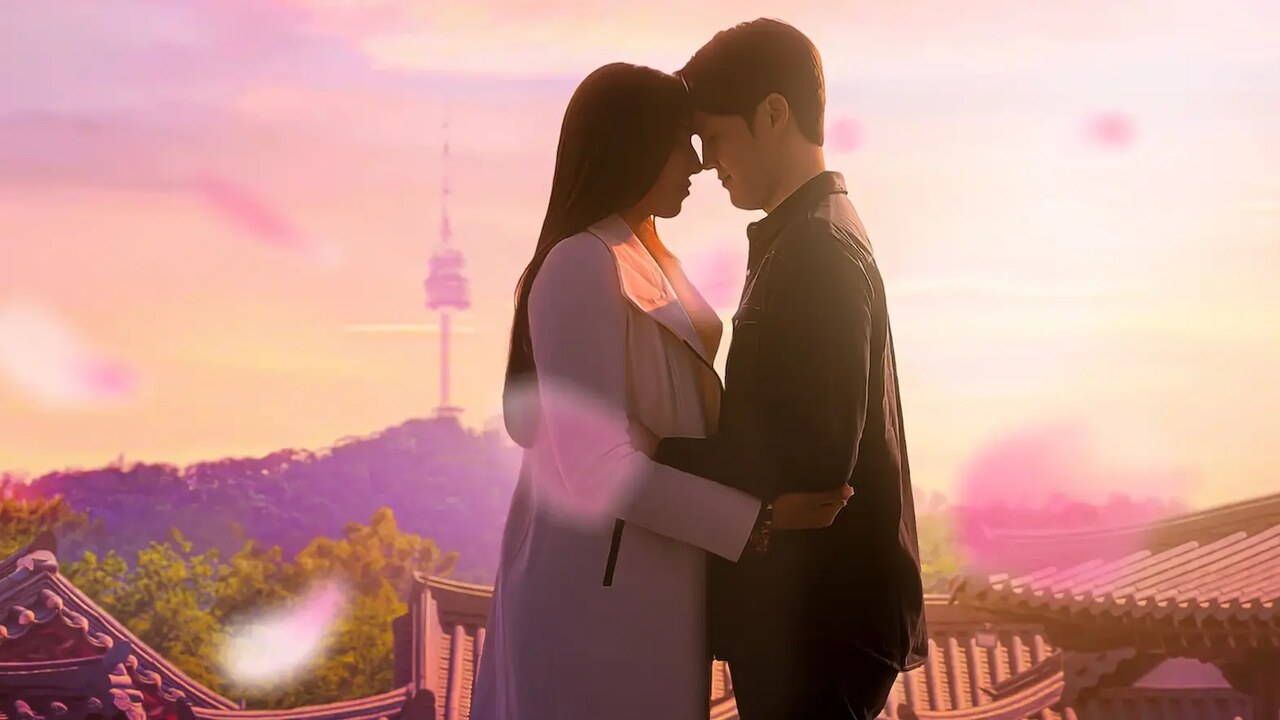
I went into My Korean Boyfriend thinking I was about to watch a slick, glossy, algorithm-approved international dating show designed to melt hearts and boost tourism. Instead, what I got was something far stranger and more uneven: a mix of sincerity and chaos, emotional honesty and accidental comedy, cultural insight and deeply questionable editing choices. Sometimes it feels thoughtful. Sometimes it feels like the show itself forgot what it wanted to be halfway through an episode. And somehow, despite all that, I kept watching.
The basic setup is simple enough. Five Brazilian women who have been dating Korean men long-distance travel to South Korea to finally live out these relationships in person. Some of them are serious, some of them are already wobbling, and some feel like they were held together by Wi-Fi and optimism alone. The show wastes no time dropping us into Seoul, which looks great, but it also means we’re immediately juggling multiple couples, personalities, and emotional baselines with very little breathing room. It’s energetic, but also slightly exhausting, like being introduced to ten people at a party in five minutes and being expected to remember everyone’s relationship history.
Where the series genuinely succeeds is in showing how cultural expectations quietly shape relationships in ways people don’t always anticipate. The tension around family approval, public affection, gender roles, and emotional expression is not manufactured; it’s clearly real. Watching these women navigate conversations with parents, siblings, and partners who communicate differently — not just linguistically but emotionally — is often the most compelling part of the show. These moments feel observational rather than performative, and when the camera stays put long enough, you get glimpses of something thoughtful and grounded.
Unfortunately, the camera doesn’t stay put very often. The pacing is frantic. Emotional beats are introduced and then abandoned almost immediately. A serious conversation will begin, cut away mid-thought, and then resurface later as a recap soundbite. This makes it hard to track actual growth or change. People don’t so much evolve as they rotate through moods. In one episode, someone is on the brink of ending things; the next, they’re laughing over dinner as if nothing happened. Real relationships are messy, yes, but the editing makes them feel messy in an unintentional, slightly careless way.
That said, the cast is doing a lot of heavy lifting. The women are open, expressive, and generally self-aware, which helps counterbalance the structural issues. They’re willing to look foolish, vulnerable, frustrated, and occasionally petty on camera, and that honesty carries the show further than the format deserves. The Korean partners, too, come across as more than just romantic props. Some are emotionally reserved, some are clearly overwhelmed, and some are quietly trying their best while being filmed in a language that isn’t their own. The show doesn’t always give them enough space, but when it does, they feel human rather than idealised.
Visually, the series looks good in a very Netflix way. Seoul is shot attractively without feeling like a tourism ad, and everyday spaces — apartments, cafés, family homes — are given as much attention as scenic city shots. There’s a casual intimacy to the way dates and domestic moments are filmed that works well. You can tell the production knows how to make reality television look polished without feeling artificial. It’s the storytelling where things wobble, not the presentation.
Humour is a constant, though not always on purpose. Some scenes are genuinely funny: language mix-ups, painfully awkward silences, or moments where one partner clearly misreads the emotional temperature of the room. Other times, the humour comes from the sheer mismatch between how serious the participants are and how lightly the show treats their situations. There are moments where someone is clearly distressed, and the edit jumps to upbeat music or a different couple’s storyline so quickly that you’re left laughing out of confusion rather than amusement.
One recurring issue is the way the series flirts with stereotypes. It doesn’t fully commit to them, but it doesn’t challenge them strongly either. Brazilian women are framed as emotionally intense and expressive; Korean men are reserved, logical, or romantically restrained. These dynamics are sometimes true for the individuals involved, but the show often presents them as cultural defaults rather than personal traits. It’s not malicious, but it is lazy, and it occasionally undercuts what could have been more nuanced conversations about personality versus culture.
Despite these flaws, some moments land surprisingly hard. Scenes where couples struggle to communicate basic needs, or where someone realises that affection doesn’t always look the way they imagined, feel honest and uncomfortable in a way reality TV rarely allows. The show is at its best when it stops trying to be cute or dramatic and simply lets people sit with uncertainty. Those moments suggest a better, more focused version of this series that never quite materialises.
By the end of the season, I didn’t feel emotionally wrecked or romantically inspired. I felt mildly fond, slightly annoyed, and oddly reflective. The show doesn’t give you grand conclusions or sweeping statements about love across cultures. Instead, it leaves you with fragments: awkward dinners, half-resolved arguments, small gestures that mean more than big declarations. It’s frustrating, but also strangely fitting. Real relationships rarely offer neat endings, especially when culture, distance, and expectation collide.
My Korean Boyfriend is not a great series. It is, however, an interesting one. It’s uneven, occasionally shallow, sometimes unintentionally hilarious, and often more revealing than it seems to realise. I rolled my eyes more than once, laughed at moments I don’t think were meant to be funny, and still found myself caring about how these people ended up. That’s nothing. It may not deliver the romantic fantasy it flirts with, but it does offer a messy, human look at what happens when that fantasy meets reality and refuses to behave.
Final Score- [5.5/10]
Reviewed by - Anjali Sharma
Follow @AnjaliS54769166 on Twitter
Publisher at Midgard Times



Hi Everyone, after a due consideration, we have decided that we will be open for donations to help us in managing our website. We will be greatful for any kind of amount we receive. Thanks!
— Midgard Times 🎬 (@Moviesr_net) January 4, 2026
PayPal- [email protected] pic.twitter.com/DlNNz5Npm5
Get all latest content delivered to your email a few times a month.
Bringing Pop Culture News from Every Realm, Get All the Latest Movie, TV News, Reviews & Trailers
Got Any questions? Drop an email to [email protected]



 © Copyrights MOVIESR.NET All rights reserved