

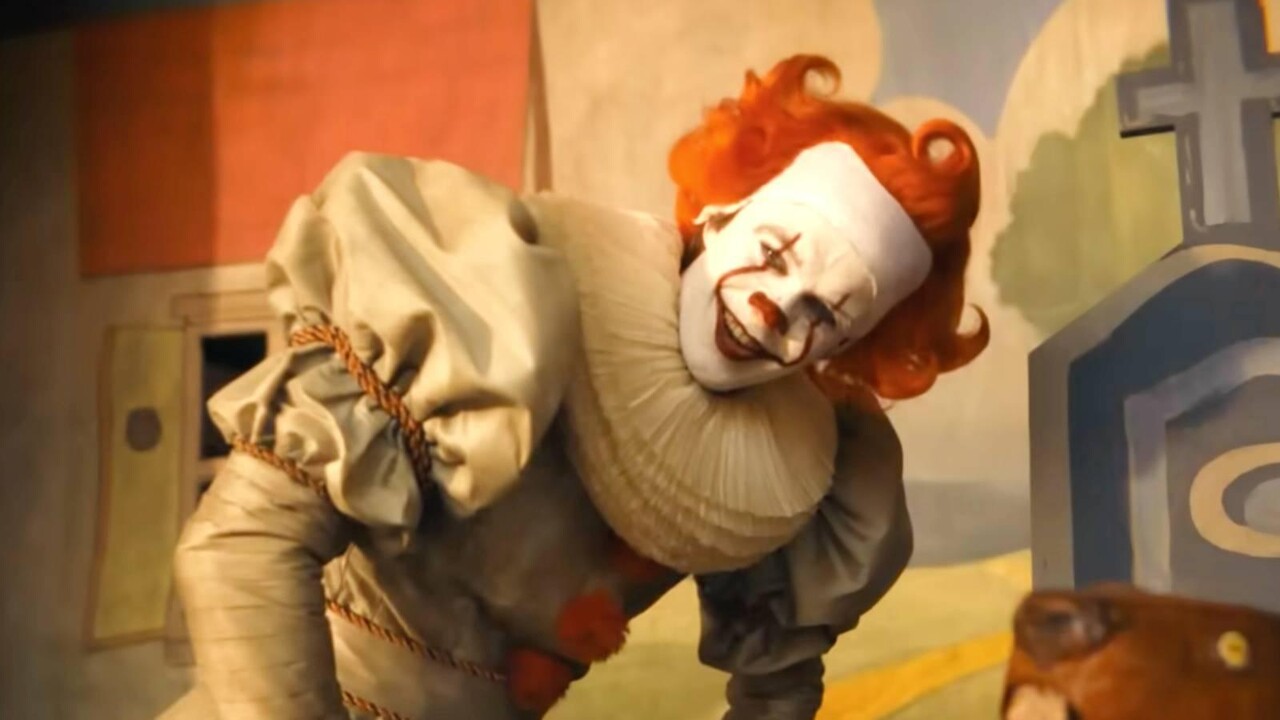
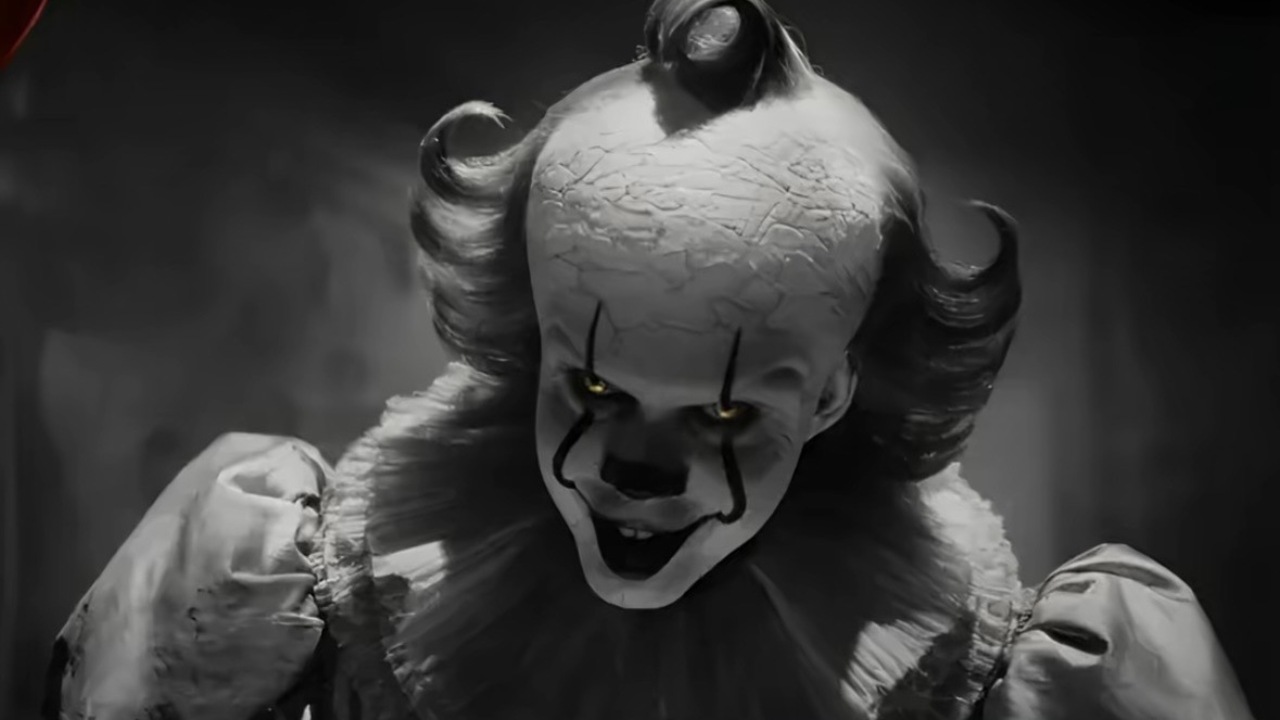
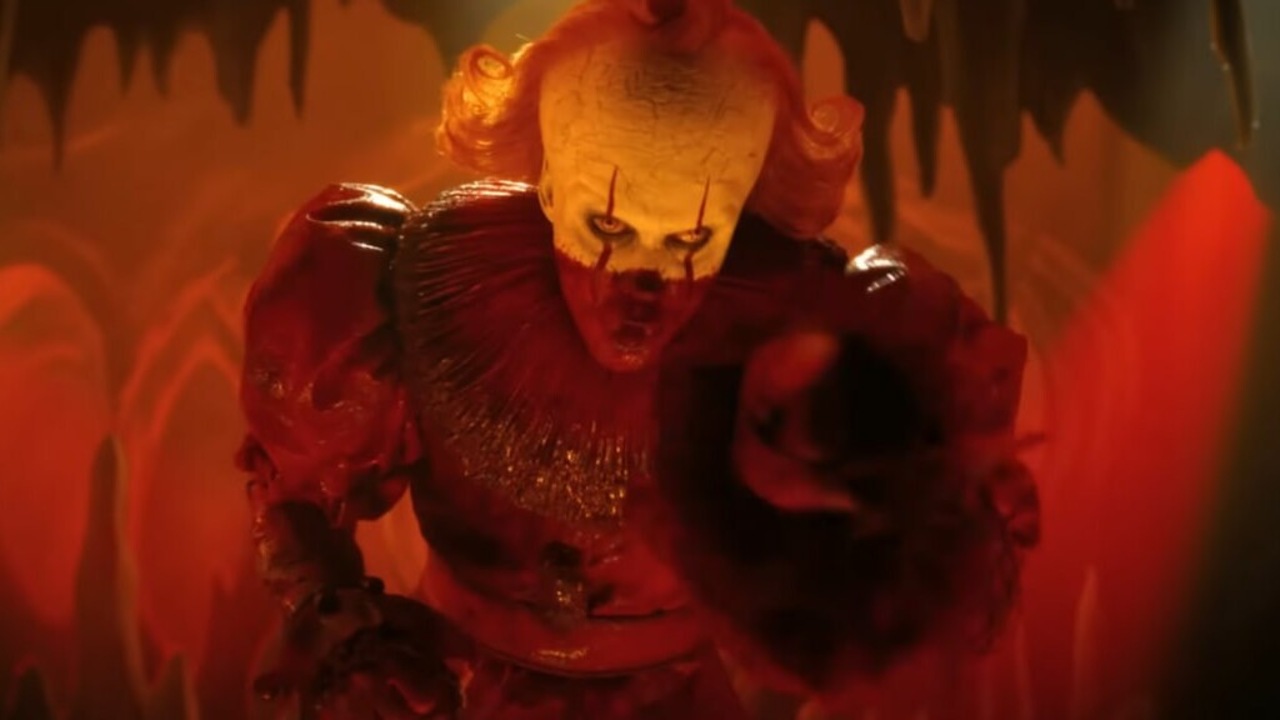
It's 1908, and we find ourselves at a carnival where Bob entertains children by performing as Pennywise the Dancing Clown. As the act progresses and we learn more about Bob's sorrowful life, we realize that another name for this character could be Pennywise the Sentimental Clown. He slips a funeral into his comedy routine and talks to his daughter about his dead wife. At night, we find him alone, smoking and drinking. He looks sad, defeated, dead on the inside. Yet a creative spark within him stubbornly keeps him alive. Bob tells his daughter about a bit he's working on—something no one has ever seen. Unfortunately, he never gets to perform it in public, thanks to It. The shapeshifter, disguised as a lost child, asks Bob for help finding his parents, then eats him. Before satisfying its hunger, It tells Bob that children seem to be attracted to him. Coming from this entity, the remark is, of course, not a compliment but an expression of curiosity. Now we understand why this antagonist so often chooses to appear as Pennywise.
Bob, however, is not the only sentimental figure in Episode 7. He is joined by Jason Fuchs and Brad Caleb Kane (writers) and Andy Muschietti (director). In the Name of the Father ended with the threat of a bloodbath between the Blacks and the Whites. That threat becomes a reality here, consuming innocent men, women, children, and—brace yourself—Rich. The young boy sacrifices himself to save Marge, tricking her into climbing into a small container. The moment recalls the climax of Titanic, where Jack sacrifices himself to save the love of his life. But we spend a great deal of time with the doomed lovers before a giant iceberg drives them apart in that film. In Welcome to Derry, the emotion rests entirely on Rich's charisma and our fondness for him. His relationship with Marge feels trivial and, in hindsight, exploitative, superficial, and a cheap setup for catastrophe. No other major character dies besides Rich, because the show wants to score points through sentimentality while maintaining the façade that anything can go wrong at any time. That illusion worked only in Episode 1. In The Black Spot, the trick comes across as calculated, manipulative, and shoddy.
James Cameron's tragic romance isn't the only film that comes to mind. Ryan Coogler's Sinners also echoes here, given how fire destroys a club where Black people gather, have fun, and play music. This parallel again reminds you that you are watching an inferior horror story. And now that General Shaw's plan is revealed, you can't help but wonder whether Muschietti and his team poured all their energy into creating something very foolish. As Shaw lays out his intentions, the dialogue sounds like the work of writers whose ideas are undeveloped, unpolished, and half-baked. All I can hope for from the finale, then, is a few creative doses of carnage. One, after all, must lower their expectations when the story itself is so second-rate.
Final Score- [3.5/10]
Hi Everyone, after a due consideration, we have decided that we will be open for donations to help us in managing our website. We will be greatful for any kind of amount we receive. Thanks!
— Midgard Times 🎬 (@Moviesr_net) January 4, 2026
PayPal- [email protected] pic.twitter.com/DlNNz5Npm5
Get all latest content delivered to your email a few times a month.
Bringing Pop Culture News from Every Realm, Get All the Latest Movie, TV News, Reviews & Trailers
Got Any questions? Drop an email to [email protected]


 © Copyrights MOVIESR.NET All rights reserved