

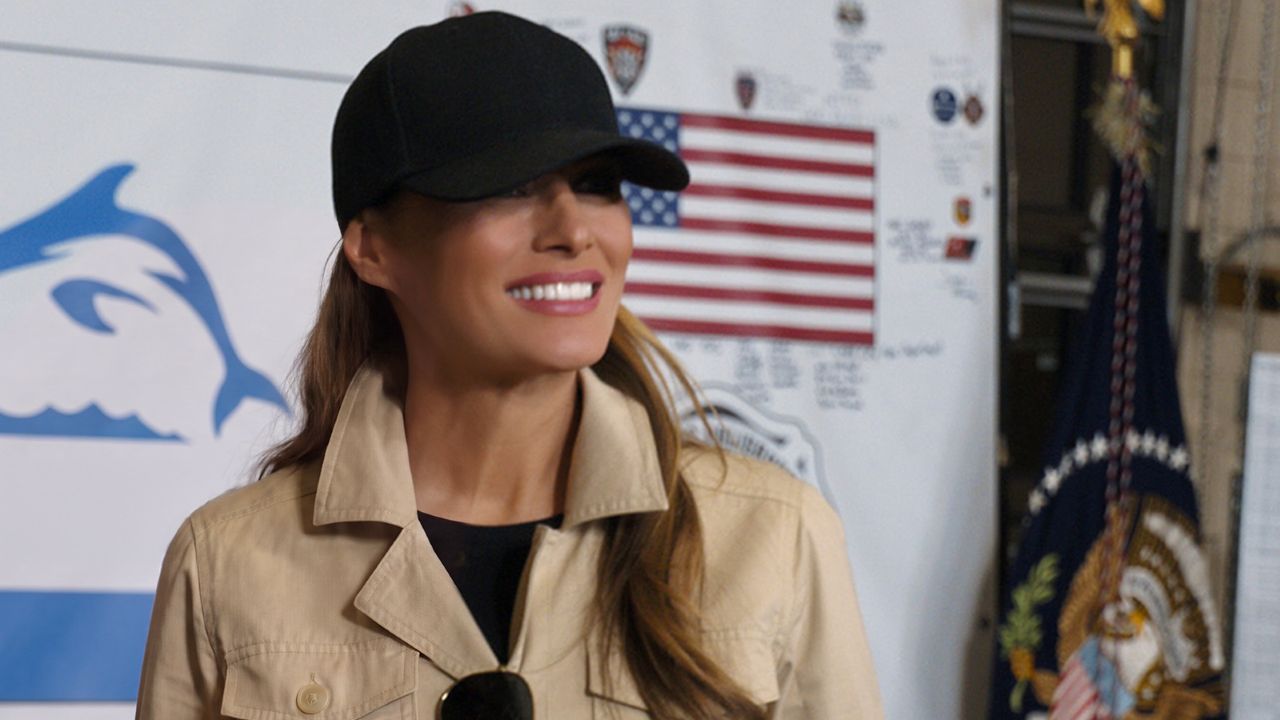
I am increasingly tired of documentaries that mistake access for insight. Give a camera permission to follow someone around, film a few private conversations, capture their wardrobe decisions and record their public appearances, and apparently we are expected to call the result an intimate portrait. MELANIA, The Series is an especially frustrating example. It promises an unprecedented look into the life of one of the most recognisable women in American politics. What it delivers is a carefully assembled image that seems remarkably reluctant to examine the person behind it. Directed by Brett Ratner, with Melania Trump and Marc Beckman among its executive producers, it covers her family priorities, public responsibilities, White House preparations, and various initiatives. Approximately 71 minutes of footage, and very little that feels like genuine discovery.
My first frustration is with the documentary's fundamental lack of curiosity. Melania Trump occupies a prominent position within an enormously consequential political institution. There are interesting questions to ask about the First Lady's role, her influence, her public responsibilities, and the relationship between her personal identity and the administration she represents. Instead, the series spends a disproportionate amount of time on the mechanics of presentation. We watch appearances being prepared, outfits being considered and personal details being elevated into supposedly revealing moments.
The sequence involving the precise placement of a brooch is a particularly telling example. Clothes can communicate status, identity and intention. I have no objection to a documentary examining that. But when the placement of an accessory receives more attention than the political context surrounding its wearer, I start questioning the editorial priorities. I didn't come looking for a wardrobe diary. I wanted a documentary.
And this is where the distinction between access and insight becomes impossible to ignore. A camera can follow someone all day without telling us anything particularly meaningful about them. Private conversations do not automatically constitute transparency. Being allowed into a room does not mean being allowed to understand what happens there. I kept waiting for the series to introduce some genuine contradiction, some independent perspective, some question that hadn't already been accommodated by its subject's preferred narrative. That curiosity never really arrives.
The production arrangements make this particularly relevant. Melania Trump is an executive producer, and the series follows her collaboration with Amazon on the feature documentary released earlier in 2026. The Washington Post reported that Amazon paid $40 million to acquire the earlier documentary, with a further $35 million reportedly spent on promotion. These figures do not establish anyone's intentions, but they certainly make questions about editorial independence reasonable. When the subject is also involved in producing the portrait, I think viewers are entitled to ask who controls the narrative and what happens to the questions that might complicate it.
The treatment of public initiatives is another missed opportunity. The second episode includes visits connected to communities affected by Hurricane Helene and the California wildfires, alongside material about foster children and Melania's initiatives. These are subjects that deserve serious attention. Yet I wanted to hear more from the people whose experiences provide the backdrop to these appearances. What happened beyond the visit? What has actually been achieved? How do these initiatives operate? A documentary cannot simply present an appearance as evidence of meaningful public service. Intention and outcome are two different things.
There is something particularly uncomfortable about watching other people's hardship become part of a political portrait without receiving equivalent attention in its own right. The communities affected by disasters are not supporting characters in somebody else's public image. Their experiences deserve to be examined on their own terms. I would have welcomed even a modest attempt to investigate the work being presented rather than simply document its presentation.
Ratner's direction reinforces the series' polished, lifestyle-oriented approach. The cinematography is composed, the footage carefully arranged, and the emphasis on private rituals maintains an almost promotional atmosphere. A documentary is perfectly entitled to be visually beautiful. But I want its aesthetic choices to reveal something, not merely preserve an image. Here, the camera seems to know exactly where it wants to look. What it rarely does is look somewhere inconvenient.
The structure doesn't help. Across two episodes, the material moves between family, public appearances and statements about responsibility without developing a particularly coherent argument. Some moments feel included simply because they were available to film. I don't need to see every detail of a famous person's routine just because a production has obtained permission to record it. Every scene should earn its place.
I also want to be clear about what I am criticising. Privacy is legitimate, even for public figures. Melania Trump does not owe viewers unrestricted access to her personal life. But a series that markets itself on unprecedented insight cannot simultaneously expect the audience to accept the absence of scrutiny as a virtue. If it wants the authority of documentary filmmaking, it must accept the responsibilities that come with it: context, transparency, independent perspectives and a willingness to confront uncomfortable questions.
Ultimately, MELANIA, The Series is more revealing about the construction of political image than it is about Melania Trump herself. Political image-making depends on selection: which moments are preserved, which stories are repeated and which qualities become central to a public identity. Documentary filmmaking can challenge that process. It can introduce competing accounts, examine contradictions and investigate the distance between a public narrative and the realities surrounding it. This series seems much more comfortable maintaining that distance.
I finished it with one persistent question: what was I actually supposed to learn? That Melania has a carefully managed public image? That appearances require preparation? That public initiatives can be documented through visits and conversations? None of this amounts to the unprecedented insight being promised. I don't object to documentaries having a perspective. I object to being sold a portrait as an investigation. MELANIA, The Series wants us to admire its access without questioning its limitations. It wants the intimacy of documentary filmmaking without the discomfort of genuine examination.
Final Score- [2/10]
Reviewed by - Anjali Sharma
Follow @AnjaliS54769166 on Twitter
Publisher at Midgard Times


Hi Everyone, after a due consideration, we have decided that we will be open for donations to help us in managing our website. We will be greatful for any kind of amount we receive. Thanks!
— Midgard Times 🎬 (@Moviesr_net) January 4, 2026
PayPal- [email protected] pic.twitter.com/DlNNz5Npm5
Get all latest content delivered to your email a few times a month.
Bringing Pop Culture News from Every Realm, Get All the Latest Movie, TV News, Reviews & Trailers
Got Any questions? Drop an email to [email protected]

 © Copyrights MOVIESR.NET All rights reserved