

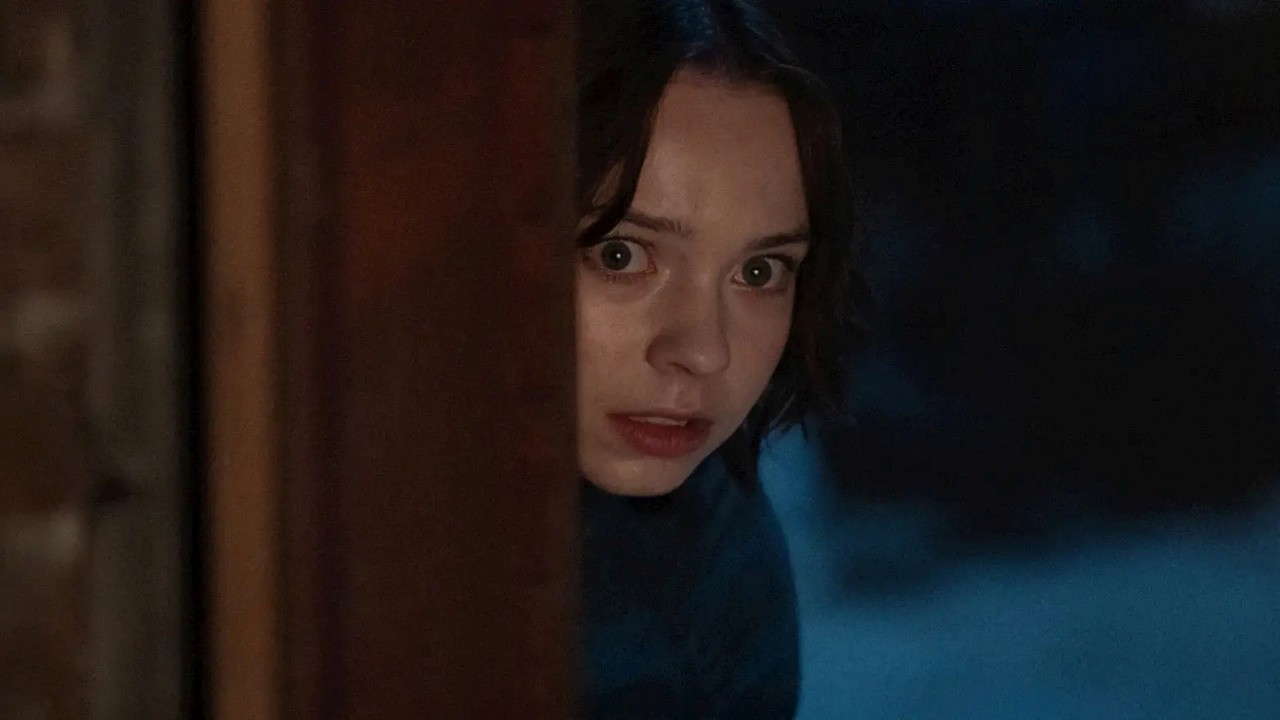
Season one of A Good Girl’s Guide to Murder surprised me because it understood something a lot of YA mystery adaptations don’t: Teenagers are smart enough to handle darkness when the writing treats them seriously. Season two understands that, too, but it pushes the story into much heavier emotional territory. The mystery is larger, the consequences feel uglier, and the tone is noticeably more anxious from the beginning. This season feels less like “teen sleuth solves another case,” and more like watching a very intelligent girl slowly realize that investigating terrible people does permanent psychological damage. And honestly, that shift works for the show more often than it doesn’t.
Based on Holly Jackson’s Good Girl, Bad Blood, the second season picks up after Pip exposes the truth about Andie Bell’s murder and the crimes surrounding Sal Singh’s death. Little Kilton is still reeling from the fallout, Max Hastings is facing trial, and Pip has become locally famous in the worst possible way. Emma Myers plays Pip with a much heavier emotional exhaustion this season, and that change gives the series real depth.
One of the smartest decisions the show makes is refusing to let Pip simply reset into “quirky mystery girl” mode again. She’s more paranoid now. More emotionally withdrawn. More aware that solving crimes doesn’t magically fix the damage underneath them. Myers handles that progression extremely well. Her performance this season feels less openly energetic and more internally stressed, which suits the story perfectly. There’s a constant tension in Pip now. Even during quieter scenes, she seems emotionally overclocked, like somebody permanently stuck halfway through an anxiety attack while pretending to function normally around other people. Very relatable, modern-protagonist energy, honestly.
Emma Myers continues carrying the show effortlessly. What makes her so effective here is that she never turns Pip into an unrealistically polished genius detective. Pip is smart, observant, stubborn, and emotionally reckless in equal measure. She makes mistakes constantly. She jumps to conclusions. She ignores danger. She pushes people away when stressed. She also happens to be right a lot. That balance keeps the character human.
Zain Iqbal remains excellent as Ravi Singh, and season two thankfully gives him more emotional complexity than simply being “a supportive boyfriend with sad eyes.” Ravi’s relationship with Pip becomes one of the strongest parts of the season because the show finally allows the emotional strain underneath their chemistry to surface properly. Ravi understands Pip better than almost anyone. The problem is that understanding someone this obsessive and traumatized eventually becomes exhausting.
Iqbal handles that emotional conflict really well. Ravi still has warmth and humor, but there’s increasing frustration underneath it now. Several of the season’s best scenes involve Ravi realizing that Pip’s inability to let go of investigations is no longer simply determination — it’s becoming part of her identity in ways that might actually destroy her. That relationship tension gives the season emotional weight beyond the mystery itself.
The central disappearance involving Jamie Reynolds is also a strong hook. Eden Hambelton-Davies plays Jamie with just enough emotional presence early on that his absence matters throughout the investigation. More importantly, the season understands that missing-person cases feel emotionally different from murder mysteries. There’s uncertainty hanging over everything. Hope becomes part of the tension. That atmosphere works really well.
Misia Butler is another strong addition as Stanley Forbes, who immediately brings unsettling energy into the story without feeling cartoonishly suspicious. One thing the show continues doing well is avoiding obvious “TV mystery acting,” where characters basically announce they’re hiding secrets through dramatic staring and creepy smiles. Most people in A Good Girl’s Guide to Murder still behave like actual teenagers and emotionally messy adults rather than puzzle-box delivery systems. That realism helps enormously. The supporting cast remains solid, too. Yali Topol Margalith continues being great as Lauren, and Jude Morgan-Collie’s Connor gets stronger emotional material this season because the investigation directly affects his family. The show wisely allows the mystery to emotionally ripple outward rather than existing in isolation around Pip alone.
Visually, the series still looks fantastic. The small-town atmosphere remains one of the show’s biggest strengths. Little Kilton continues feeling deceptively cozy in daylight and deeply unsettling at night. Empty streets, wooded areas, parking lots, cramped bedrooms, school corridors, cafés, and quiet suburban houses all carry this constant underlying tension now. Nobody in this town seems emotionally comfortable anymore. And honestly, fair enough.
The direction is noticeably more confident this season, too. Several sequences involving Pip’s podcast investigations, online digging, and increasingly dangerous encounters are handled with much sharper pacing than season one. The suspense feels more controlled now. The show trusts silence more. It trusts awkwardness more. It understands that fear often works better when people are quietly uncertain instead of loudly panicking.
The writing is strongest whenever it focuses on the emotional consequences of true crime culture. Pip has become semi-famous because of her investigations, and the season smartly explores how disturbing that reality actually is. People admire her. They want updates. They consume trauma as entertainment. Meanwhile, Pip herself increasingly looks like someone emotionally deteriorating in public while everyone applauds her for being “brave.” That’s fascinating territory for a YA thriller.
The show also deserves credit for handling trauma more carefully this season. Max Hastings’ crimes continue hanging over the story, and the series never treats that material lightly. Instead of using assault and abuse purely as shock-value mystery fuel, the season consistently focuses on emotional aftermath and the way communities quietly fail victims while protecting powerful people. That thematic maturity elevates the material significantly.
For all its emotional intelligence, the pacing occasionally becomes uneven in the middle episodes. The season sometimes gets so invested in emotional fallout, podcast fame, relationship tension, and atmosphere that the central investigation briefly loses momentum before snapping back into place later. There are also moments where Pip’s decision-making stretches credibility slightly too far, even accounting for teenage impulsiveness. I understand the show wants Pip’s obsession to become part of the drama, but there were one or two scenes where I found myself thinking: “You are now behaving less like an investigator and more like someone actively trying to get kidnapped.”
The season also occasionally leans a little too heavily into aestheticized teen misery. Everyone is exhausted, traumatized, emotionally unavailable, sleep-deprived, and standing under dim lighting while staring at text messages. It mostly works for the tone, but there are moments where the show risks becoming emotionally repetitive in its constant atmosphere of anxiety and guilt. Still, those issues never fully derail the season because the performances remain so strong and the emotional stakes feel genuine. Most importantly, season two understands that Pip’s greatest conflict is no longer simply solving mysteries. It’s figuring out whether she can exist without them.
That idea gives the entire season surprising emotional sadness underneath the thriller mechanics. By the end, Pip doesn’t feel triumphant. She feels changed. Older, somehow. More isolated. More aware of how ugly people can become when fear, shame, power, and secrecy start overlapping. That maturity makes the season stronger than a standard YA mystery adaptation. By the final episode, I realized the show had quietly evolved from “clever teen detective series” into something much more psychologically heavy: a story about obsession, trauma, and the emotional cost of turning yourself into the person responsible for uncovering everybody else’s darkness. That’s compelling television.
A Good Girl’s Guide to Murder season two is darker, more emotionally ambitious, and significantly more psychologically mature than its first season. Emma Myers and Zain Iqbal continue anchoring the series beautifully, the central mystery remains gripping throughout, and the show’s exploration of trauma, public fascination with crime, and emotional obsession gives it far more depth than most YA thrillers currently streaming. While the pacing occasionally drifts and some investigative choices require generous suspension of disbelief, the season succeeds because it treats both its characters and its audience seriously.
Final Score- [8/10]
Reviewed by - Anjali Sharma
Follow @AnjaliS54769166 on Twitter
Publisher at Midgard Times




Hi Everyone, after a due consideration, we have decided that we will be open for donations to help us in managing our website. We will be greatful for any kind of amount we receive. Thanks!
— Midgard Times 🎬 (@Moviesr_net) January 4, 2026
PayPal- [email protected] pic.twitter.com/DlNNz5Npm5
Get all latest content delivered to your email a few times a month.
Bringing Pop Culture News from Every Realm, Get All the Latest Movie, TV News, Reviews & Trailers
Got Any questions? Drop an email to [email protected]



 © Copyrights MOVIESR.NET All rights reserved