


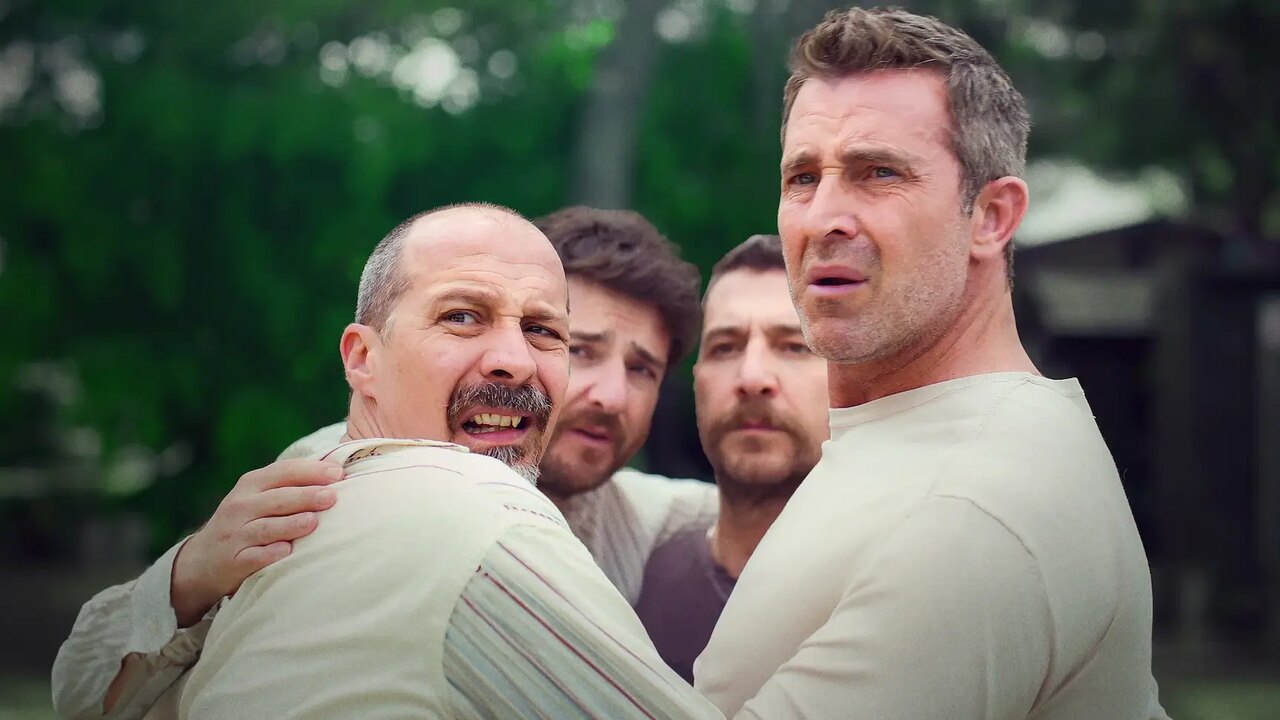
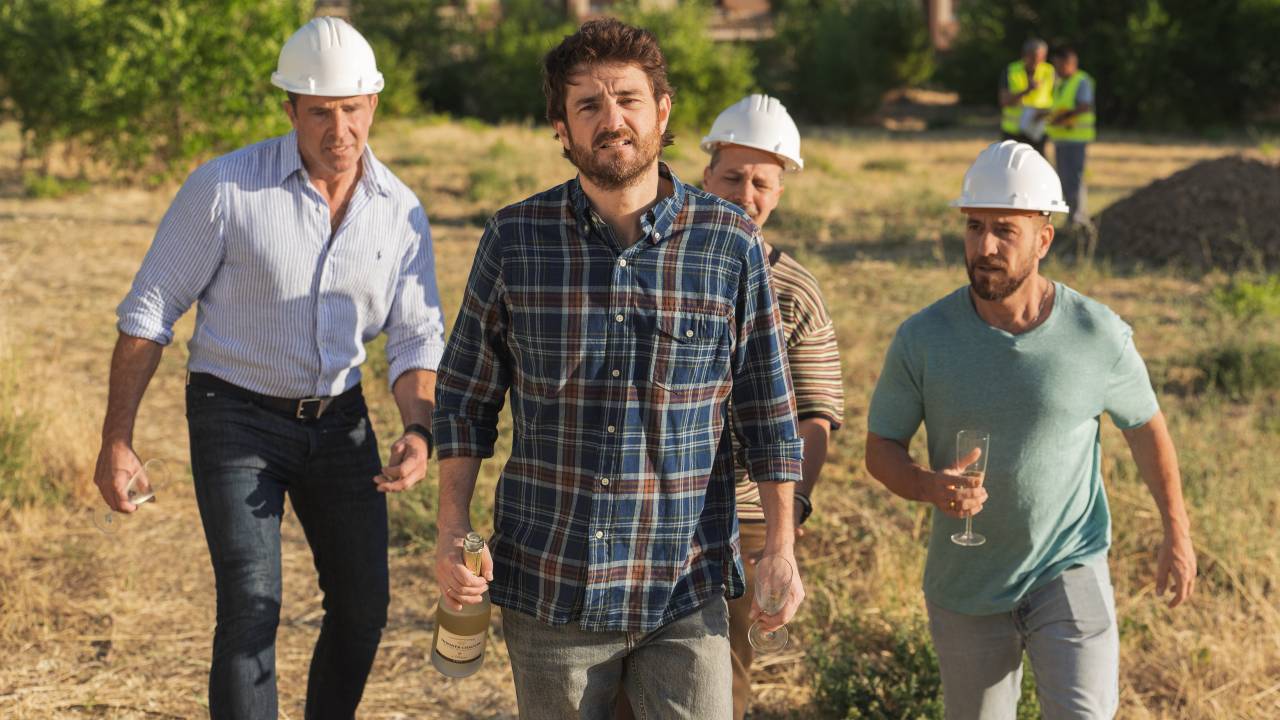
I approached Alpha Males Season 4 with genuine curiosity and some reservations. By this point, the series has already defined its voice: a light, conversational comedy that uses everyday male insecurity as both subject and fuel. What Season 4 does differently, and mostly well, is narrow its focus. Putting all four men under one roof is a smart structural choice. It forces interaction, friction, and intimacy in ways earlier seasons sometimes avoided by cutting too quickly between separate lives. The result is a season that feels more cohesive, more character-driven, and occasionally more honest than before.
The central quartet—Pedro, Luis, Raúl, and Santi—are all at different stages of emotional exhaustion, and the season wisely leans into that. Pedro’s sudden professional collapse is the clearest example. Watching him lose the status that once defined him is uncomfortable in a way the show handles with restraint. The jokes land, but they never completely undercut the reality of what it means to feel obsolete in your forties. His arc is one of the strongest of the season because it allows space for insecurity without turning him into a punchline. There is a quietness to some of his scenes that the show previously avoided, and it works.
Luis continues to be the emotional anchor. His storyline around parenting, partnership, and the slow erosion of personal time is deeply familiar, and the writing treats it with respect. What I appreciated most is that the show does not frame him as either a hero or a victim. He is tired, sometimes selfish, often well-intentioned, and frequently wrong. That balance makes his relationship dynamics feel grounded rather than ideological. The humor here comes from recognition, not exaggeration, which is where the series is at its best.
Raúl and Santi bring much of the overt comedy, though this is also where the season occasionally stumbles. Raúl’s resistance to maturity remains funny, but it is also the most repetitive element of the season. There are moments when it feels like the character is circling the same emotional block without making meaningful progress. The jokes still work, but the insight behind them feels thinner than before. Santi’s storyline fares slightly better, especially when the show allows him moments of genuine self-reflection, but even here, there is a sense of hesitation. The season flirts with deeper growth for him, then pulls back just as it gets interesting.
The shared apartment setting is used effectively, especially in the first half of the season. Domestic conflicts, passive-aggressive routines, and awkward late-night conversations give the show a rhythm that feels lived-in. Some of the best scenes are simple group interactions: meals that go off the rails, casual conversations that turn unexpectedly serious, and arguments that reveal more than anyone intended. These moments capture the essence of long-term friendship in midlife—supportive, exhausting, affectionate, and occasionally suffocating.
Tonally, Season 4 is more confident than earlier entries. It trusts silence more. It allows conversations to linger. The humor is still present, but it is less frantic and less eager to underline its own points. This restraint pays off, especially when dealing with themes around masculinity, vulnerability, and shifting social expectations. The show continues to avoid lecturing. Instead, it lets discomfort play out naturally, often resolving scenes with ambiguity rather than easy conclusions.
Visually, the season remains understated, which suits the material. The direction prioritizes performance over style, and while there is nothing particularly striking about the cinematography, it never distracts. The camera stays close to the characters, reinforcing the sense of emotional proximity. Editing is mostly tight, though there are episodes where the pacing slackens slightly, especially when secondary subplots fail to connect meaningfully to the main narrative.
One of the season’s weaker points is its occasional reliance on side characters who feel more functional than fully realized. While some provide welcome contrast and new energy, others exist mainly to trigger reactions from the core group. These interactions can be funny, but they sometimes feel disposable, as if the show is filling time rather than advancing character development. When episodes lean too heavily on these detours, momentum suffers.
Despite these issues, the final stretch of the season is quietly effective. Rather than pushing for dramatic resolutions, the show opts for emotional recalibration. Not everything is fixed. Not everyone changes. That choice feels honest, even if it leaves certain arcs feeling slightly undercooked. The ending does not deliver a big catharsis, but it does offer clarity about where each character stands, and that restraint aligns well with the series’ overall philosophy.
What ultimately makes Season 4 work is its understanding of tone. It knows when to be funny and when to step back. It recognizes that midlife is not a crisis in a single direction but a series of small reckonings that accumulate over time. The show does not pretend to have answers, and it does not rush its characters toward transformation for the sake of narrative satisfaction.
Season 4 is not flawless. It repeats itself at times, hesitates when it should commit, and occasionally settles for familiar beats. But it is also thoughtful, well-acted, and increasingly comfortable with emotional complexity. As a continuation of Alpha Males, it feels earned rather than obligatory. I finished the season entertained, occasionally frustrated, but largely appreciative of how far these characters have come—and how realistically the show acknowledges that growth is rarely linear. In the end, this is a season that understands its audience and respects its characters. It may not reinvent the series, but it refines it, and that quiet confidence makes Season 4 a satisfying, if imperfect, chapter in the ongoing story.
Final Score- [7/10]
Reviewed by - Anjali Sharma
Follow @AnjaliS54769166 on Twitter
Publisher at Midgard Times



Hi Everyone, after a due consideration, we have decided that we will be open for donations to help us in managing our website. We will be greatful for any kind of amount we receive. Thanks!
— Midgard Times 🎬 (@Moviesr_net) January 4, 2026
PayPal- [email protected] pic.twitter.com/DlNNz5Npm5
Get all latest content delivered to your email a few times a month.
Bringing Pop Culture News from Every Realm, Get All the Latest Movie, TV News, Reviews & Trailers
Got Any questions? Drop an email to [email protected]



 © Copyrights MOVIESR.NET All rights reserved