

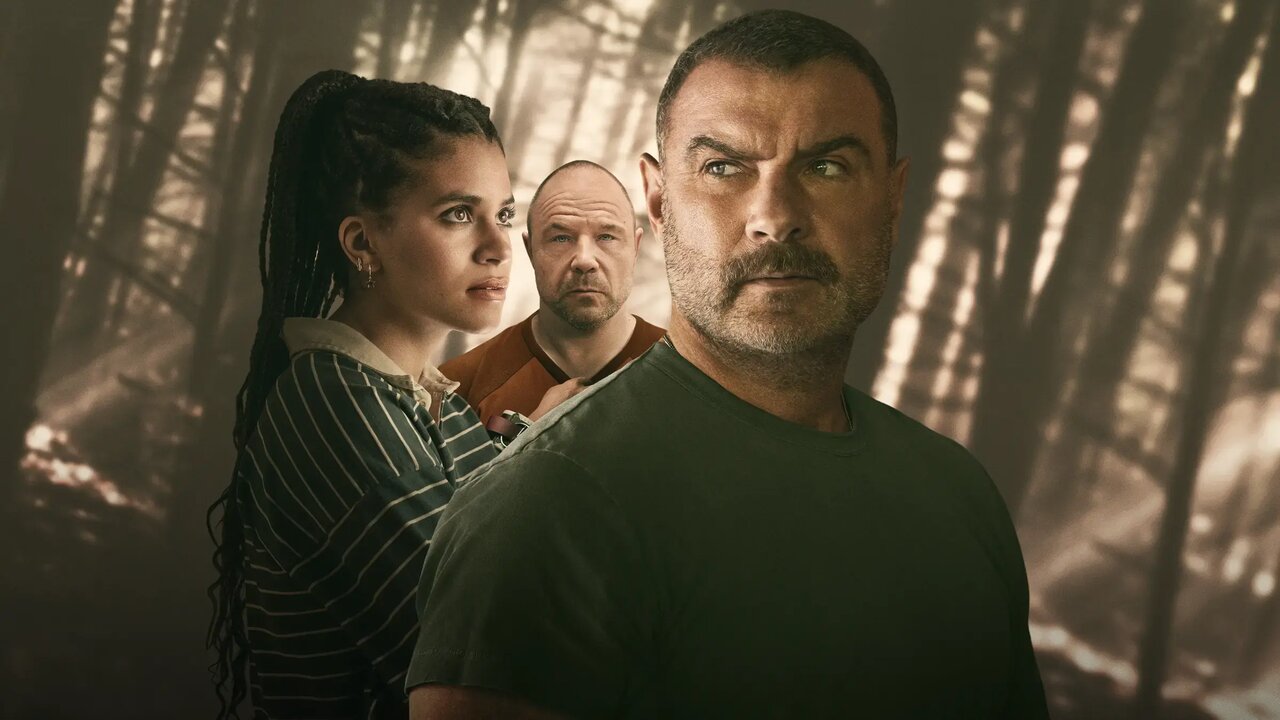
With Nocturne, I have now seen Poorna Jagannathan in three consecutive productions over the last 2-3 months. She was in Lanterns, which premiered in August, and she had a cameo appearance in the recently released third season of Nobody Wants This (which grossly underutilized her talents). I know I wrote in my review of Lanterns that I can just about watch anything starring Jagannathan and Kelly Macdonald, though I certainly didn't expect to see the former in, well, almost everything within such a short span of time. When people say that the "universe is conspiring," do they mean something like this or what? Whatever the universe or anyone else is doing, feel free to continue doing so. Jagannathan needs to be present in as many productions as possible. And in Nocturne, she becomes the source of one of the most shocking twists in the show. But before that, she effectively conveys the mental strain of being separated from her son and the professional toll of trying to find a missing girl and catch the accomplice of a serial killer. Look at her face. It's just the right amount of "tired." Jagannathan neither lets her face droop nor sighs too much. She simply does her job; she is simply...present.
Speaking of faces, Stephen Graham, as Jurek Walter, wears expressions so cold that they send chills down your spine, and on the gigantic screen of an IMAX theater, they would have given you goosebumps, too. Walter is supposedly a serial killer locked up in an asylum who, through his faux-charming tone and sweet words, manipulates the nurses assigned to look after him and administer his medication into delivering his messages to his "lawyer." Why is he supposedly a serial killer? Because he consistently denies kidnapping or killing anyone. Then again, a thief never says that he has stolen a wallet. And Walter's eerie demeanor and spooky whispers do make him look guilty as charged. On top of that, there are the letters he sends to his "lawyer," who, one can easily guess, may not be a lawyer at all. What if Walter is actually innocent, though? This would make Nocturne more complex, as it would (avoiding spoilers) turn into a show about how personal prejudices and blind spots can yield a kind of injustice that changes the very nature of a person. That's some interesting stuff.
Is Nocturne that interesting a show, then? I cannot say because only seven episodes out of ten were provided. Whether Nocturne will turn out to be a profound drama or a routine thriller is something only time will tell. For now, all I can say is that it's not always absorbing or thrilling to watch. It spends much of its time dutifully setting the table. Every character is moved across the board to make them fit into their designated positions. Saga (Zazie Beetz) is put in the asylum. Karl (Rory Culkin) is made to befriend Walter. Nathan (Gary Carr), a cop, is put on surveillance duty, while Jonah (Liev Schreiber) and Quinn (Jagannathan) pursue leads and conduct their investigation on the ground, trying to piece together the plot. You look at Karl and you see a sad, lonely, exhausted man who doesn't seem to have any friends. Given that he does manage to have decent, friendly relationships with his colleagues, why doesn't he try to befriend any of them? Ah, but that would puncture the careful calculations of the plot, which wants Karl to befriend only Walter so that he can be used to move the story forward and act as a convenient obstacle later.
It's easy to see the rigid purpose each character is assigned in the story, which means they come across as more functions than individuals. Hence, you don't identify with their pain or their struggles. What's more, Nocturne is severely humorless, so it's thickly laden with a "grim atmosphere" that's probably meant to be creepy and mysterious but only sends your enthusiasm to the morgue. No thought enters your head (at least while watching the show) beyond the necessary information being delivered through exposition. A good, engaging thriller emerges here and there through the conversations between Walter and Saga, as they basically deal with psychological manipulation. Yet Nocturne doesn't fully exploit these scenes to take them to great personal and dramatic heights, which it could have done by showing or talking about the mental effects of drugs and isolation and the asylum environment on Saga. She does have a tragic past, which she wields to get close to Walter. What Saga goes through internally by "reopening the wounds" is something the series dismayingly leaves out.
There was an opportunity here to dive into the hectic workloads of nurses and the physical abuse of female patients by male staff members, all of which could have presented a portrait of a broken medical system. Nocturne, though, converts it all into mere decorations or devices to move the story from one point to another. Creator Rowan Joffé and showrunner John Hlavin don't concern themselves with the deeper implications of the text. For them, the text is all about keeping certain secrets from the audience only to dispense them carefully to build towards an explosion. Its narrow aims result in a narrow range of emotions and narrowly conceived performances that, despite all the talent, do little more than adorn the text. The creators want to construct a slow-burn narrative that gradually develops suspense and detonates in Episode 7. However, the directors behind each of the seven episodes never really make you feel tense. They remain tethered to the details of the script, approaching them with a sense of duty and obligation, which is why the images come across as plain and merely informational. There is one notable exception, however, and it comes when Jonah enters a room in a basement and, for a millisecond, imagines seeing two figures. For a brief moment, we see the show through the eyes of a character. It's a good shot. The framing, the sudden shift to a subjective perspective, the brief destabilization of what we see—all of it makes the moment work, especially because the show has done nothing quite like this elsewhere. Jonah sees something that isn't there, and the series lets us experience that distorted perception with him. Alas, Nocturne is devoid of more such dark, shadowy illusions. It doesn't grasp you in its palms; it mistakes laying the groundwork for building momentum. Nocturne, in the end, is an exercise in patience, endurance, and diminishing returns.
Final Score - [4.5/10]
Reviewed by - Vikas Yadav
Follow @vikasonorous on Twitter
Publisher at Midgard Times
Note: Seven episodes are screened for this review.
Premiere Date: October 30, 2026, on Apple TV+, with the first two episodes followed by a new episode every Friday.




Hi Everyone, after a due consideration, we have decided that we will be open for donations to help us in managing our website. We will be greatful for any kind of amount we receive. Thanks!
— Midgard Times 🎬 (@Moviesr_net) January 4, 2026
PayPal- [email protected] pic.twitter.com/DlNNz5Npm5
Get all latest content delivered to your email a few times a month.
Bringing Pop Culture News from Every Realm, Get All the Latest Movie, TV News, Reviews & Trailers
Got Any questions? Drop an email to [email protected]



 © Copyrights MOVIESR.NET All rights reserved