

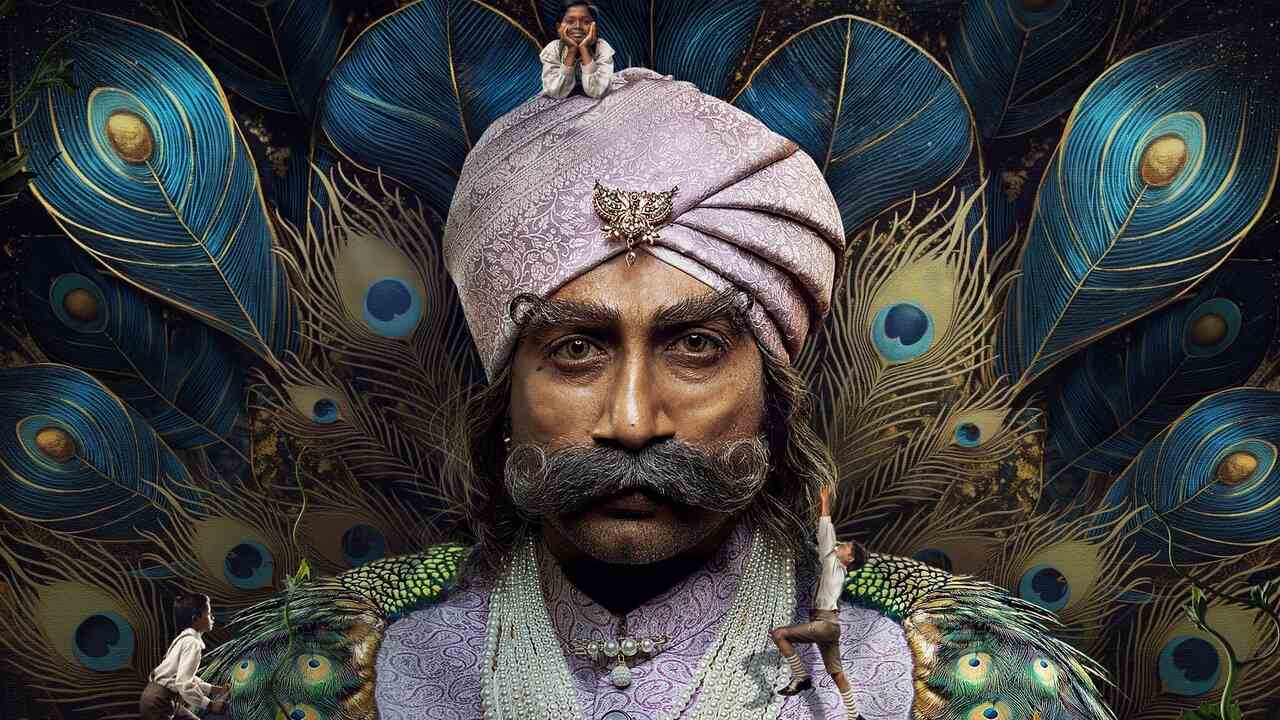
With Rao Bahadur, Venkatesh Maha takes a bold leap as a filmmaker, and witnessing such an evolution is one of the great pleasures of watching films and practicing film criticism. The movie, which tackles the hollowness of a fading aristocracy, is undoubtedly visually inventive, but equal attention should also be paid to the unique tone Maha builds. By combining disparate elements of dark comedy, magical realism, emotional drama, romance, and mystery, Maha creates a dense, hectic experience that shifts between its various intermingling moods on its own terms. You are never sure which element will pop up in the next scene. Sometimes the change is almost abrupt; sometimes you are guided by the hands of the narrative. Rao Bahadur is tonally unpredictable, and Maha doesn't "smooth things out" to ease the audience in. For many, this might feel like tonal whiplash, forcing them to disengage. Others, however, who are willing to try something new and are tired of regular mainstream detritus will find their patience richly rewarded. Whatever your state of mind, Rao Bahadur operates according to its own rules and logic and is much, much better for it.
It's also worth noting that this tone is not Maha's way of being "pretentious." The choice makes sense because the film deals with the empty pompousness of those claiming to have royal blood. The absurdity of the tone is matched by the absurdity of Bhuvanam Ramappa Rao Bahadur (a terrifically theatrical Satyadev), who speaks of the Kauravas and Pandavas as though they are his contemporaries and "talks" to figures like Sanjay Gandhi. When Maha presents us with Ramappa's POV, we see the walls rotating around him. His dingy, decaying room seems to be an extension of him. Ramappa says that his story is so vast that it could be adapted into a two-part film. He is right, considering the narrative richness and themes Maha introduces in this one-part film. Would Rao Bahadur have been better served as a two-part film—or even an eight-hour-long series? We might have become more familiar with the specifics of royal life, such as what someone like Ramappa does during international business trips (he returns from London with gifts), whether Lavana (Pranay Vaka), Ramappa's son, talks to his friends about his household issues, or if Renuka (Deepa Thomas), Ramappa's wife, has friendly relations with other royal ladies. How many aristocratic families exist in this world? Is Ramappa's the only one?
But Maha focuses on his messages with such force and clarity that what's missing from Rao Bahadur—or what else it could have been—doesn't bother you significantly. The writer-director's main target is the oppressive nature of social conditioning, which he conveys with superb creativity through a song-and-dance sequence where Ramappa's brain is literally opened and altered from within. It's a giddy moment, one that forcefully asserts a relevant point. Again, a series might have had room to show how a young Ramappa acquired his "progressive" viewpoints from the shallow influences of his urban surroundings, making them thin and fragile, which is why he becomes psychologically vulnerable after both his father's death and Renuka's rejection of his marriage proposal, leaving him heartbroken and depressed. Nonetheless, Maha gets his points across efficiently and imaginatively with images like the one where Ramappa is trapped in a golden cage with a woman and the dance performance in which he is internally wired to follow the customs of his ancestors. Ramappa, in a way, undergoes a "regressive brain surgery." Or call it brainwashing.
This is just one aspect of the movie. Maha deals with caste, skin color, domestic violence, and the burden parents place on their children by saddling them with a grand name that might end up clashing with their real personality. Ramappa, for instance, inherits the surname "Rao Bahadur" from his ancestors, yet he's terrified of water. Some people look at palaces, castles, lavish bungalows, or luxurious high-rise apartments and enviously wish they had all that wealth, that they had been born into such a wealthy family. Rao Bahadur asserts that there is nothing enviable about such people's lives—they are trapped in a gilded cage. Ramappa could have gone on to live like a free bird had he not belonged to a family of aristocrats. This means Renuka would have been spared the pain of losing her child as well as that of self-imposed isolation (who's to say she wouldn't have become a strong, independent single mother?). Lavana, too, might have ended up becoming a cricketer.
The film ultimately (and implicitly) argues that it is good news that the age of aristocracy is over and democracy has taken its place. The transfer of power from one or a few individuals to the masses has expanded personal autonomy, and those who enjoy such freedom should not envy people living—or who once lived—in castles. That royal age was largely governed by the egos of men—an ego that, in Rao Bahadur, is exposed for its vanity, emptiness, and meaninglessness. Maha pokes fun at both patriarchy and the pomposity of noblemen. In the process, he also reveals that there is no merit in following blind, age-old traditions. Tradition comes with rigid rules that stifle one's independence. Those ancestors who brainwash Ramappa can easily be replaced with your own parents—parents who force their children to walk down paths chosen for them, whether in career or marriage. What, you thought Rao Bahadur was only about aristocrats? Look closely, and you'll discover that Maha has created something resonant and universal. The filmmaker wants you to introspect. Don't be surprised if you notice recognizable reflections of your own reality in his baronial mirror.
Written by - Vikas Yadav
Follow @vikasonorous on Twitter
Publisher at Midgard Times
Hi Everyone, after a due consideration, we have decided that we will be open for donations to help us in managing our website. We will be greatful for any kind of amount we receive. Thanks!
— Midgard Times 🎬 (@Moviesr_net) January 4, 2026
PayPal- [email protected] pic.twitter.com/DlNNz5Npm5
Get all latest content delivered to your email a few times a month.
Bringing Pop Culture News from Every Realm, Get All the Latest Movie, TV News, Reviews & Trailers
Got Any questions? Drop an email to [email protected]


 © Copyrights MOVIESR.NET All rights reserved