


I have a soft spot for romantic comedies about couples who are already together. The courtship is usually the easy part. Two people meet, discover an attraction, misunderstand each other for a while, and eventually decide that life would be better together. Then the credits roll, conveniently before they have to discuss anything genuinely difficult. You, Me, Us begins much further down the road. Simone and Lucia already love each other. They have their routines, their private jokes and the sort of familiarity that makes a relationship feel lived-in. Unfortunately, they also have rather different ideas about what their future should look like. Love has carried them this far. Whether it can carry them through the next decision is another matter.
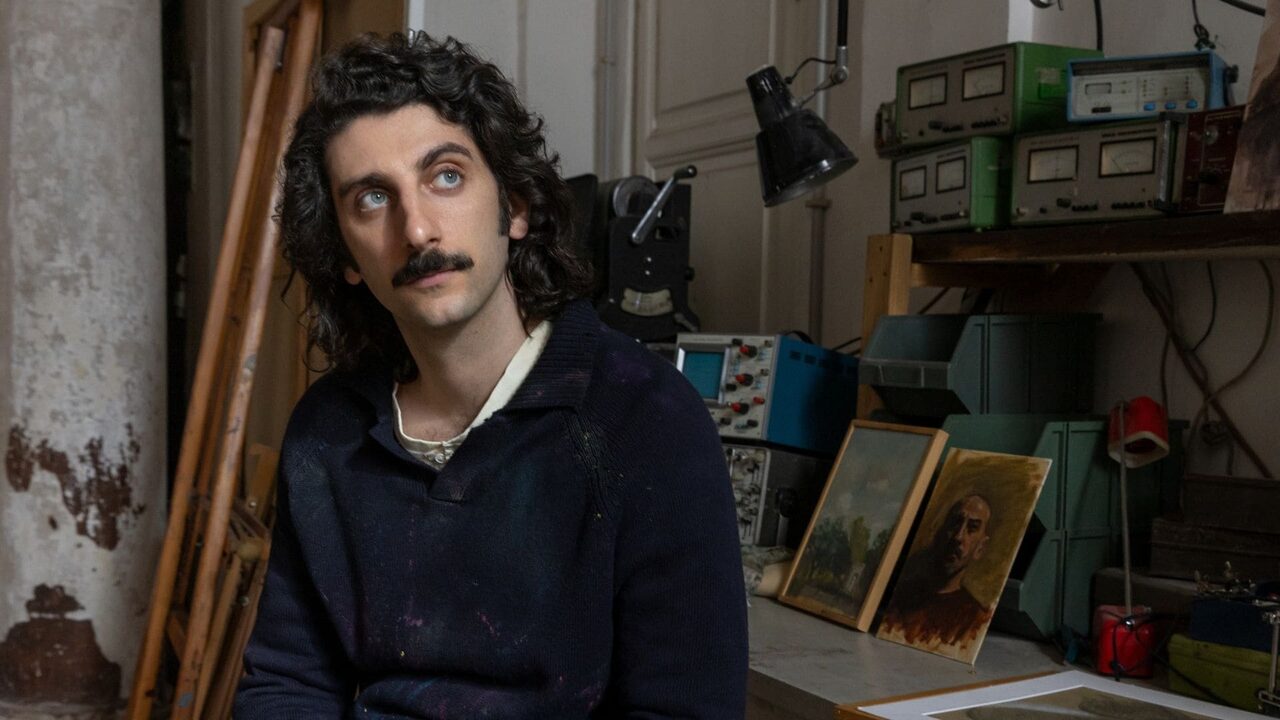
Directed by Daniele Luchetti, the Italian film stars Elio Germano as Simone and Maria Chiara Giannetta as Lucia. Simone is methodical, attached to family traditions and keen on becoming a father. Lucia values her independence and has long been opposed to motherhood. Their differences have never prevented them from loving each other, but the decision to adopt a child brings those differences into sharper focus. The screenplay, written by Enrico Audenino, Davide Lantieri and Serena Patrignanelli with Luchetti, takes this familiar relationship-comedy setup into more difficult territory.
What interested me most was Lucia's position. Cinema has a habit of treating a woman who doesn't want children as someone who hasn't yet met the right man, experienced the right kind of love, or reached the appropriate stage of emotional maturity. The story usually resolves her reluctance by revealing that she was mistaken about herself all along. It is a frustrating convention, particularly when the character's decision has been presented as a considered part of who she is.
Lucia has a partner who wants children, and that makes her situation more complicated than a simple declaration of independence. She cannot pretend Simone's desire doesn't matter to him. But he cannot assume that his desire should eventually become hers, either. Their disagreement concerns the shape of their future, and there is no compromise that can make the underlying difference disappear entirely.
I wish more romantic comedies were willing to sit with that discomfort. Couples can love each other deeply and still want incompatible things. Sometimes the conflict comes from a misunderstanding that can be resolved through an honest conversation. Sometimes the conversation simply establishes that the disagreement is real. The second possibility is less reassuring, but it is often closer to life.
Adoption makes the question especially difficult because it introduces a third person's future into the couple's deliberations. Decisions about holidays, finances, or where to live can be renegotiated. Becoming a parent carries consequences that cannot be treated as a trial run. A child needs adults who are prepared to take responsibility for them, not two people who hope the experience will eventually settle their differences.
This is where I wanted the film to be particularly careful. Adoption should not become a sentimental device for repairing a relationship. A child is not a reward for a couple who have finally learned to compromise, nor should the process be treated as an adventure whose principal purpose is to help adults discover something about themselves. Simone and Lucia's feelings matter, but so does the question of whether they genuinely agree about the responsibilities they are considering taking on.
The premise gives Luchetti room to explore that tension through comedy. Simone and Lucia are described as having a relationship sustained by constant negotiations over practically everything, with disagreements regularly giving way to affection and complicity. Anyone who has spent enough time with another person will recognise the dynamic. A relationship can contain arguments that are completely trivial to an outsider and enormously important to the people having them. Who makes the plans? Whose family gets priority? How much change is acceptable before the life you've built together stops feeling like your own? Those small negotiations can be funny because the people involved know each other so well. They also reveal how much a couple has come to depend on familiar arrangements. When a decision arrives that cannot be resolved through their usual back-and-forth, the comedy has somewhere more interesting to go.
The pairing is one of the film's most promising elements. Germano and Giannetta bring different energies to the central relationship, and the premise gives them a reason to play affection and frustration alongside each other. The film depends on the audience believing that Simone and Lucia have something worth preserving. Without that foundation, their disagreements would be little more than an extended argument about whether they should stay together.
There is a distinctly Italian quality to the film's interest in family celebrations, obligations, and the social rituals surrounding adulthood. These traditions can provide comfort and continuity, but they can also make certain life choices feel compulsory. A person who doesn't want children may find that the decision becomes a public discussion, with relatives and acquaintances treating it as something they are entitled to question. The pressure rarely arrives as a direct command. It tends to emerge through jokes, concerned questions, and the assumption that everyone will eventually want the same things.
The title, Noi, un po' meglio, translates roughly as "Us, a Little Better." I like the modesty of that idea. It suggests a couple trying to improve rather than transform themselves into ideal partners. There is something recognisable about wanting to become a little more patient, a little more honest or a little less defensive for the person you love. Nobody enters a relationship with a complete understanding of themselves, and living with another person has a way of exposing the habits you would prefer not to examine. But improvement has limits. A person can become better at listening without changing their mind. They can understand a partner's position and still disagree with it. In an adoption story, that distinction is essential. The couple cannot simply become more accommodating and assume that the central problem has been solved.
The film's sentimental-comedy approach is appealing, though I found myself wanting it to push further into the messier implications of its own premise. The conflict between Simone and Lucia deserves more than the familiar suggestion that love can help people overcome their differences. Some differences can be worked through; others concern the kind of life a person wants to live. Treating them as interchangeable problems risks making a serious decision feel like another obstacle in a romantic plot.
I came away more interested in the questions the film raises than in the certainty of its romantic conclusions. That is partly a compliment and partly a frustration. The premise deserves a screenplay willing to acknowledge that love can survive a disagreement without necessarily resolving it, and that a couple's future cannot be decided by whichever partner makes the more emotionally persuasive argument.
Final Score- [7/10]
Reviewed by - Anjali Sharma
Follow @AnjaliS54769166 on Twitter
Publisher at Midgard Times




Hi Everyone, after a due consideration, we have decided that we will be open for donations to help us in managing our website. We will be greatful for any kind of amount we receive. Thanks!
— Midgard Times 🎬 (@Moviesr_net) January 4, 2026
PayPal- [email protected] pic.twitter.com/DlNNz5Npm5
Get all latest content delivered to your email a few times a month.
Bringing Pop Culture News from Every Realm, Get All the Latest Movie, TV News, Reviews & Trailers
Got Any questions? Drop an email to [email protected]


 © Copyrights MOVIESR.NET All rights reserved