


There is a particular kind of misunderstanding that occurs between parents and their grown-up children. The children believe they are doing everything right: working hard, earning well, providing financial security, and making sacrifices their parents may never fully understand. The parents, meanwhile, may be perfectly happy with the life they have built and rather less enthusiastic about having it redesigned. Dilwali Diwali, Netflix's festive family drama, finds its story in this familiar divide. It is a simple premise with an appealing emotional core, even if the film does not always find enough depth to make its observations memorable.
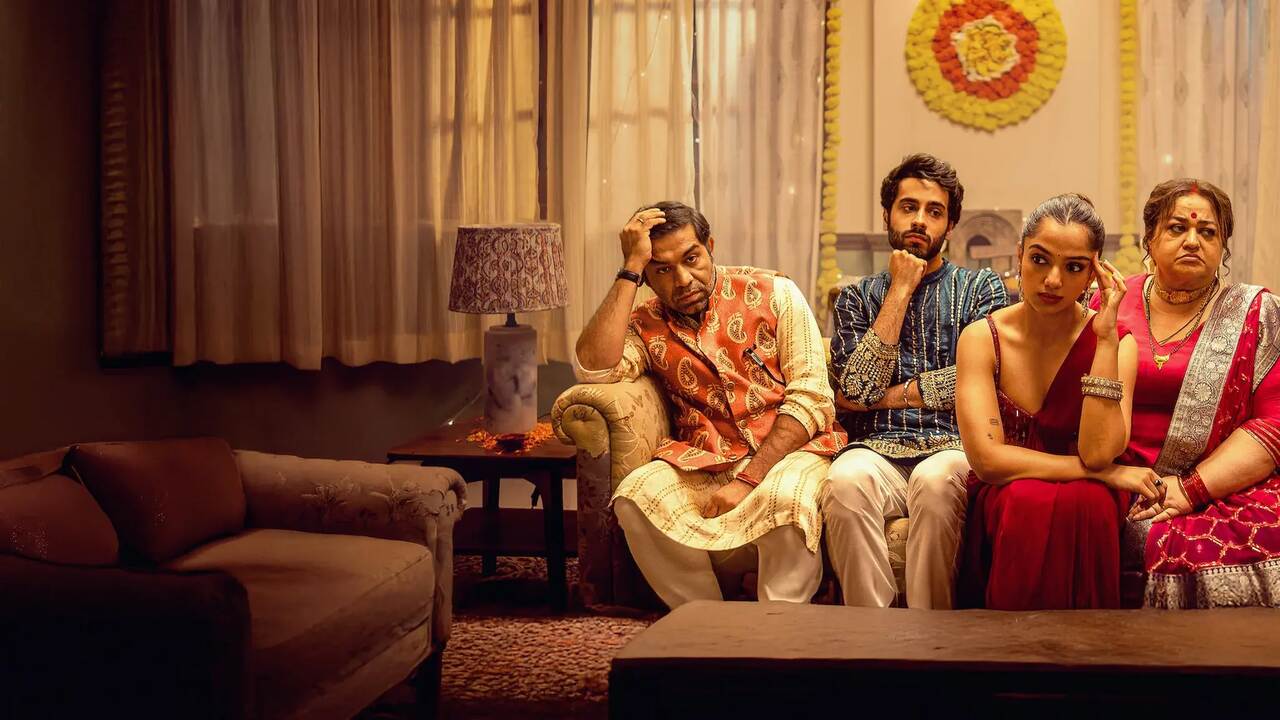
Having bought his middle-class parents a luxurious new apartment, Ansh Sikka (Mihir Ahuja) expects his gesture to make their lives more comfortable. But the family reunion does not go quite as planned. His parents have their own understanding of what makes a home, and the new address does little to erase their attachment to the familiar surroundings and routines they have left behind. As the family comes together for Diwali, differences in their expectations gradually surface.
Ansh's intentions are easy to understand. He has spent years working away from home, presumably with the belief that financial success will allow him to give his parents a more comfortable life. The new apartment represents more than an expensive purchase. It is an expression of affection, responsibility and perhaps a desire to make his years away feel worthwhile. For many young Indians living and working outside their hometowns, this sentiment will be recognisable.
But the film is equally interested in the parents' perspective. A house is not simply a collection of rooms, modern facilities and a desirable address. It accumulates memories through ordinary routines, familiar neighbours and the relationships people develop with their surroundings. Moving into a better apartment may improve one's material circumstances without necessarily improving one's emotional well-being. The distinction sounds obvious, but it is one that adult children can overlook when they become preoccupied with providing what they believe their parents need.
This is where Dilwali Diwali finds its most relatable material. It understands that family disagreements often emerge from competing expressions of love. Ansh wants to give his parents something better; his parents want their son to understand that they have not necessarily been waiting for the life he has imagined for them. Neither position requires a villain. The conflict comes from the gap between intention and understanding.
Unfortunately, the film does not explore that gap with quite enough complexity. Its premise could have supported a more layered examination of migration, class aspirations, and the changing relationship between parents and children. Ansh's years abroad are an important part of his identity, while his parents' attachment to their old life reflects a different relationship with security and belonging. There is plenty to examine in the distance between these experiences. The film touches on the subject without developing all its possibilities.
The short runtime of approximately an hour also works against it. A family drama needs time to establish the relationships that give its conflicts emotional significance. Here, the central disagreement is immediately understandable, but the characters could have benefited from more room to become individuals beyond their positions in the argument. The result is a story that feels pleasant and accessible, though occasionally too neat for the subject it is addressing.
The performances help considerably. Manoj Pahwa brings an ease and naturalness to the role of Ansh's father, giving the character a sense of familiarity that suits the film's domestic setting. Neelu Kohli complements him as Sukhmani, representing the emotional attachment to a home that cannot be measured by its market value. Their performances give the parents' perspective credibility without turning the conflict into a simple rejection of their son's generosity.
Mihir Ahuja has the more complicated task of playing Ansh, a character whose good intentions do not necessarily make him right. His predicament is recognisable: he wants his efforts to be appreciated, but he must also confront the possibility that he has mistaken his own idea of a better life for his parents' idea of happiness. Aurra Bhatnagar adds another presence to the family dynamic as Mahi. The ensemble is comfortable together, and the film benefits from performers who understand the understated humour that can emerge from familiar family interactions.
The Diwali setting is an appropriate choice. Festivals often bring families together under the assumption that shared traditions will temporarily smooth over their differences. In reality, these gatherings can make disagreements more visible. Everyone returns with expectations about how the celebration should unfold, and even small differences can become emotionally charged. The film uses this backdrop to reinforce its central theme, although it does not make particularly inventive use of the festive setting.
What ultimately holds Dilwali Diwali back is its reluctance to push beyond a message that is already apparent quite early. The difference between a house and a home is worth exploring, but the film occasionally treats that distinction as though recognising it is enough to resolve the underlying conflict. A more engaging version of this story might have spent longer examining what Ansh has sacrificed to achieve financial success, what his parents fear losing, and how both sides might learn to accommodate the other's understanding of a fulfilling life.
Still, something is refreshing about a family film that does not need an elaborate misunderstanding or an outrageous crisis to bring its characters together. Dilwali Diwali is built around an ordinary disagreement, and its emotional foundation is sincere. It may not offer particularly fresh insights into generational differences, but it understands the affection that often sits beneath them.
The film is an easy festive watch, especially for viewers who recognise the familiar negotiations between parents who want to hold on to their way of life and children who want to give them something more. It could have been sharper, more layered and considerably more ambitious. Even so, its central observation holds: providing for family and understanding family are two very different things. A new apartment may be a generous gift. Making someone feel at home requires knowing what they might actually miss.
Final Score- [6/10]
Reviewed by - Anjali Sharma
Follow @AnjaliS54769166 on Twitter
Publisher at Midgard Times




Hi Everyone, after a due consideration, we have decided that we will be open for donations to help us in managing our website. We will be greatful for any kind of amount we receive. Thanks!
— Midgard Times 🎬 (@Moviesr_net) January 4, 2026
PayPal- [email protected] pic.twitter.com/DlNNz5Npm5
Get all latest content delivered to your email a few times a month.
Bringing Pop Culture News from Every Realm, Get All the Latest Movie, TV News, Reviews & Trailers
Got Any questions? Drop an email to [email protected]


 © Copyrights MOVIESR.NET All rights reserved