

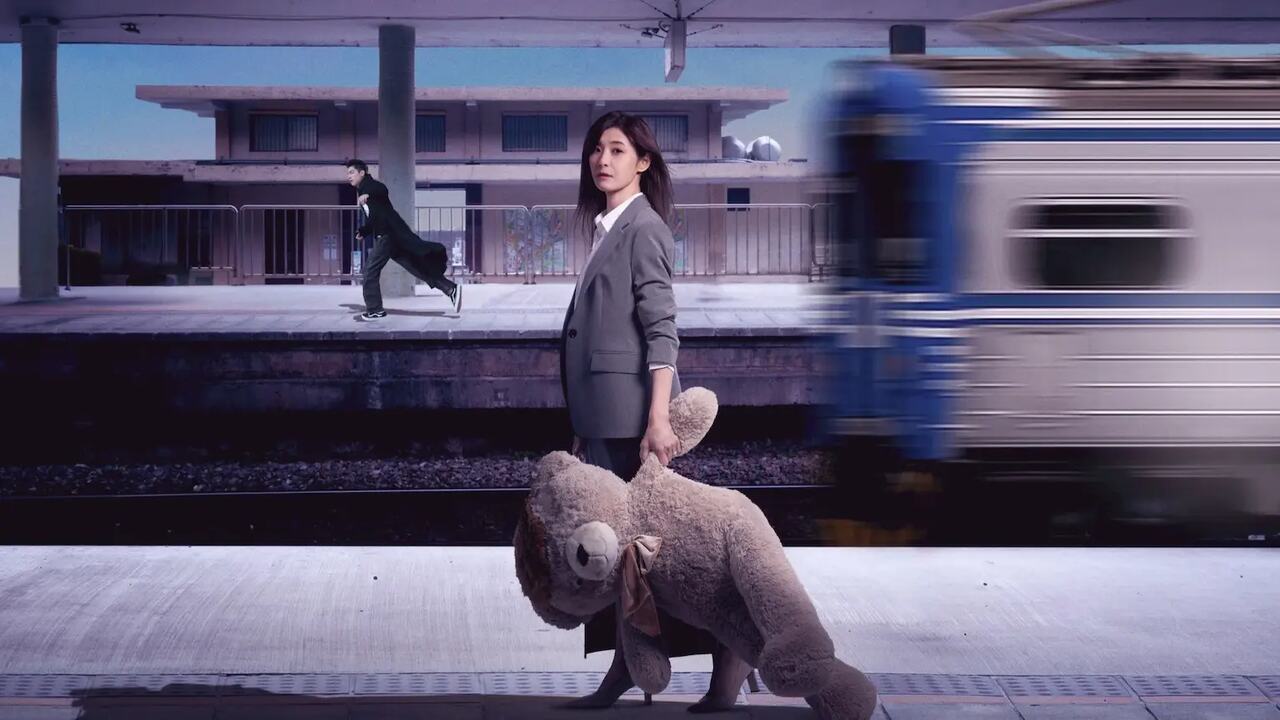
One of the easiest traps a series like Dogman could have fallen into is treating middle age as a punchline. Thankfully, it mostly avoids that. Instead, Dogman approaches its protagonist with a mixture of sympathy, frustration, and occasional mockery. The show clearly understands that Zhou Kejie is responsible for many of his own problems. He's arrogant, emotionally immature, self-absorbed, and spends large portions of the series acting like a man who believes nostalgia should count as a personality trait. At the same time, the writers never reduce him to a joke. Beneath all the bad decisions is somebody genuinely struggling with regret. That's what gives the show its emotional weight.
Joseph Chang is the biggest reason the series works. Kejie could have easily become exhausting, especially considering how much time the story spends inside his perspective. Instead, Chang somehow makes him compelling even when he's being completely unreasonable. He captures the specific sadness of someone who keeps looking backward because looking forward feels disappointing. The performance is funny when it needs to be.
There are moments where Kejie isn't really mourning lost fame. He's mourning the version of himself he thought he was going to become. That idea sits at the center of the entire series. Tarcy Su is equally strong as Chen Li-hsuan. In lesser hands, Li-hsuan could have become the stereotypical long-suffering wife whose primary role is reacting to her husband's nonsense. Thankfully, the show gives her considerably more depth than that. One of the smartest choices the writers make is allowing her frustration to feel justified. She isn't simply standing in the way of Kejie's happiness. In many ways, she's spent years cleaning up after his inability to grow up. The marriage itself becomes far more interesting than I expected.
Most time-travel or second-chance stories focus heavily on the fantasy element. Dogman occasionally uses that structure, but it's far more interested in the realities of long-term relationships. The series repeatedly asks whether people are actually in love with their partners or merely in love with who those partners used to be. Berant Zhu deserves credit as the younger version of Kejie. The casting works because he doesn't simply imitate Joseph Chang. Instead, he captures the confidence, optimism, and self-belief that the older Kejie has lost over the years. Watching the contrast between the two versions becomes one of the show's strongest devices.
The series is also refreshingly honest about celebrity culture. Kejie isn't portrayed as some tragic genius who was unfairly abandoned by the world. The show repeatedly suggests that part of his downfall comes from his own ego. He became obsessed with maintaining an image instead of maintaining relationships. That's a theme that feels particularly relevant today, when so much of modern life revolves around curating versions of ourselves for public consumption. The social commentary isn't especially subtle, but it generally works.
What impressed me most is how the series handles masculinity. A lot of stories about middle-aged men confronting regret eventually become exercises in self-pity. Dogman avoids that trap by refusing to fully excuse its protagonist. The show acknowledges Kejie's pain without pretending that pain automatically makes him right. Too often, male midlife-crisis narratives become elaborate explanations for bad behavior. Here, the writing consistently reminds viewers that regret and accountability can coexist. The fantasy elements are where my feelings become more mixed.
But they're rarely the most interesting aspect of the story. The magical premise often feels like a narrative tool designed to facilitate conversations the characters should have had years ago. That's not necessarily a flaw, but it does mean the fantasy side of the series occasionally feels underdeveloped compared to the emotional material. I found myself caring less about how the time-bending mechanics worked and more about what they revealed. That's usually a sign the character drama is stronger than the high concept.
The pacing is also uneven at times. The strongest episodes focus tightly on Kejie, Li-hsuan, and the emotional consequences of revisiting the past. The weaker stretches occasionally wander into subplots that feel less essential. There are moments where the narrative seems unsure whether it wants to be a romantic drama, a fantasy comedy, a music industry satire, or a meditation on aging. To be fair, it often manages to be all four simultaneously. It just doesn't always balance them equally well.
The music, unsurprisingly, is a major strength. Any series centered around a former rock star needs convincing musical credibility, and Dogman generally delivers. The songs aren't merely background decoration; they're tied directly to Kejie's identity and his relationship with both success and failure. Visually, the series is attractive without being flashy. The direction focuses more on character interactions than stylistic flourishes, which proves to be the right choice. This is ultimately a story about people confronting themselves rather than a story about spectacle.
If I have one larger criticism, it's that the series occasionally becomes a little too forgiving. There were moments where I wished it pushed harder against Kejie's romanticization of the past. The show recognizes this tendency, but not always as sharply as it could have. A slightly more critical perspective might have made the story even stronger. Still, Dogman succeeds because it understands something simple but powerful: most people don't actually want to go back and relive their youth. They want to understand why they became the person they are now. That's a more mature idea than the premise initially suggests.
Dogman is an engaging blend of drama, romance, fantasy, and music elevated by excellent performances from Joseph Chang and Tarcy Su. The series offers thoughtful observations about aging, marriage, masculinity, and the dangers of living in the past, while avoiding many of the clichés that typically accompany midlife-crisis stories. Although the fantasy elements sometimes feel less compelling than the emotional core and the pacing occasionally loses focus, the show's honesty and strong character work keep it consistently engaging. It isn't a masterpiece, but it's far more thoughtful than its premise initially suggests and ultimately delivers a satisfying exploration of love, regret, and second chances.
Final Score- [7.5/10]
Reviewed by - Anjali Sharma
Follow @AnjaliS54769166 on Twitter
Publisher at Midgard Times
Hi Everyone, after a due consideration, we have decided that we will be open for donations to help us in managing our website. We will be greatful for any kind of amount we receive. Thanks!
— Midgard Times 🎬 (@Moviesr_net) January 4, 2026
PayPal- [email protected] pic.twitter.com/DlNNz5Npm5
Get all latest content delivered to your email a few times a month.
Bringing Pop Culture News from Every Realm, Get All the Latest Movie, TV News, Reviews & Trailers
Got Any questions? Drop an email to [email protected]



 © Copyrights MOVIESR.NET All rights reserved