

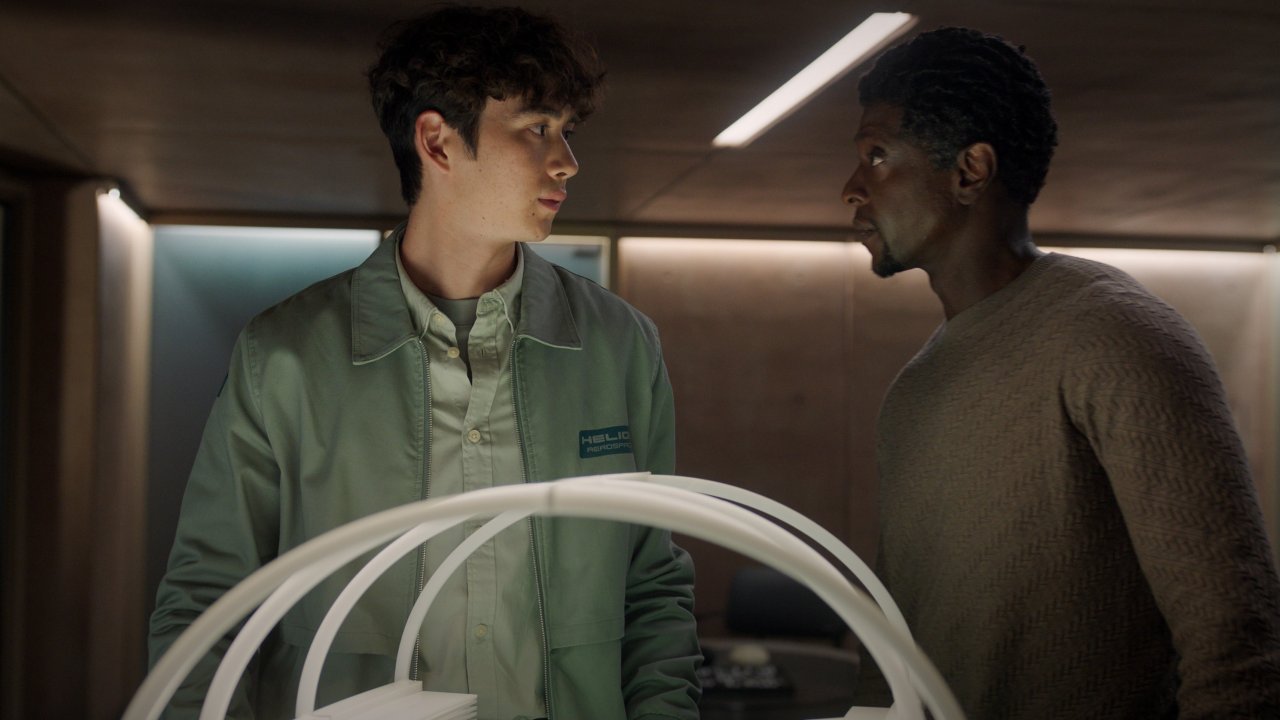
There’s something quietly confident about “Open Source,” an episode that doesn’t chase spectacle but instead leans into transition. After the emotional weight of Episode 3, which closed the chapter on Ed Baldwin in a way that felt both inevitable and deeply personal, this hour shifts the narrative center of gravity. It’s less about legacy as memory and more about legacy as action. I found myself appreciating how deliberately the episode resists the urge to rush into its next big plotline. Instead, it pauses, observes, and then nudges its characters forward in ways that feel earned.
Alex’s storyline is the spine of the episode, and it works largely because the writing gives him space to be uncertain. His decision to join Helios could have been framed as a triumphant “next generation” moment, but the show avoids that neatness. There’s hesitation in how he approaches the job, a sense that he’s stepping into something bigger than he understands. That ambiguity is effective. It mirrors what the show has always done well, placing characters inside systems that are evolving faster than they can comfortably navigate. Sean Kaufman plays this with restraint, which I think is exactly the right call. He doesn’t overstate Alex’s internal conflict; he lets it sit in his posture, in the way he listens more than he speaks.
Helios itself continues to be one of the more interesting narrative engines this season. The company has shifted from being an ambitious private player to something closer to a governing force in the Martian ecosystem, and “Open Source” leans into that ambiguity. There’s a subtle tension in how the workplace is depicted: efficient, forward-thinking, but also quietly opaque. The title of the episode starts to make more sense in this context. It isn’t just about technology or data sharing; it’s about who gets access to power and who gets to define the rules. The script doesn’t spell this out, which I appreciated. It trusts the audience to connect those dots.
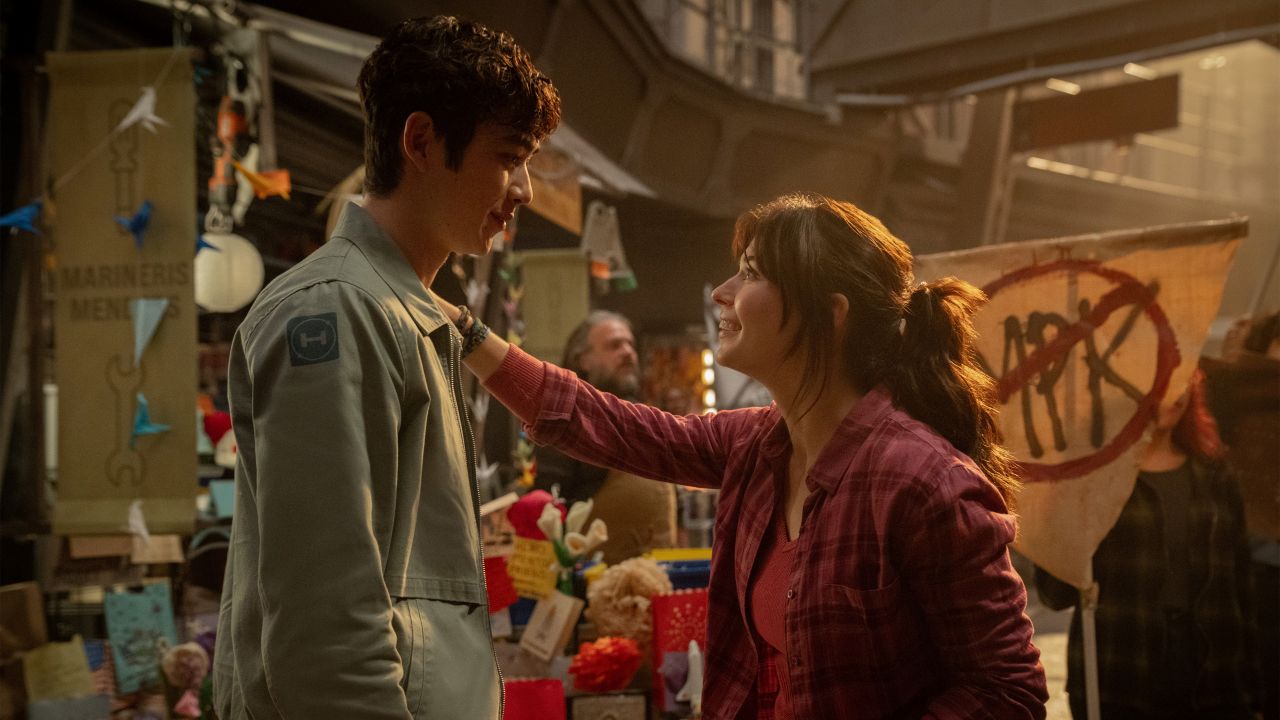
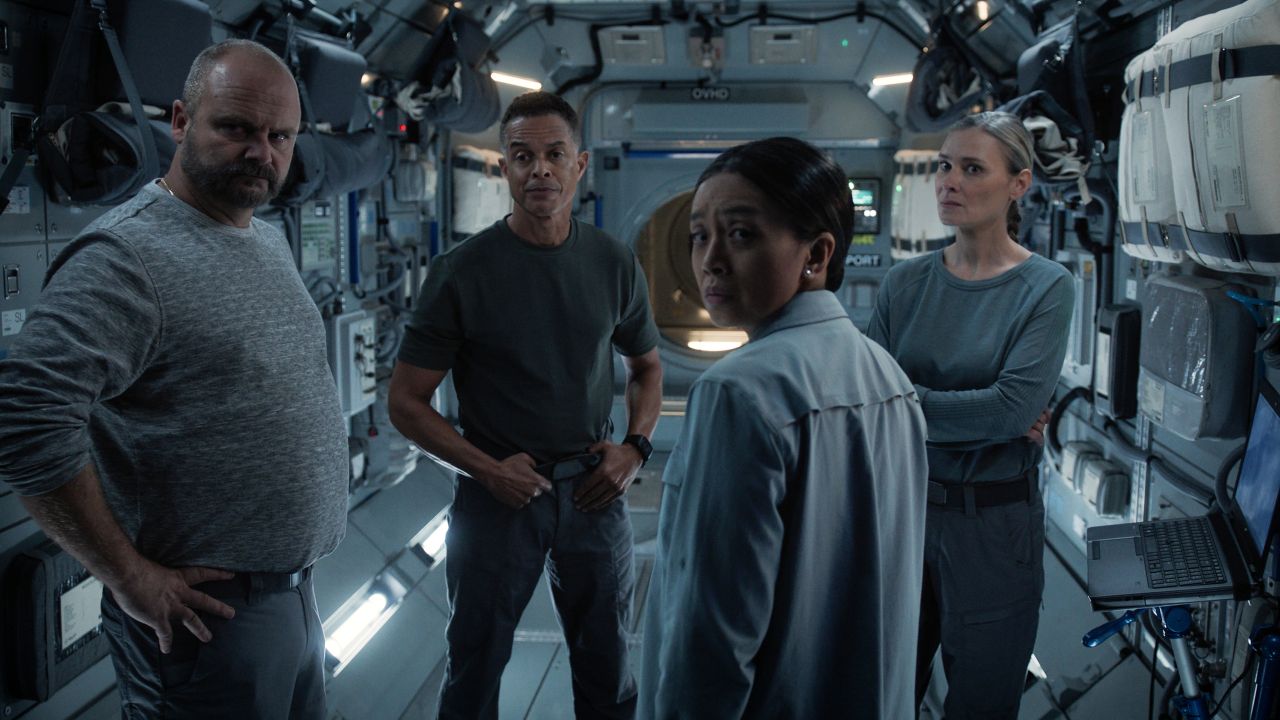
The Mars setting continues to look exceptional. The production design has reached a point where it feels lived-in rather than constructed. Interiors are cluttered in a way that suggests routine rather than crisis, and the exterior shots maintain that slightly desaturated palette that keeps the environment grounded. There’s a sequence involving Alex’s first day at Helios that stood out to me—not because of anything dramatic, but because of how procedural it is. The camera lingers just long enough on small interactions, on the rhythm of work, to make the place feel real. It’s a reminder that this show’s strength has never been just its alternate-history premise, but its attention to operational detail.
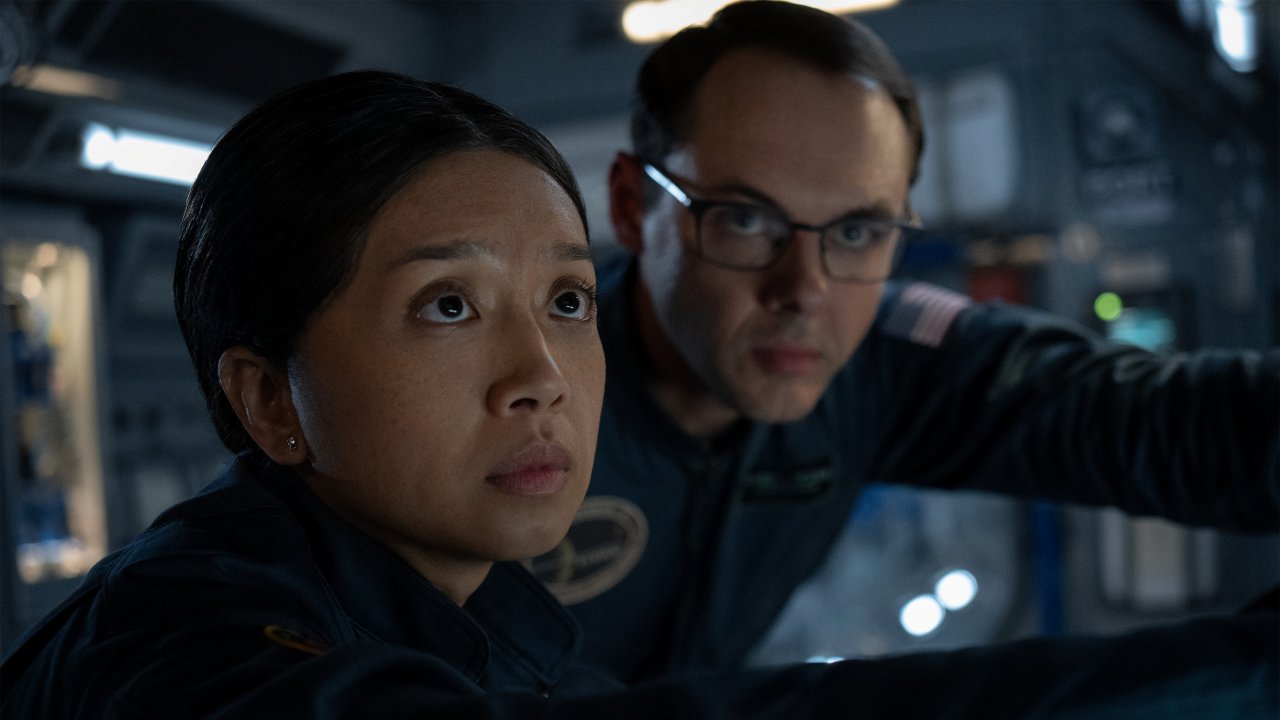
At the same time, the episode threads in the broader consequences of Ed’s absence without making it the sole focus. You can feel the vacuum he’s left behind, particularly in how other characters recalibrate their positions. There’s a subtle shift in authority dynamics, especially in scenes that deal with decision-making on Mars. No one explicitly says it, but the absence of a central figure like Ed forces everyone else to define themselves more clearly. That’s where the episode finds some of its most compelling moments—quiet exchanges that carry more weight than any major plot twist.
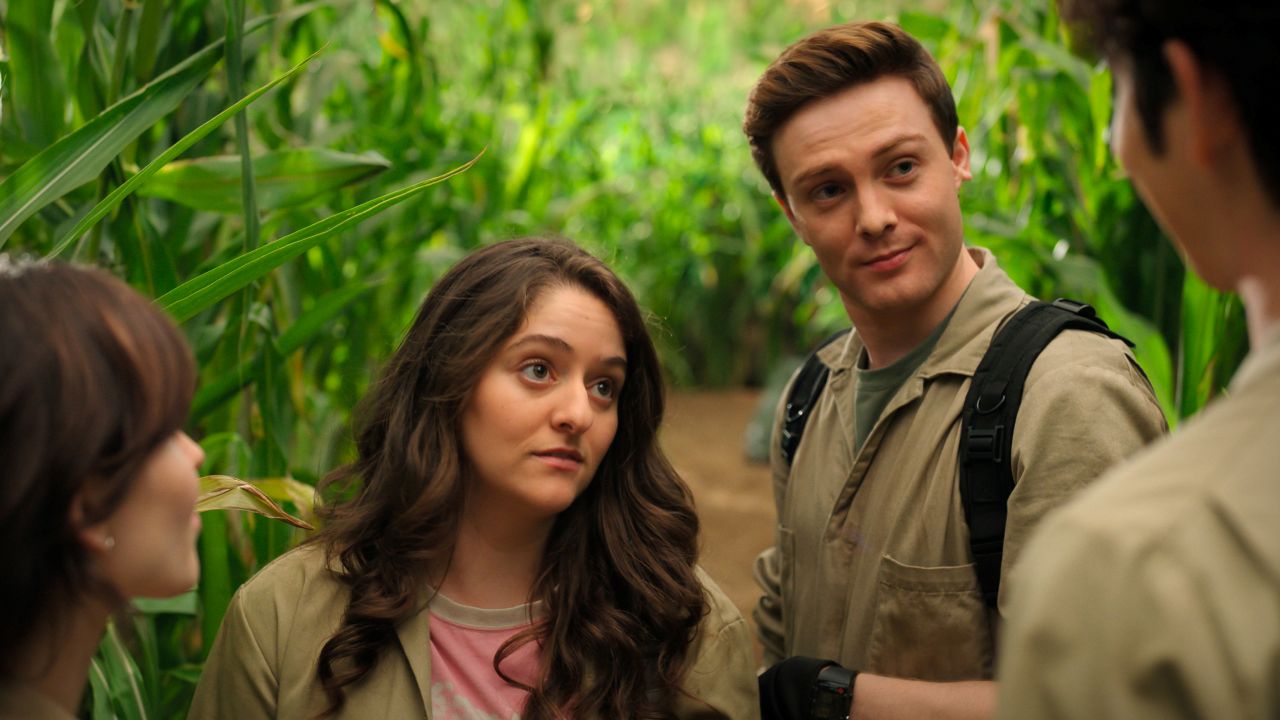
Kelly’s arc, while not as foregrounded as Alex’s, adds an emotional undercurrent that keeps the episode from feeling too procedural. There are hints of personal stakes that could develop into something more significant, and while the show doesn’t fully explore them here, it plants enough to keep me invested. The balance between personal and institutional storytelling is something For All Mankind has refined over time, and this episode is a good example of that calibration.
Where the episode stumbles slightly is in its pacing. The deliberate approach works for most of the runtime, but there are stretches where the narrative feels a bit too restrained. A couple of scenes linger longer than they need to, and the lack of a strong secondary plotline makes those moments more noticeable. Earlier seasons often paired character-driven beats with a parallel storyline that added urgency. Here, the focus is narrower, which is admirable, but it does come at the cost of momentum.
There’s also a slight sense that some of the thematic material is being held back for later episodes. The ideas around decentralization, control, and technological openness are introduced but not fully interrogated. That’s not necessarily a flaw, but it does make the episode feel more like a setup than a fully realized statement. I found myself wanting one scene that pushed those ideas a bit further, just to anchor the episode more firmly.
That said, the direction by Meera Menon is consistently strong. She understands the tone the show is aiming for and maintains it without overemphasizing any one element. The performances are allowed to breathe, and the visual language stays cohesive. There’s a confidence in how scenes are staged, particularly in group settings where power dynamics are communicated through blocking rather than dialogue. It’s subtle work, but it adds a layer of sophistication that elevates the material.
What I keep coming back to is how “Open Source” handles the idea of continuation. This is a series that has always been about progress, but it rarely treats progress as clean or uncomplicated. This episode reinforces that perspective. Alex stepping into Helios isn’t framed as a solution; it’s framed as a question. What does it mean to inherit a legacy in a world that’s constantly rewriting itself? The show doesn’t answer that, and I’m glad it doesn’t. It leaves the tension intact.
By the end, I felt like I had watched a transition rather than a turning point, and that’s not a criticism. It’s a different kind of storytelling choice, one that prioritizes continuity over shock. Not every episode needs to redefine the narrative. Sometimes it’s enough to realign it, to quietly shift the focus so that what comes next has a stronger foundation. “Open Source” may not have the immediate impact of the episodes around it, but it plays a crucial role in shaping the season’s trajectory. It’s thoughtful, well-acted, and visually precise, even if it occasionally holds its cards a little too close. More than anything, it signals that the show is comfortable evolving again, handing off its core themes to a new generation without losing sight of what made it compelling in the first place.
Final Score- [8/10]

Hi Everyone, after a due consideration, we have decided that we will be open for donations to help us in managing our website. We will be greatful for any kind of amount we receive. Thanks!
— Midgard Times 🎬 (@Moviesr_net) January 4, 2026
PayPal- [email protected] pic.twitter.com/DlNNz5Npm5
Get all latest content delivered to your email a few times a month.
Bringing Pop Culture News from Every Realm, Get All the Latest Movie, TV News, Reviews & Trailers
Got Any questions? Drop an email to [email protected]


 © Copyrights MOVIESR.NET All rights reserved