

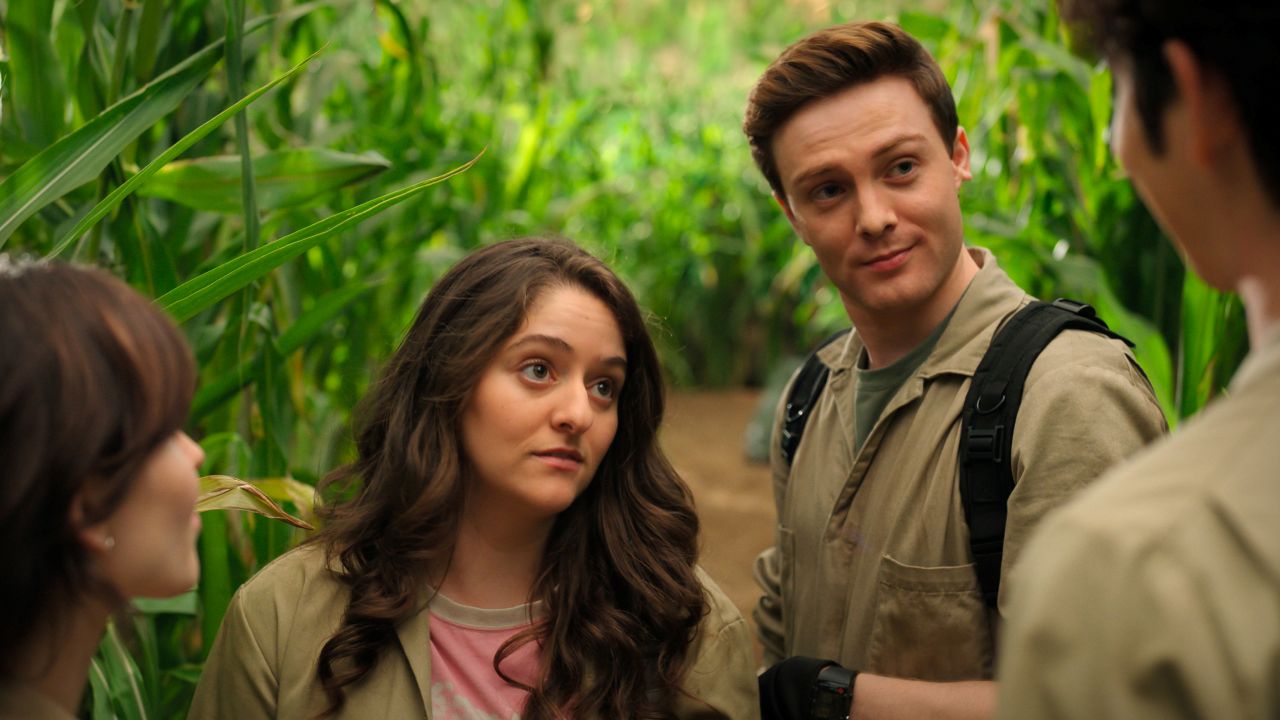
By the time For All Mankind reached season five, episode seven, I thought this show had already put me through every possible version of aerospace anxiety. Moon disasters. Mars politics. Corporate greed in zero gravity. Family trauma with excellent production design. People are making emotional decisions while surrounded by expensive equipment. I thought I was prepared. I was not prepared for “The Sirens of Titan.” And I mean that as a compliment.
This episode doesn’t just continue the season’s slow build toward the Titan mission—it grabs every scientific, emotional, and geopolitical thread that’s been quietly tightening over the past six episodes and pulls hard. The result is one of the strongest hours this season has delivered so far, an episode that somehow manages to feel intimate, massive, hopeful, stressful, and occasionally so tense that I found myself leaning toward my screen like my posture was somehow going to improve mission outcomes. Spoiler: it did not.
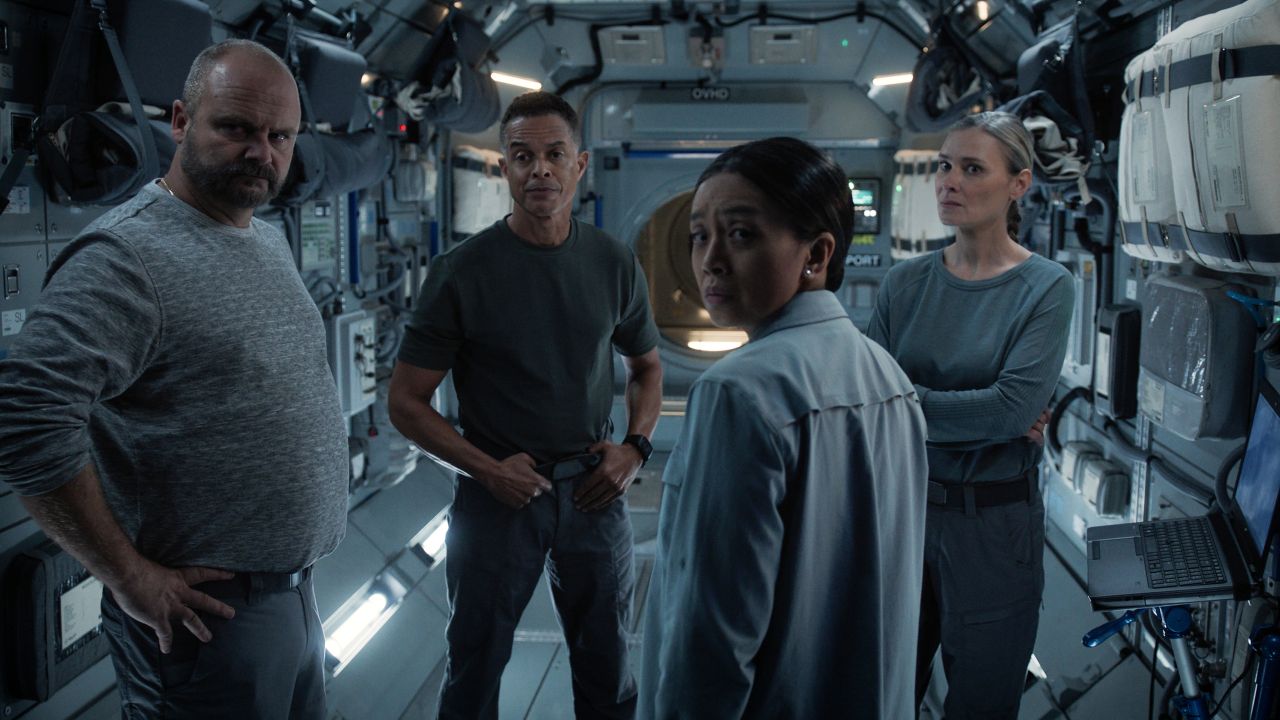
At the center of the episode is Kelly Baldwin, played by Cynthy Wu, and honestly, this might be her strongest showcase in the series to date. Kelly has always had a difficult role in For All Mankind. She’s a Baldwin, which automatically means she inherits enough emotional baggage to require its own cargo manifest, but she’s also been asked to stand on her own as a scientist, explorer, leader, and, increasingly, the emotional anchor of a generation that grew up in the shadow of legendary astronauts. That’s a lot. In “The Sirens of Titan,” she handles all of it beautifully.
The episode opens with the Titan orbital team preparing for what is presented as a relatively straightforward atmospheric descent and mineral survey. Which, if you’ve watched even five minutes of For All Mankind, translates roughly to: “Something is about to go spectacularly wrong, and somebody will definitely ignore at least three warning signs.” Sure enough, the warning signs arrive almost immediately. Telemetry irregularities. Communication lag. Atmospheric interference. A crew member says, “It’s probably nothing.” I actually laughed out loud at that last one. Nothing good has ever followed those words in science fiction.
What I loved about the writing here is that the episode doesn’t rush into disaster. It takes its time establishing routine, trust, and emotional vulnerability before the mission complications begin. That patience pays off because when things start slipping, you’re invested not just in the technical success of the mission, but in the people making impossible decisions.
Kelly’s relationship with flight engineer Luka Petrov continues to evolve in quietly interesting ways. I’ve enjoyed their dynamic all season, but this episode finally gives it real weight. Their conversations feel lived-in now—less flirtation, more mutual respect, occasional irritation, and the kind of emotional shorthand that only develops after months trapped inside a metal tube with recycled oxygen. Romance in space. Nothing says intimacy like sharing finite water reserves.
Luka, played by Miloš Biković, continues to bring a grounded intensity to the role. He’s competent without being arrogant, emotionally guarded without becoming emotionally unavailable, and his scenes with Kelly have a natural rhythm that never feels forced. There’s one exchange midway through the episode—again, no spoilers—that says more in thirty seconds of silence than some shows manage with ten pages of dialogue. That’s confidence. That’s also very good directing.
Visually, “The Sirens of Titan” is stunning. I know For All Mankind has always looked expensive, but this episode feels like Apple TV+ walked into the visual effects department and said, “What if we made space terrifyingly beautiful again?” Titan itself looks incredible. The orange haze, the distorted light, the frozen methane terrain, the endless cloud layers—there’s a real sense of alien scale here that makes the moon feel genuinely unfamiliar rather than just “Earth, but colder.” The descent sequence alone deserves serious praise. It’s technically precise, emotionally tense, and edited with just enough restraint to let the danger speak for itself. No over-scored panic. No unnecessary shouting. Just professionals realizing the situation is changing faster than their options. That’s where For All Mankind is at its best. Not when things explode. When smart people realize they may have prepared for the wrong problem.
The political subplot back on Earth is also stronger here than it’s been in earlier episodes this season. I’ll admit some of the Earth-based material has occasionally felt like the show impatiently checking its email before getting back to the space stuff. Not here. President Wilson’s administration, Helios executives, and the increasingly fragile international alliance all get meaningful development, and for once, the political scenes feel directly tied to the emotional stakes of the mission rather than simply setting up future episodes. There’s one negotiation scene involving mission authority that’s written with real precision. Nobody raises their voice. Nobody slams a table. Nobody dramatically storms out. It’s somehow more stressful than all of those things. That said, the episode isn’t perfect.
As much as I admired the emotional and technical focus, one subplot involving a younger support crew member feels slightly underdeveloped. The episode clearly wants that character’s arc to carry emotional weight later, but right now it still feels like groundwork rather than payoff. Not bad—just noticeably less compelling compared to everything happening around Kelly. There’s also a moment in the second act where the pacing slows a little too much. I understand why—it’s building dread, emphasizing isolation, giving characters room to process—but I did find myself checking how much runtime was left, which rarely happens with this show.
And while most of the science feels impressively grounded, there’s one late-episode maneuver that made my inner space nerd raise an eyebrow. Not a full protest. Just… a respectful eyebrow. I accepted it because the emotional payoff worked. But I noticed. Still, these are minor complaints in an episode that gets so much right. What really makes “The Sirens of Titan” work is its understanding that exploration isn’t just about discovery. It’s about inheritance. Kelly isn’t just exploring Titan. She’s carrying decades of Baldwin history, NASA history, human history, and the impossible expectations that come with all of it. Every decision she makes feels shaped by people who aren’t even in the room anymore. And Cynthy Wu plays that beautifully.
There’s a scene near the end—quiet, personal, almost painfully simple—that reminded me why For All Mankind has lasted this long while so many prestige sci-fi shows burn bright and disappear. It remembers that space isn’t the story. People are. Space just makes their decisions harder. By the time the credits rolled, I realized I hadn’t moved for nearly an hour. My coffee was cold, my notes had become increasingly aggressive underlines, and I was emotionally invested in atmospheric pressure calculations. That’s not normal. That’s For All Mankind.
“The Sirens of Titan” is thoughtful, tense, visually extraordinary, emotionally mature, and packed with the kind of character-driven science fiction that respects both the intelligence of its audience and the emotional cost of exploration. It stumbles once or twice with pacing and a couple of secondary threads, but when the episode locks in, it reminds you exactly why this series continues to be one of the smartest things on television. Also, if anyone on that mission says “we’ll be fine” in episode eight… I’m immediately concerned.
Final Score- [8.5/10]

Hi Everyone, after a due consideration, we have decided that we will be open for donations to help us in managing our website. We will be greatful for any kind of amount we receive. Thanks!
— Midgard Times 🎬 (@Moviesr_net) January 4, 2026
PayPal- [email protected] pic.twitter.com/DlNNz5Npm5
Get all latest content delivered to your email a few times a month.
Bringing Pop Culture News from Every Realm, Get All the Latest Movie, TV News, Reviews & Trailers
Got Any questions? Drop an email to [email protected]



 © Copyrights MOVIESR.NET All rights reserved