


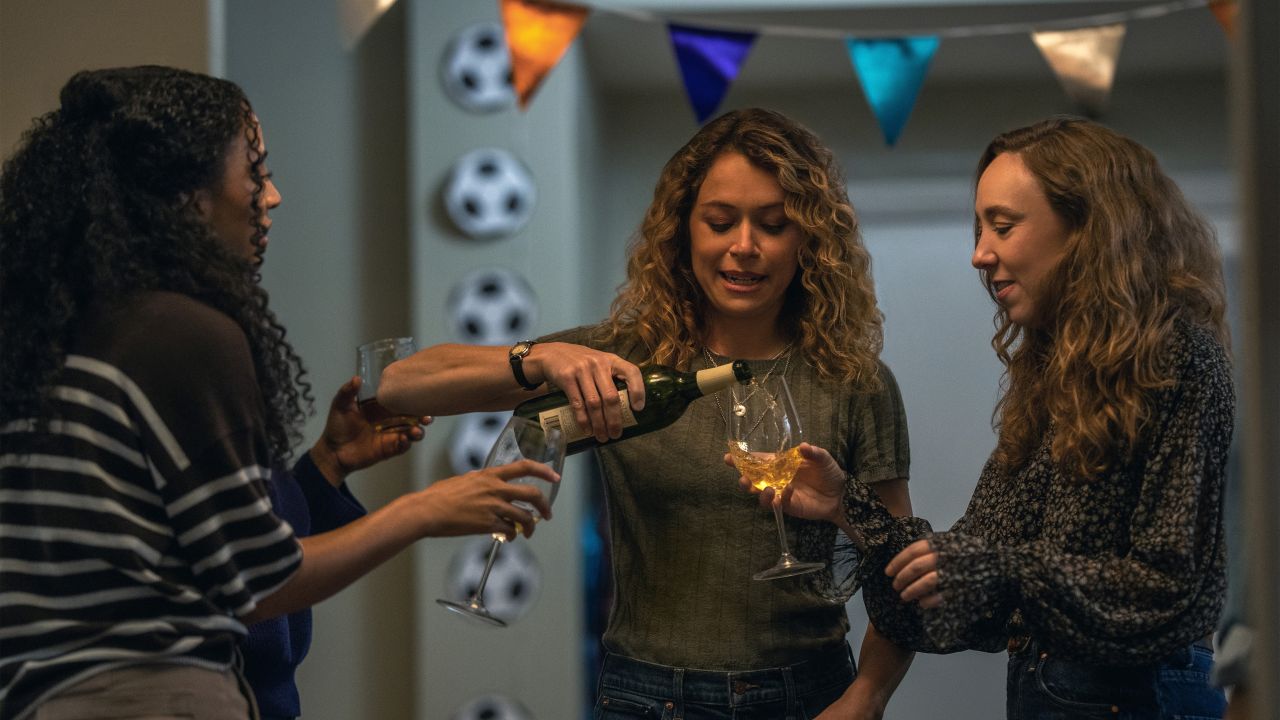
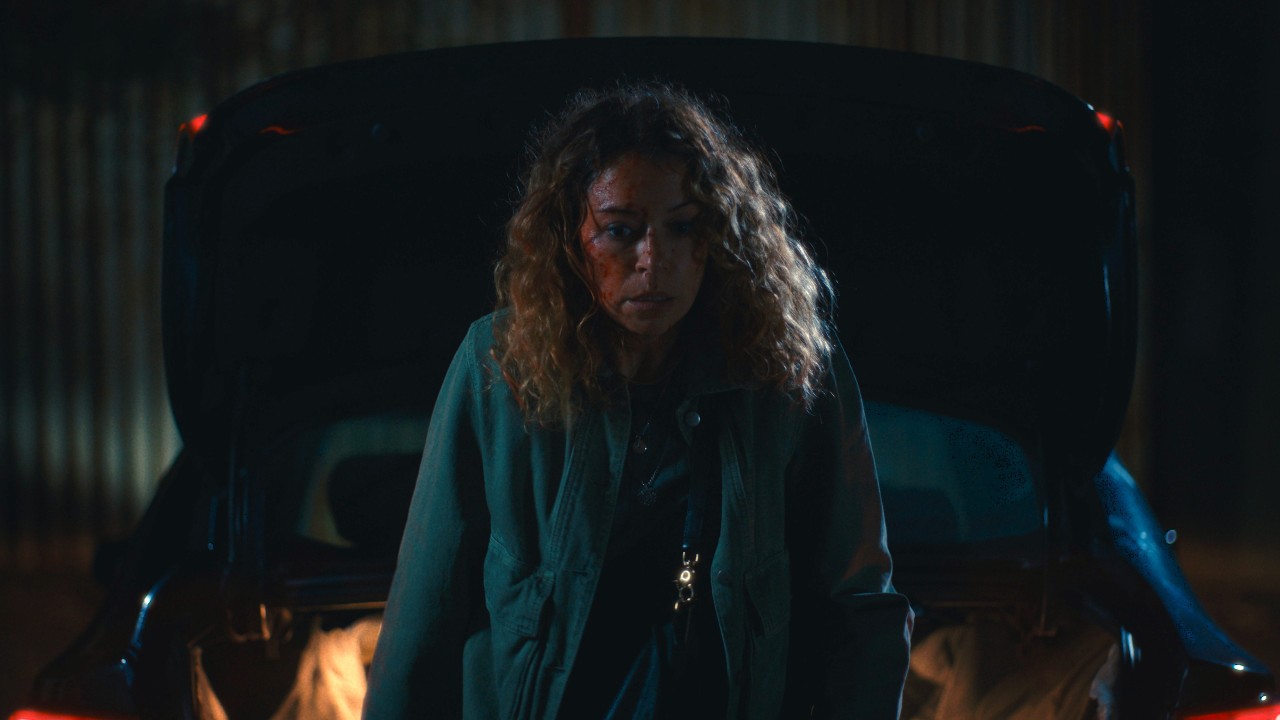
By episode three, Maximum Pleasure Guaranteed has fully figured out what kind of show it wants to be, which is good news. Because after the first two episodes, I was still slightly unsure whether the series was aiming for dark comedy, psychological thriller, social satire, suburban panic attack, or “Tatiana Maslany experiences the worst week in modern streaming history.” The answer, apparently, is all of them.
“Chunnel” is where the series finally locks into its rhythm, and while it still occasionally struggles with tonal balance, it is the first episode where the chaos genuinely feels intentional rather than slightly overstuffed. The result is a fast, anxious, very entertaining hour of television that works largely because it fully commits to Paula’s unraveling without trying to make her artificially cool or competent. Honestly, that’s the show’s smartest decision.
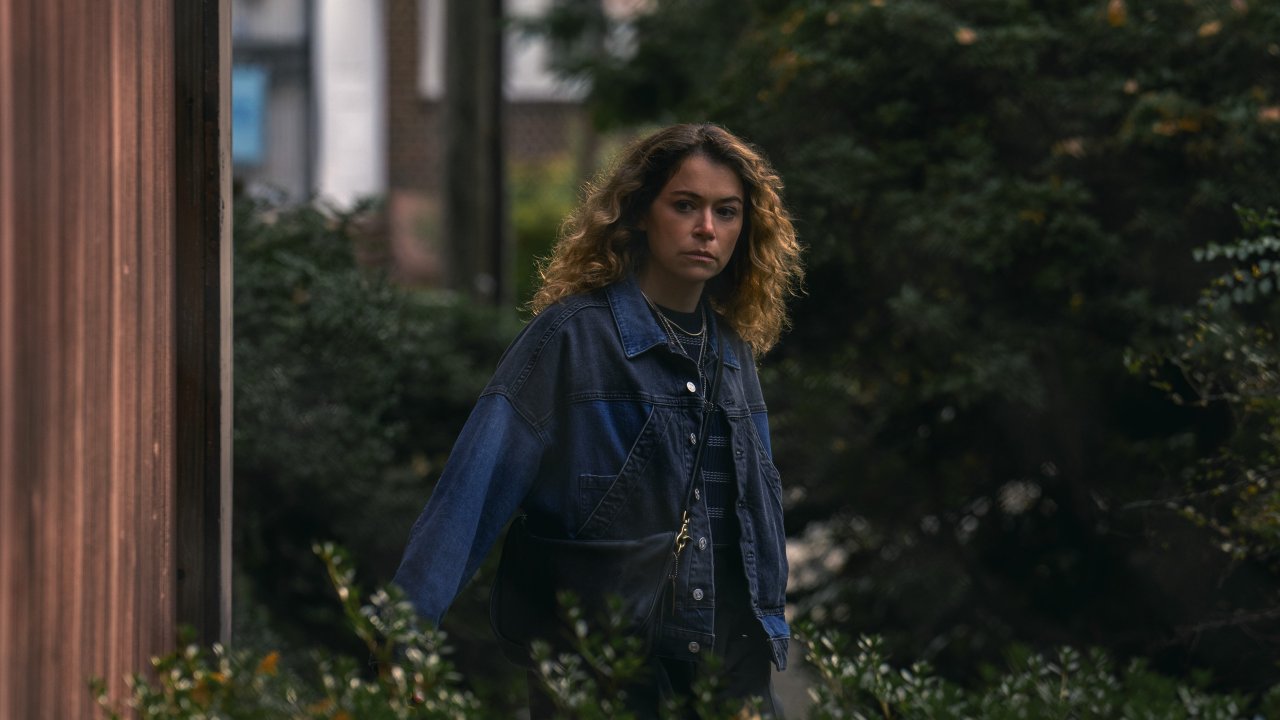
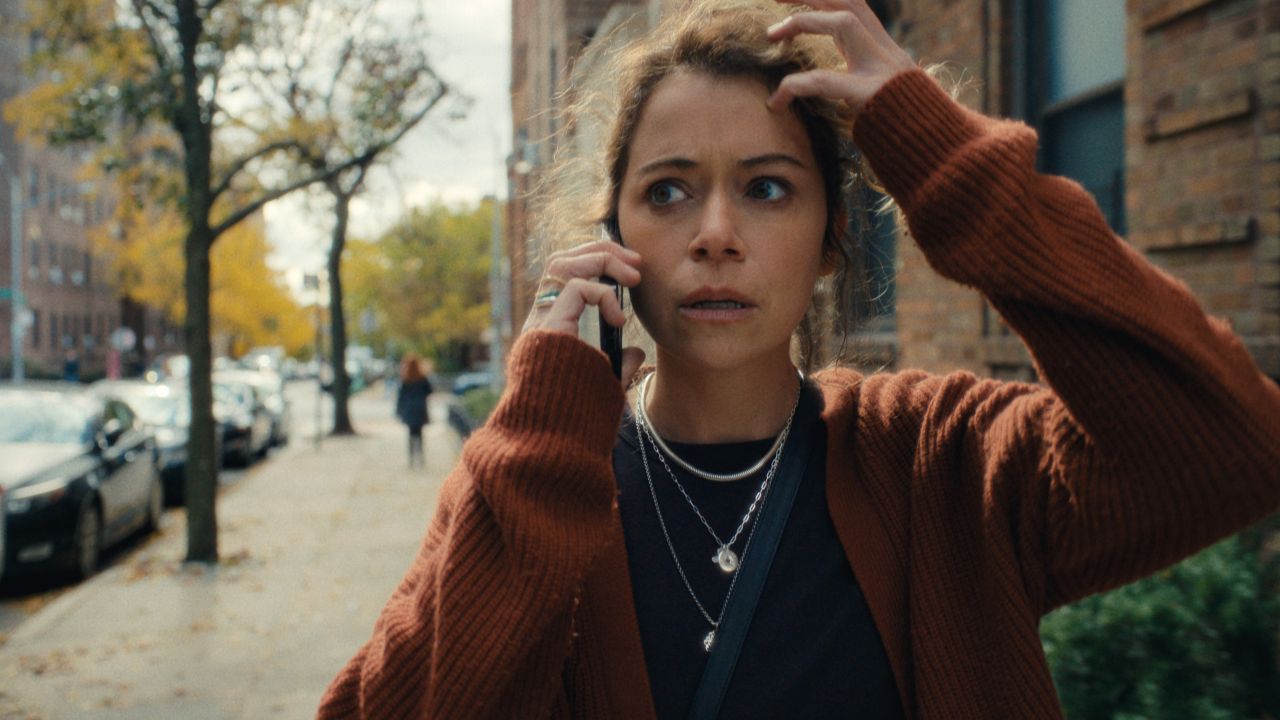
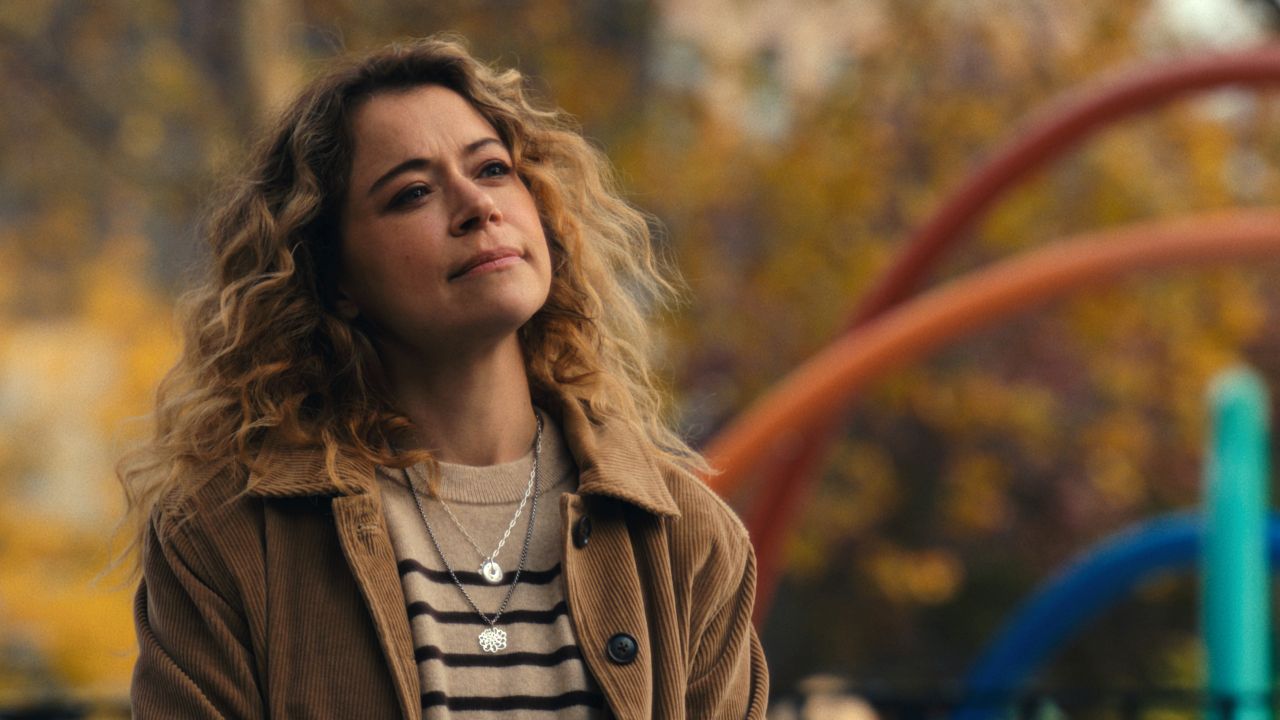
Tatiana Maslany continues carrying the entire series on her back with terrifying levels of charisma. Paula is one of those characters who could have become deeply irritating in the wrong hands—a self-destructive protagonist making terrible decisions while spiraling deeper into increasingly avoidable danger. But Maslany makes Paula feel painfully human because she never plays the character as stupid. Overwhelmed, yes.Lonely, absolutely.Emotionally impulsive? Constantly.But never stupid. That distinction matters enormously.
“Chunnel” pushes Paula into even messier territory after the fallout involving Trevor, the violent attack she witnessed online, and the growing realization that she may be trapped inside something far bigger than a simple scam. The episode wisely avoids turning Paula into an instant investigative genius. Instead, she behaves like a stressed, frightened person trying to solve a dangerous situation while also balancing custody issues, work responsibilities, emotional isolation, and the basic logistical problem of remaining functional during a psychological collapse. It’s exhausting to watch, in a good way.
Maslany is especially great in the quieter moments of panic. There’s a scene midway through the episode where Paula tries to casually continue a normal conversation while clearly experiencing internal emotional catastrophe, and Maslany plays it perfectly. The show understands that embarrassment is one of Paula’s strongest emotional drivers. She’s not only afraid of danger—she’s terrified of exposure, judgment, humiliation, and losing control of how people see her. That anxiety gives the series real emotional texture underneath the thriller mechanics.
Brandon Flynn’s Trevor also becomes more interesting here. One of the smartest choices the show makes is refusing to fully clarify Trevor’s sincerity too early. Flynn plays him with just enough vulnerability and charm that you understand why Paula became emotionally attached to him, while still maintaining enough ambiguity that every interaction feels potentially manipulative. That uncertainty powers most of the episode’s tension.
Jake Johnson continues doing solid work as Karl, Paula’s ex-husband, largely because the show avoids turning him into a generic “bad ex” stereotype. Karl is frustrating, dismissive, occasionally insensitive, but also recognizably human. Johnson gives the character enough grounded realism that his scenes with Paula feel emotionally complicated rather than structurally convenient. Their dynamic is one of the strongest parts of the show because it captures the awkward emotional bureaucracy of modern divorce incredibly well. Every conversation sounds like two people trying to remain civilized while quietly carrying years of resentment and disappointment underneath basic logistical discussions. That realism helps ground the increasingly chaotic thriller elements.
Dolly de Leon also continues being fantastic as Detective Gonzalez. She brings exactly the right level of skepticism and exhaustion to the role. Gonzalez feels like someone who has spent years dealing with people bringing bizarre situations into police stations, and that weariness gives the character credibility. Importantly, the show doesn’t make her incompetent simply because Paula needs to keep investigating independently. She just doesn’t fully believe Paula yet. Which honestly feels fair.
Visually, “Chunnel” is probably the strongest episode of the season so far. David Gordon Green’s direction leans heavily into urban anxiety without becoming overly stylized. New York feels crowded, noisy, invasive, and emotionally claustrophobic. The city constantly seems to be pressing inward on Paula from every direction—subway platforms, apartments, traffic, crowded streets, tiny offices, overheard conversations, buzzing phones, endless notifications. The entire episode feels overstimulated. That atmosphere works extremely well for the story the show is telling.
The sound design deserves a lot of credit, too. Phone vibrations, background conversations, traffic noise, distorted music cues, laptop audio, subway sounds, awkward silence hanging too long in conversations—it all contributes to the constant sense that Paula’s nervous system is slowly being destroyed in real time. Which, to be fair, it probably is. What impressed me most about “Chunnel” is how much sharper the writing becomes when it leans into Paula’s emotional contradictions. The episode understands that loneliness can make intelligent people ignore obvious warning signs. It also understands how modern digital intimacy creates strange emotional confusion. Paula knows Trevor may be manipulating her, yet the emotional connection still feels real to her anyway. That complexity makes the show much stronger than a standard scam thriller.
The dark comedy also works better here than in previous episodes because it emerges more naturally from the character rather than tonal forcing. Paula’s increasingly chaotic attempts to manage normal life while hiding increasingly insane circumstances become genuinely funny at times. There’s a sequence involving casual parenting responsibilities colliding with criminal paranoia that perfectly captures the show’s best tonal instincts. The humor works because nobody pauses for punchlines. Everybody is just stressed beyond human capacity.
There are moments where the series abruptly shifts from emotional realism to pulpy thriller energy so quickly that the transition feels slightly awkward. One scene will play like painfully grounded divorce drama, and the next suddenly feels like Paula accidentally wandered into a paranoid neo-noir thriller directed by somebody having caffeine problems. Most of the time, the energy works. Occasionally, it feels like two very good shows fighting each other.
The pacing also becomes slightly overcrowded in the middle stretch. “Chunnel” throws a lot at Paula very quickly—money drops, suspicion, relationship tension, investigative developments, custody stress, emotional breakdowns, hidden agendas—and while the chaos is partly the point, there are moments where the narrative starts feeling just a little too mechanically stressful. Like the writers sat down and asked: “What if we simply ruined her entire day professionally?” Still, those complaints feel relatively minor because the episode succeeds where it matters most: it makes Paula compelling enough that the audience willingly follows her deeper into increasingly irrational territory. That’s difficult to pull off. And Tatiana Maslany absolutely sells it.
By the end of “Chunnel,” the series finally feels emotionally cohesive. The thriller elements, dark comedy, loneliness, digital paranoia, and emotional collapse all begin functioning together instead of competing for space. The episode still occasionally overextends itself tonally, and some plot escalations require slightly generous suspension of disbelief, but the performances remain excellent, and the atmosphere is increasingly addictive. Most importantly, the show now fully understands its greatest strength: Watching Tatiana Maslany attempt to survive modern life while carrying the emotional energy of someone whose nervous system has been replaced with exposed electrical wiring.
Final Score- [7/10]
Hi Everyone, after a due consideration, we have decided that we will be open for donations to help us in managing our website. We will be greatful for any kind of amount we receive. Thanks!
— Midgard Times 🎬 (@Moviesr_net) January 4, 2026
PayPal- [email protected] pic.twitter.com/DlNNz5Npm5
Get all latest content delivered to your email a few times a month.
Bringing Pop Culture News from Every Realm, Get All the Latest Movie, TV News, Reviews & Trailers
Got Any questions? Drop an email to [email protected]

 © Copyrights MOVIESR.NET All rights reserved