


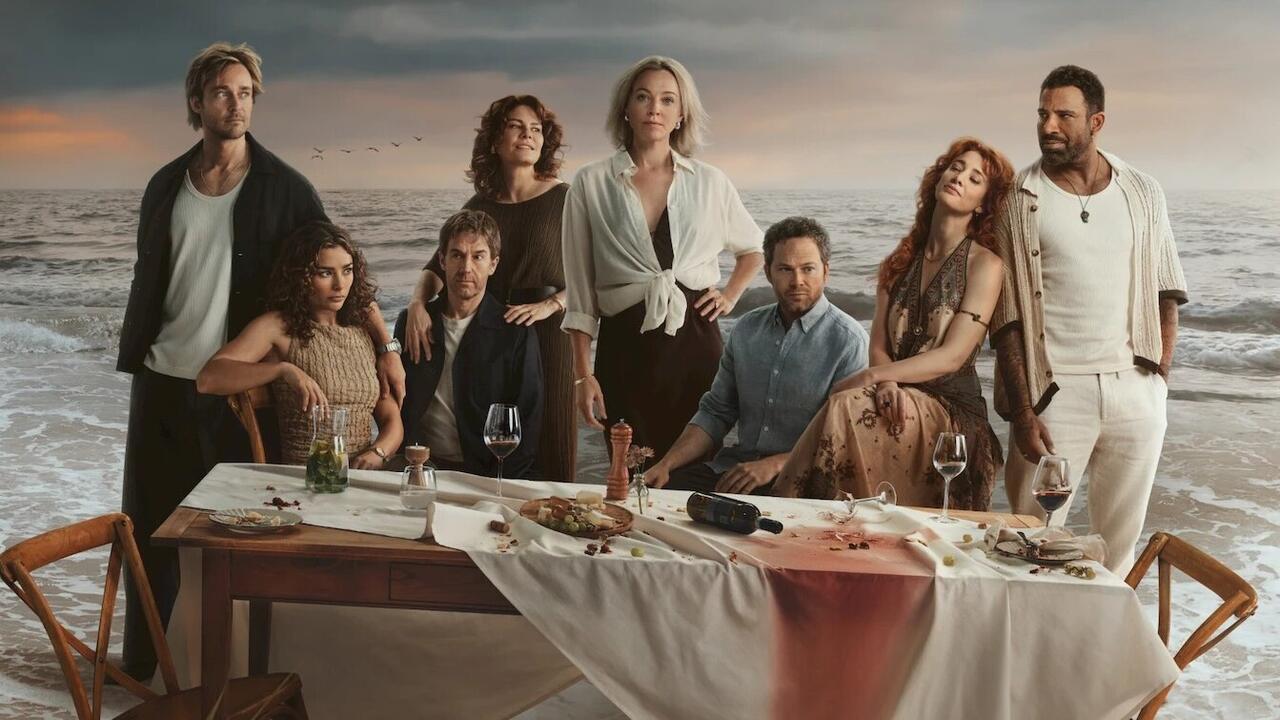
I went into Season 3 of Turn of the Tide expecting escalation, but what I got felt more precise than that. Instead of simply going bigger, the show goes tighter. It narrows its focus, digs into its characters with more intent, and lets the weight of everything that has happened settle in a way that feels earned. This final season understands that the story was never just about drugs or survival, but about how quickly ambition distorts people who once had very little to begin with.
The continuation from Season 2 is immediate in tone, even if the narrative introduces a subtle time shift. Eduardo returns not as the impulsive, slightly naive figure from earlier seasons, but as someone shaped by prison, loss, and a growing sense that he has crossed a line he cannot step back from. José Condessa plays this version of Eduardo with restraint, which works in the show’s favor. There is less visible volatility, more calculation. He listens more than he speaks, and when he does act, it carries consequence. That shift anchors the entire season.
Sílvia remains one of the most compelling presences in the show. Helena Caldeira brings a sense of internal conflict that feels consistent with everything the character has endured. What stands out this time is how the writing allows her to operate independently of Eduardo’s arc. Their dynamic still matters, but the show resists reducing her to a supporting role in his story. She makes decisions that feel grounded in her own priorities, and not all of them are easy to agree with, which makes her more interesting.
Carlinhos and Rafael continue to function as both emotional support and narrative tension points. The friendship that once felt unbreakable now carries visible strain. The writing leans into this, showing how shared history doesn’t guarantee loyalty when stakes rise. There are moments where the silence between characters says more than dialogue, and the series uses that effectively.
The introduction of João Canto Moniz as the central antagonist is one of the season’s strongest moves. He isn’t loud or theatrical. Instead, he operates with quiet authority, and that makes him more threatening. Joaquim de Almeida plays him as someone who understands power structures and manipulates them rather than reacting to them. Compared to earlier villains, he feels less impulsive and more strategic, which forces the main characters to adapt in ways that push them further into moral compromise.
From a structural standpoint, the season maintains the six-episode format, and that economy mostly works. Each episode has a clear narrative purpose, and the pacing avoids unnecessary detours. The show continues to balance crime plotting with personal stakes, though it leans more heavily into the latter this time. There is a noticeable emphasis on consequences, which gives the story a sense of closure.
Visually, the series remains impressive. The Azorean setting continues to play a significant role, not just as a backdrop but as a constraint. The island environment reinforces the idea that there is no easy escape. Cinematography captures this effectively, often framing characters against open landscapes that still feel limiting. The color palette leans slightly darker this season, aligning with the narrative tone without becoming overly stylized.
The direction is confident, particularly in how it handles tension. Instead of relying on constant action, it allows scenes to build gradually. Conversations carry weight, and confrontations often unfold with a sense of inevitability rather than surprise. This approach won’t appeal to viewers looking for fast-paced thrills in every episode, but it suits the story being told.
That said, the season is not without its issues. The most noticeable one is pacing inconsistency in the middle stretch. While the beginning and end feel tightly constructed, a couple of episodes in the center slow down in a way that feels less intentional. The focus on character introspection is valuable, but at times it comes at the expense of narrative momentum. Certain subplots, particularly those involving secondary characters, feel underdeveloped or abruptly resolved.
There are also moments where the dialogue becomes slightly too direct. The show generally trusts its audience, but occasionally characters articulate their thoughts in ways that feel more like exposition than natural conversation. These moments are brief, but they stand out because the rest of the writing is more subtle. Another limitation is the handling of the law enforcement perspective. Inspector Frias remains an important presence, but her storyline doesn’t evolve as much as it could have in a final season. There is potential for a deeper exploration of her position within the system and her personal stakes, but the show prioritizes the central group’s arc instead. While that choice is understandable, it leaves her character feeling somewhat static compared to others.
Despite these shortcomings, the final episodes bring the story to a conclusion that feels consistent with its themes. The series does not aim for shock value or easy resolution. Instead, it focuses on the idea that actions accumulate and eventually demand a response. The ending reflects that philosophy. It doesn’t tie everything up neatly, but it provides enough clarity to feel complete. What stayed with me after finishing Season 3 is how controlled it feels. There is no sense of the show overstaying its welcome or stretching beyond its natural endpoint. It knows what it wants to say and stops when it has said it. That kind of discipline is not always common in long-form storytelling.
Overall, this season works because it respects its characters. It allows them to change, to make mistakes, and to face the outcomes of those mistakes without forcing redemption arcs that don’t fit. It also maintains a clear sense of place and tone, which has been one of the series’ strengths from the beginning. By the time it ends, Turn of the Tide feels less like a crime story and more like a study of how quickly ordinary lives can shift under pressure. Season 3 doesn’t try to reinvent the show. It refines it, focuses it, and brings it to a close with a steady hand.
Final Score- [7/10]
Reviewed by - Anjali Sharma
Follow @AnjaliS54769166 on Twitter
Publisher at Midgard Times





Hi Everyone, after a due consideration, we have decided that we will be open for donations to help us in managing our website. We will be greatful for any kind of amount we receive. Thanks!
— Midgard Times 🎬 (@Moviesr_net) January 4, 2026
PayPal- [email protected] pic.twitter.com/DlNNz5Npm5
Get all latest content delivered to your email a few times a month.
Bringing Pop Culture News from Every Realm, Get All the Latest Movie, TV News, Reviews & Trailers
Got Any questions? Drop an email to [email protected]


 © Copyrights MOVIESR.NET All rights reserved