

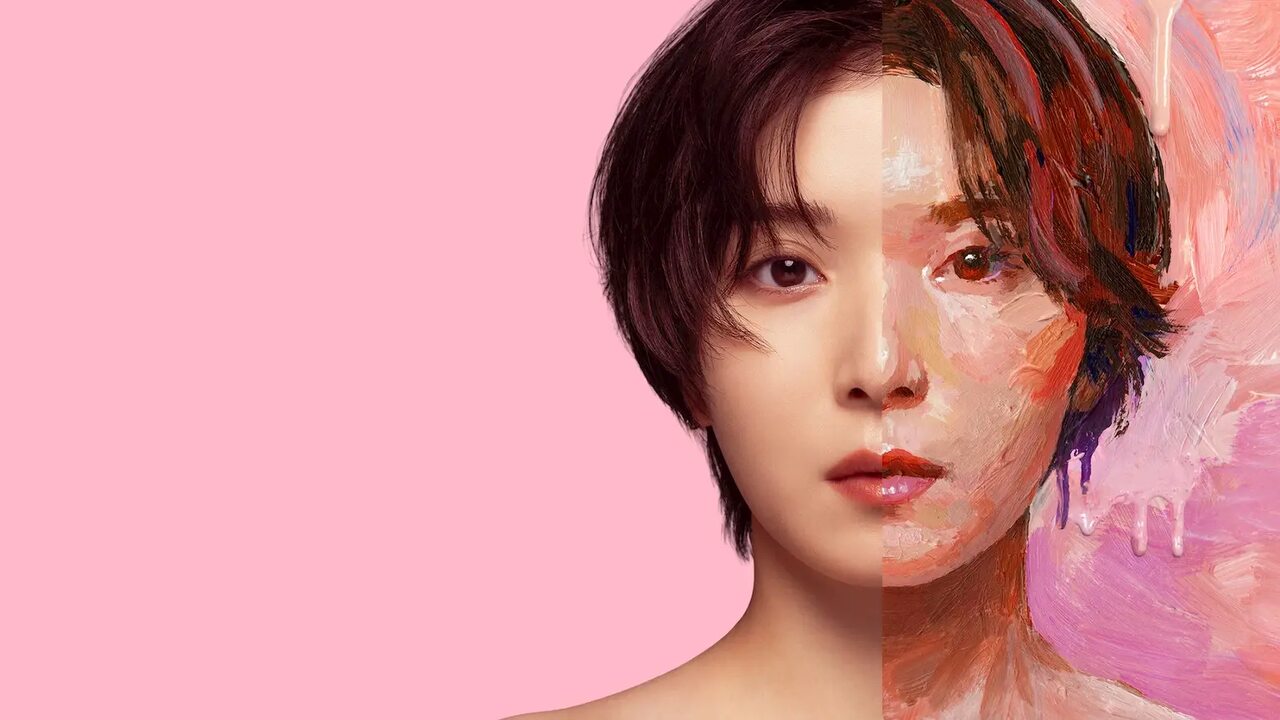
Plastic Beauty is the kind of medical drama that gives you a scalpel, a philosophical argument about beauty, and enough family trauma to operate on an entire hospital. And surprisingly, it mostly knows what to do with all three. The premise initially sounds almost too obvious. Fumi Numata is a gifted emergency surgeon who believes medicine should be about saving lives. Rin Tohyama is a glamorous celebrity cosmetic surgeon who believes changing someone's appearance can fundamentally change their life. Fumi ends up at Rin's clinic with an agenda of her own, determined to expose the darker side of the cosmetic-surgery industry. So naturally, the show asks the question: What if both of them are right?
That is where Plastic Beauty becomes much more interesting than the standard “medical ethics versus beauty industry” drama I initially expected. Fumi's position is easy to understand. She is a surgeon trained to deal with life-threatening conditions, and she initially struggles with the idea of operating on people who are not medically ill simply because they dislike something about themselves. Her attitude can be harsh, judgmental, and occasionally downright unpleasant. Mayu Matsuoka doesn't try to make Fumi into a conveniently inspirational heroine. She is stubborn. She is abrasive. She makes assumptions about patients. She can be selfish. Netflix's own production notes explicitly describe her as someone with prejudice who speaks harshly and acts selfishly, and Matsuoka plays those contradictions rather than sanding them down. That makes her much more interesting to watch. Fumi's worldview is constantly being challenged by the people who come into Rin's clinic. And some of those patients are where the show is genuinely excellent.
The series doesn't treat cosmetic surgery as one uniform phenomenon. People want surgery for different reasons: confidence, social pressure, professional demands, grief, relationships, illness, insecurity, or simply because they want to look different. The third episode, for example, centres on a terminally ill widow who wants a complete transformation, forcing Fumi to confront the question of whether there are circumstances in which changing someone's appearance can actually be part of caring for them. That is a considerably more interesting ethical question than is plastic surgery good or bad?
Riisa Naka is terrific as Rin. She could very easily have been written as the glamorous villain who has monetised everyone's insecurities, but the series refuses to leave her there. Rin genuinely believes in what she does. She believes that appearance can affect how people move through the world, how they perceive themselves and how other people treat them. There is something almost unnerving about how sincere she is. She isn't sitting in her office twirling a moustache and counting cosmetic-surgery money. She actually thinks she is helping people. That makes the conflict with Fumi considerably more compelling because neither woman is simply arguing from stupidity. Fumi believes medicine should address genuine illness. Rin believes suffering does not have to be medically life-threatening to deserve treatment. And then the show proceeds to spend eight episodes making both women question what they thought they knew. This is where the writing is strongest.
Unfortunately, it is also where Plastic Beauty occasionally becomes far too pleased with itself. The irony is that the patient stories are often subtle enough that the show doesn't need to explain its themes quite so aggressively. The audience gets it. The show is also much gorier than I expected. The awkward period when the promised new face has not yet emerged, and the patient has to live with something that looks considerably worse before it looks better. That makes the glamour much less glamorous. And sometimes, frankly, quite difficult to look at.
The series is particularly effective when it uses the physical transformation to expose the psychological one. The disturbing part isn't necessarily the surgery itself. It is the moment when someone looks into a mirror and genuinely believes that a different nose, jawline, eyelid, or body will finally solve the rest of their life. That's where Plastic Beauty gets under the skin. The family material is less successful. This is probably my biggest criticism of the season. Whenever the show is inside the clinic, dealing with patients or putting Fumi and Rin against each other, I was interested. Whenever it wandered into some of the broader family melodrama, my attention dropped. There are important things happening in those storylines, particularly in understanding why Fumi is the person she is and how Rin's own family shapes her worldview. But the execution occasionally becomes much more conventional than the show's medical and ethical material.
The fifth and sixth episodes are where the season starts leaning harder into that personal material, with Fumi facing a family crisis while Rin's professional world begins to fracture. By then, the show has enough investment in its characters for those developments to matter, but I still found myself missing the individual patient stories that gave the earlier episodes so much specificity. The eight-episode structure helps enormously. Plastic Beauty has enough material for a much longer Japanese medical soap, and I was genuinely relieved that Netflix didn't turn it into a 16-episode marathon of people staring meaningfully at mirrors. Eight episodes is enough to establish the ethical conflict, complicate both women, explore several patient cases, and bring the professional rivalry to a meaningful point without completely exhausting the premise. And the episodes are substantial: roughly an hour each, with the finale running about 78 minutes.
That final episode is especially important because the show has spent the season setting up Fumi and Rin as ideological opposites, only to gradually complicate the distinction between them. I won't spoil where it takes that relationship, but I appreciated that the series doesn't settle for the easy conclusion that one woman was right and the other was wrong because that would have undermined the entire premise. The strongest thing Plastic Beauty does is make beauty an insufficiently simple subject. There is a tendency to discuss cosmetic surgery as though everyone who undergoes it has either been liberated by their decision or brainwashed by society. Reality is obviously more complicated.
Matsuoka and Naka are the reason the rivalry works. Neither actress is playing the other woman's caricature. Their disagreements have genuine intellectual and emotional weight, and you can gradually see both characters absorbing things they initially rejected. Matsuoka gives Fumi a particularly effective mixture of arrogance and vulnerability. Naka, meanwhile, makes Rin's confidence feel like something constructed rather than innate. Beneath the polished celebrity-surgeon persona is someone who has her own complicated relationship with the very idea of beauty she sells to others. Shotaro Mamiya, Minami Tanaka, and the rest of the ensemble also provide a strong supporting framework around them.
Visually, the series is suitably polished. The clinic looks expensive. The patients look immaculate when they're supposed to. The surgical sequences look unpleasant when they're supposed to. And there is a deliberate contrast between the glossy world of cosmetic medicine and the physical reality underneath it. The show's title becomes increasingly ironic because there is very little “plastic” about the emotional consequences of what these characters are doing.
There are moments when Plastic Beauty becomes a little too obviously “important.” Characters say things that sound less like dialogue and more like the thesis statement the writers want quoted in reviews. Some of the family drama is melodramatic enough to feel imported from an entirely different series. And the show occasionally takes a fascinating ethical dilemma and explains it until all the oxygen has left the room. Still, those are relatively frustrating flaws because the underlying material is so strong. The fact that the series allows that final answer to exist without immediately condemning it is one of its most mature choices.
Plastic Beauty isn't perfect. Its family melodrama occasionally overwhelms its much more interesting medical stories, some thematic points are repeated too often, and Fumi's worldview can become frustratingly rigid before the character development catches up with it. But the central performances are excellent, the patient stories are often genuinely affecting, the surgical material has uncomfortable physical realism, and the ethical questions are far more nuanced than the glossy premise initially suggests. It is a sharp, uncomfortable and occasionally melodramatic medical drama with two excellent leads at its centre. It doesn't always know when to stop explaining itself, but when it gets out of the way and lets its patients—and Matsuoka and Naka—do the talking, it becomes genuinely compelling.
Final Score- [8/10]
Reviewed by - Anjali Sharma
Follow @AnjaliS54769166 on Twitter
Publisher at Midgard Times


Hi Everyone, after a due consideration, we have decided that we will be open for donations to help us in managing our website. We will be greatful for any kind of amount we receive. Thanks!
— Midgard Times 🎬 (@Moviesr_net) January 4, 2026
PayPal- [email protected] pic.twitter.com/DlNNz5Npm5
Get all latest content delivered to your email a few times a month.
Bringing Pop Culture News from Every Realm, Get All the Latest Movie, TV News, Reviews & Trailers
Got Any questions? Drop an email to [email protected]



 © Copyrights MOVIESR.NET All rights reserved