

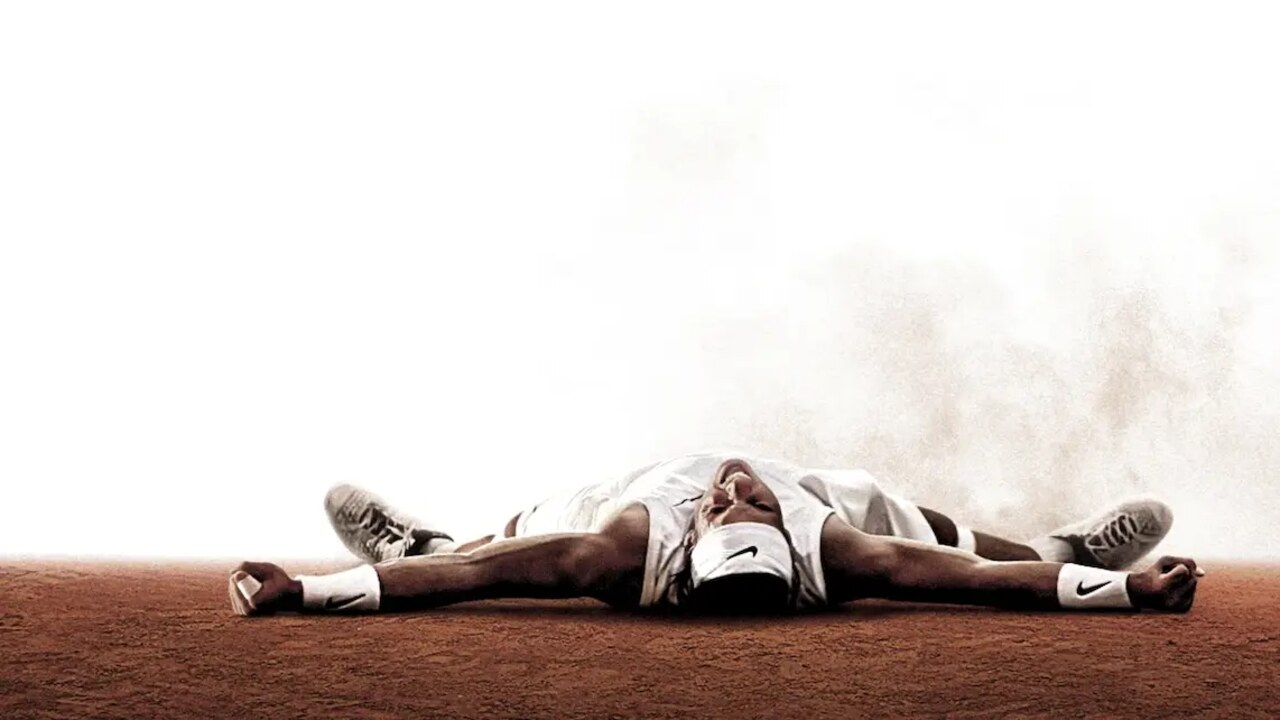
As someone who has watched Rafael Nadal for most of my life, I went into Rafa expecting a celebration. What I got was something more interesting. And occasionally more frustrating. Netflix's four-part documentary series, directed by Zach Heinzerling, has extraordinary access to Nadal, his family, his team, and many of the people who helped define his career. The series follows him through the final stretch of his playing days while also revisiting the moments that turned a teenager from Mallorca into a 22-time Grand Slam champion. It explores his rivalries with Roger Federer and Novak Djokovic, his endless battles with injury, his relationship with his uncle and longtime coach Toni Nadal, and the emotional reality of approaching retirement after decades of living inside professional tennis. What immediately impressed me was how little the documentary feels like a victory lap.
Most athlete documentaries eventually become two-hour exercises in self-congratulation. Rafa certainly admires Nadal—and honestly, it would be difficult not to—but it spends a surprising amount of time focusing on pain. Physical pain, obviously. The series repeatedly returns to the foot problems, chronic injuries, surgeries, treatments, and endless rehabilitation that defined much of Nadal's career. But it also explores the emotional toll of constantly fighting against a body that increasingly refused to cooperate. Those sections are some of the strongest material in the entire series.
One thing I appreciated is that the documentary doesn't try to portray Nadal as a superhero. If anything, it shows just how vulnerable he often was. There are moments where he looks exhausted, uncertain, frustrated, and genuinely scared that his body may no longer allow him to compete at the level he expects from himself. For someone whose public image has always been built around determination and resilience, those moments feel surprisingly revealing.
The archival footage is fantastic throughout. Watching young Nadal emerge onto the scene again is a reminder of just how unusual he seemed at the time. Federer looked elegant. Djokovic looked precise. Nadal looked like a force of nature. The documentary does a great job capturing that contrast and showing how his physical style of play completely changed the sport. The rivalry material is especially strong. Federer and Djokovic aren't simply treated as supporting characters in Nadal's story; they're presented as essential parts of it. Their presence helps the documentary avoid becoming a one-dimensional celebration and instead turns it into a broader story about one of tennis's greatest eras.
I also liked how much attention the series gives to Nadal's family. His wife, Maria Francisca Perelló, appears throughout the documentary, as do his parents and members of his inner circle. The family material adds warmth and perspective to a story that could have easily become overwhelmed by statistics and trophies. Some of the most affecting moments have nothing to do with tennis at all. They're about family members quietly discussing what it was like watching someone they love repeatedly push himself through physical suffering in pursuit of excellence.
Visually, the documentary looks excellent. The combination of archival footage, modern interviews, tournament coverage, home videos, and behind-the-scenes access creates a polished, cinematic experience. The editing does a particularly good job moving between Nadal's final season and key moments from earlier in his career without making the structure feel repetitive. The series is also smart about not assuming viewers already know every detail of Nadal's career. Longtime tennis fans will recognize most of the major events, but newcomers should have no trouble following the narrative. The documentary consistently explains why certain matches, rivalries, injuries, and decisions mattered without becoming overly instructional.
The biggest issue is that despite all the access, Nadal remains surprisingly elusive. The documentary gets closer to him than almost any previous project has, yet there are still moments where it feels like you're standing outside a locked room trying to look through the keyhole. You learn what happened. You learn how he trained. You learn what injuries he endured. But the deeper psychological questions often remain unanswered. What exactly drove him to keep competing through so much pain? What internal pressures shaped him? What fears motivated him? The series occasionally approaches those questions but rarely digs as deeply as it could. That's partly because Nadal himself has always been private. Expecting him to suddenly become radically confessional may be unrealistic. Still, there were several moments where I wanted the documentary to push a little harder.
The pacing can also become repetitive during the injury-focused sections. I understand why those stories are important—they're central to Nadal's career—but there are stretches where the series moves from one medical setback to another with such frequency that the narrative momentum slows. Scans, treatments, setbacks, recoveries, more setbacks, more treatments. It's all relevant, but occasionally it begins feeling like a very prestigious medical documentary.
What ultimately makes Rafa work is that it understands retirement is not a sporting event. It's an identity crisis. For most people, changing careers is stressful enough. For someone whose entire life has revolved around competition since childhood, walking away becomes something much bigger. The documentary captures that uncertainty extremely well. Beneath the trophies, records, and achievements is a man trying to figure out who he is once tennis stops being the center of everything. That's the version of Nadal I found most fascinating.
Rafa is an excellent sports documentary that benefits enormously from unprecedented access, strong storytelling, and a genuinely emotional final chapter. It delivers fascinating insights into Nadal's career, his rivalries, his family life, and the physical cost of greatness. While it occasionally feels too respectful of its subject and never fully unlocks the deepest parts of Nadal's psychology, it remains a compelling and often moving portrait of one of the greatest athletes of all time. Whether you're a lifelong tennis fan or someone who simply appreciates stories about dedication, sacrifice, and identity, there's a lot here to admire.
Final Score- [8.5/10]
Reviewed by - Anjali Sharma
Follow @AnjaliS54769166 on Twitter
Publisher at Midgard Times

Hi Everyone, after a due consideration, we have decided that we will be open for donations to help us in managing our website. We will be greatful for any kind of amount we receive. Thanks!
— Midgard Times 🎬 (@Moviesr_net) January 4, 2026
PayPal- [email protected] pic.twitter.com/DlNNz5Npm5
Get all latest content delivered to your email a few times a month.
Bringing Pop Culture News from Every Realm, Get All the Latest Movie, TV News, Reviews & Trailers
Got Any questions? Drop an email to [email protected]
 © Copyrights MOVIESR.NET All rights reserved