

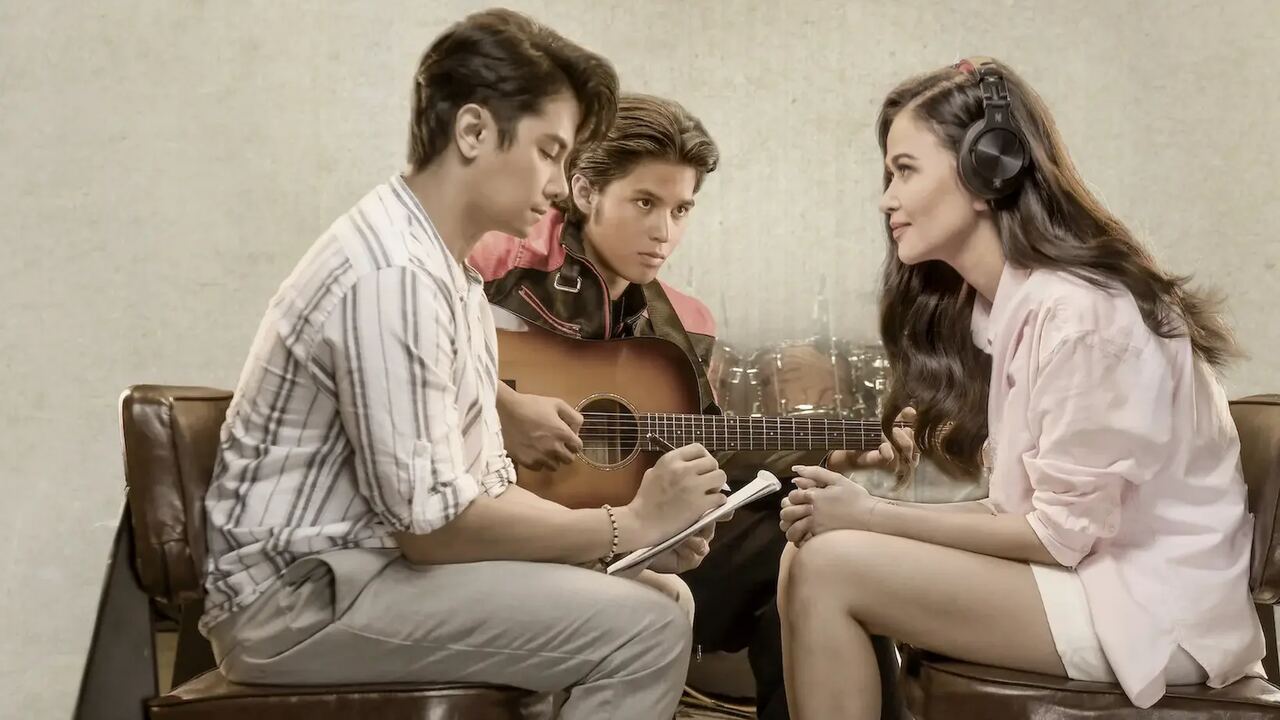
Watching 100 Songs for Stella felt like going to a relationship that I really cared about but had not thought about in a long time. The movie 100 Songs for Stella is a follow-up to 100 Poems for Stella. It starts with a calm feeling; it is not as wild as it used to be. Now it is more about thinking about my emotions. So 100 Songs for Stella is not about falling in love; it is about learning how to deal with what is left after love is gone. 100 Songs for Stella is a story about what happens after you fall in love. It is 100 Songs, for Stella, and how it makes you think about love. The film understands that nostalgia is powerful but also unreliable, and it uses music as both a bridge and a barrier between the past and the present. The result is a romantic drama that is mostly absorbing, emotionally sincere, and musically rich, even if it occasionally stumbles under the weight of its own sentimentality and length.
Stella is a person who puts together events for singles now. She has made a lot of progress in her life that you can see. She is still very careful about her feelings. Fidel used to write poetry and put his heart into it. Now he writes songs. He does not always express his feelings in a way that people can understand. He hides them.
Their paths cross again because of a song that Fidel wrote. It is sung by Clyde, who is a musician that a lot of people are starting to like. This creates a situation with a lot of emotions. It is not about romance; it is about Stella and Fidel and the song and how it affects them. The situation with Stella, Fidel, and Clyde is complicated. It does not just come down to who likes whom. Instead, Clyde represents possibility, freshness, and emotional openness, contrasting with the shared history that binds Stella and Fidel. This setup gives the film its emotional engine, and for the most part, it runs smoothly, fueled by well-observed character moments and a deep respect for emotional realism.
Bela Padilla brings remarkable restraint to Stella, portraying her as someone who has learned to survive disappointment by managing expectations. There is a calm maturity in her performance, especially in scenes where Stella listens rather than speaks. Her eyes often do more work than her dialogue, and the film wisely allows silence to carry emotional weight. JC Santos, as Fidel, leans into emotional vulnerability with honesty. His portrayal avoids grand gestures and instead focuses on internal conflict, regret, and cautious hope. Together, their chemistry feels lived-in rather than spark-driven, which suits the story’s reflective tone. They interact like two people who know each other deeply but no longer fully understand each other, and that tension adds texture to nearly every shared scene.
Kyle Echarris Clyde is a character who tells a different story. He could have been a guy, but Kyle Echarris' performance makes him seem real and relatable. Clyde is a guy who wants a lot of things. He is sensitive, and he knows how people feel. When he is around, things get complicated for Stella. He is not a bad guy. This is something the movie does well. The movie does not make it easy to hate anyone. Instead, it shows that people conflict because of what's happening, not because they are mean. Kyle Echarris Clyde is a part of this. He makes the story more interesting and real.
Music is really important here. It is not just playing in the background. The music is actually helping to tell the story. Each song is used to show how the characters are feeling and when their emotions are changing. The soundtrack is great because it has a lot of emotion, and the songs are in a good order. When the characters sing or play music, it feels like it is really part of who they are. There are some good scenes where the music and the story come together in a way that feels natural. The music helps us understand why the characters are feeling ways and when they decide to sing or write songs. The Music is a part of the story, and it helps us understand the characters and their emotions. That said, the film occasionally leans too heavily on its musical identity, especially in its middle stretch, where back-to-back emotional songs slightly blunt their cumulative impact. A more selective approach might have allowed certain moments to resonate more strongly.
Visually, the film is elegant without being showy. The cinematography favors soft lighting, warm interiors, and gently composed frames that mirror the story’s emotional tone. Urban spaces are shot with intimacy, emphasizing personal isolation within crowded environments. Scenes involving music performances are handled with restraint, focusing less on spectacle and more on emotional proximity. The editing maintains a steady rhythm, though the overall pacing does sag in sections, particularly during transitional sequences that repeat emotional beats already clearly established.
The film’s greatest strength lies in its understanding of emotional timing. It recognizes that what hurt most years ago may no longer hurt in the same way, but it still matters. The screenplay allows characters to articulate their disappointments, regrets, and desires without resorting to melodrama. Conversations unfold naturally, often meandering in ways that resemble real-life emotional processing. This gives the film a lived-in quality that elevates it beyond typical romantic drama. Moments of humor are subtle and character-based, offering emotional breathing space without undercutting the film’s seriousness.
However, the film is not without its weaknesses. At over two hours, it sometimes feels overly indulgent. Certain subplots, particularly involving side characters, feel underdeveloped and ultimately unnecessary. While these moments aim to add emotional texture, they often stall narrative momentum. The central emotional arc is compelling enough that the film would benefit from tighter structural discipline. There are also moments where dialogue becomes overly explicit, spelling out emotional states that the performances already convey effectively. Trusting the audience a bit more in these instances would have strengthened the film’s emotional impact.
The movie has a problem. It likes to make emotional indecision seem appealing. Being unsure is a part of the story. Sometimes the movie spends too much time on people being hesitant. This can be annoying for people who want the story to keep moving. The movie wants to explore emotions rather than tell a story with a clear ending. This is what the movie is trying to say. It can make some scenes feel like they are repeating the same thing over and over. The last part of the movie is emotionally satisfying. It would have been better if the story were more focused. This would have stopped the movie from feeling like it was going around in circles, with emotions.
Yet despite these criticisms, 100 Songs for Stella remains deeply engaging. Its emotional sincerity, thoughtful performances, and carefully curated soundtrack create an experience that feels personal and reflective rather than formulaic. The film respects the complexity of adult relationships, acknowledging that closure is rarely clean and that emotional growth often involves learning how to live alongside unresolved feelings. It resists the urge to provide overly neat answers, which lends authenticity to its conclusion.
What ultimately lingers is the film’s quiet emotional honesty. It understands that first love leaves lasting impressions, not necessarily because it was perfect, but because it was formative. By revisiting these characters in adulthood, the film explores how identity evolves while emotional memory remains stubbornly intact. This tension gives the story its emotional depth and keeps it grounded even when narrative choices verge on indulgent. In the broader context of romantic dramas, 100 Songs for Stella stands out for its emotional restraint and narrative maturity. It is not a story about dramatic twists or sweeping declarations, but about small emotional shifts, uncomfortable realizations, and the slow process of emotional reconciliation. The film invites viewers to sit with discomfort, uncertainty, and longing, and in doing so, creates a space for genuine emotional engagement.
By the time the final notes fade, the film leaves behind a quiet sense of emotional completion, even if narrative closure remains deliberately ambiguous. It is this balance between resolution and openness that makes 100 Songs for Stella resonate. Despite its pacing flaws and occasional narrative excess, it remains a thoughtful, emotionally layered film that rewards patience and attentive viewing. For anyone willing to meet it on its own reflective terms, it offers a deeply human exploration of memory, love, and the complicated beauty of second chances.
Final Score- [7.5/10]
Reviewed by - Anjali Sharma
Follow @AnjaliS54769166 on Twitter
Publisher at Midgard Times




Hi Everyone, after a due consideration, we have decided that we will be open for donations to help us in managing our website. We will be greatful for any kind of amount we receive. Thanks!
— Midgard Times 🎬 (@Moviesr_net) January 4, 2026
PayPal- [email protected] pic.twitter.com/DlNNz5Npm5
Get all latest content delivered to your email a few times a month.
Bringing Pop Culture News from Every Realm, Get All the Latest Movie, TV News, Reviews & Trailers
Got Any questions? Drop an email to [email protected]



 © Copyrights MOVIESR.NET All rights reserved