

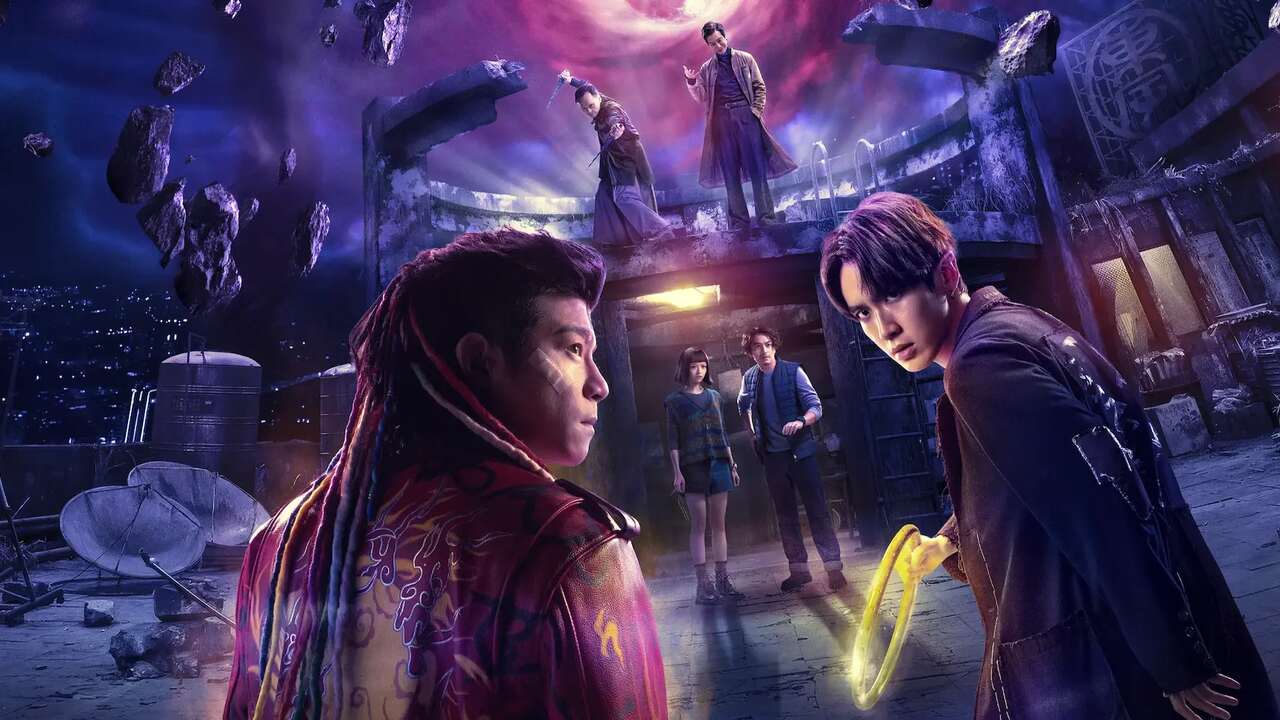
I went into Agent From Above expecting a fairly standard genre blend—some espionage, a touch of science fiction, and a protagonist with a mysterious past. What I didn’t expect was how confidently the show leans into its identity. It knows it’s a character-driven story wrapped in a high-concept premise, and for the most part, it executes that balance with surprising clarity and restraint.
At its core, the series is built around a deceptively simple idea: an agent who is not entirely human is assigned to Earth to guide events from behind the scenes. Early episodes establish the rules efficiently. The agent operates under strict limitations, reports to an unseen authority, and must maintain emotional detachment. Naturally, that last condition is the first to unravel. What works well here is how the show avoids over-explaining its mythology. Instead of drowning the viewer in lore, it reveals just enough through action and consequence. That choice keeps the pacing steady and allows the narrative to remain grounded despite its premise.
The lead performance carries much of this weight. There’s a controlled stillness to the protagonist that gradually shifts as the series progresses. In the first few episodes, the character feels deliberately distant—almost mechanical in how they observe and interact. Over time, small changes in expression and tone signal an internal shift. It’s subtle work, and it pays off because the writing trusts the audience to notice rather than spelling it out. By the midpoint, the character’s growing discomfort with their role becomes the emotional anchor of the story.
The supporting cast is equally important, and this is where the show finds much of its energy. The human characters are not just plot devices; they actively challenge the agent’s worldview. A journalist investigating unexplained events, a government official with ambiguous motives, and a civilian who becomes unintentionally entangled in the mission all bring different perspectives. Their interactions feel purposeful, and the dialogue generally avoids the kind of exposition-heavy exchanges that can drag down shows like this. Conversations often carry subtext, which adds to the sense that multiple agendas are constantly in play.
One of the strongest aspects of Agent From Above is its tone. It manages to stay light without becoming trivial. There are moments of dry humor, often arising from the agent’s unfamiliarity with human behavior, but the show doesn’t rely on comedy as a crutch. Instead, it uses those moments to deepen character rather than distract from the plot. This balance makes the more serious developments land with greater impact.
Visually, the series is polished without being flashy. The cinematography favors clean compositions and controlled lighting, which suits the story’s emphasis on surveillance and observation. There’s a recurring use of reflective surfaces and framing that places characters at a slight remove, reinforcing the theme of distance. Action sequences are handled efficiently. They are not overly elaborate, but they are clear and purposeful, prioritizing tension over spectacle. This approach keeps the focus on narrative stakes rather than visual excess.
That said, the pacing is not entirely consistent. The early episodes move with confidence, setting up the premise and characters without hesitation. However, the middle stretch slows down more than necessary. A few episodes spend too much time reiterating conflicts that have already been established. While these moments do add nuance, they occasionally feel like they are delaying the inevitable turning points rather than building toward them. It’s not enough to derail the experience, but it does create a slight dip in momentum.
The writing is generally sharp, especially when it comes to moral ambiguity. The show is at its best when it explores the tension between duty and empathy. The agent’s mission requires detachment, but the narrative keeps presenting situations where detachment becomes ethically questionable. These dilemmas are not resolved neatly, which adds to the show’s credibility. However, there are instances where the script leans a bit too heavily on familiar tropes. Certain twists can be anticipated, particularly in the political subplot. While they are executed competently, they don’t carry the same sense of surprise as the more character-driven developments.
Another minor issue is the handling of the overarching mystery. The series introduces a larger threat tied to the agent’s origin, and while it is intriguing, it remains somewhat underdeveloped by the end of the season. There are hints and fragments of information, but not enough concrete progression to fully satisfy. This feels like a deliberate setup for future installments, which is understandable, but it does leave a sense that the story is holding back rather than delivering a complete arc.
Despite these shortcomings, the show maintains a strong sense of direction. The final episodes regain momentum and bring several character arcs to meaningful turning points. The agent’s internal conflict reaches a point where a decision has to be made, and the consequences of that decision feel earned. The closing moments do not attempt to tie everything up. Instead, they leave space for continuation while still providing a sense of resolution for the central emotional thread.
What impressed me most is how cohesive the series feels. The performances, writing, and visual style all support the same core idea. Nothing feels out of place, even when certain elements don’t reach their full potential. It’s clear that there is a deliberate vision behind the show, and that consistency makes it easy to stay engaged.
Overall, Agent From Above succeeds because it prioritizes character over concept. The science fiction elements provide a compelling framework, but it’s the human (and not entirely human) experiences within that framework that make the series worth watching. It’s thoughtful without being heavy, entertaining without being shallow, and ambitious without losing focus. While it has a few pacing issues and some predictable turns, it delivers a satisfying blend of intrigue and emotional depth. I found myself consistently interested in where the story was going, even during its slower stretches, and that’s a strong indicator of effective storytelling. It’s not a flawless series, but it is a confident and engaging one that leaves a solid impression and enough curiosity to justify continuing the journey.
Final Score- [7/10]
Reviewed by - Anjali Sharma
Follow @AnjaliS54769166 on Twitter
Publisher at Midgard Times
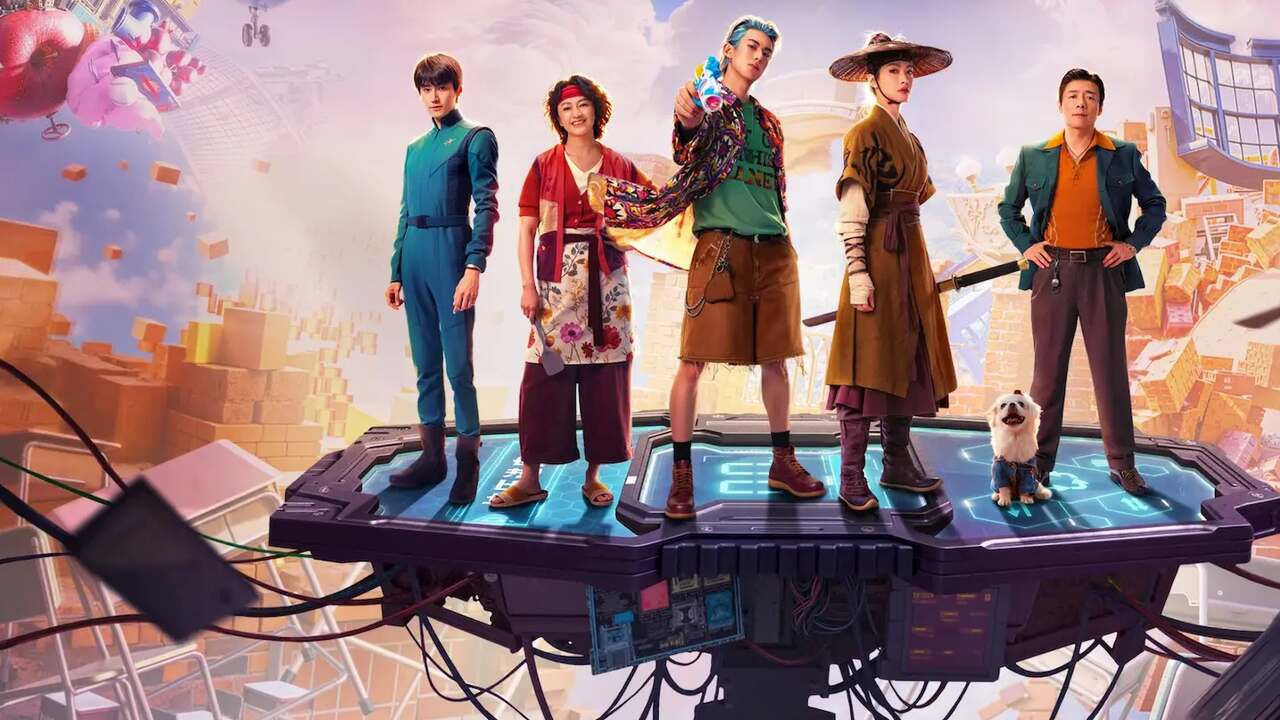




Hi Everyone, after a due consideration, we have decided that we will be open for donations to help us in managing our website. We will be greatful for any kind of amount we receive. Thanks!
— Midgard Times 🎬 (@Moviesr_net) January 4, 2026
PayPal- [email protected] pic.twitter.com/DlNNz5Npm5
Get all latest content delivered to your email a few times a month.
Bringing Pop Culture News from Every Realm, Get All the Latest Movie, TV News, Reviews & Trailers
Got Any questions? Drop an email to [email protected]



 © Copyrights MOVIESR.NET All rights reserved