

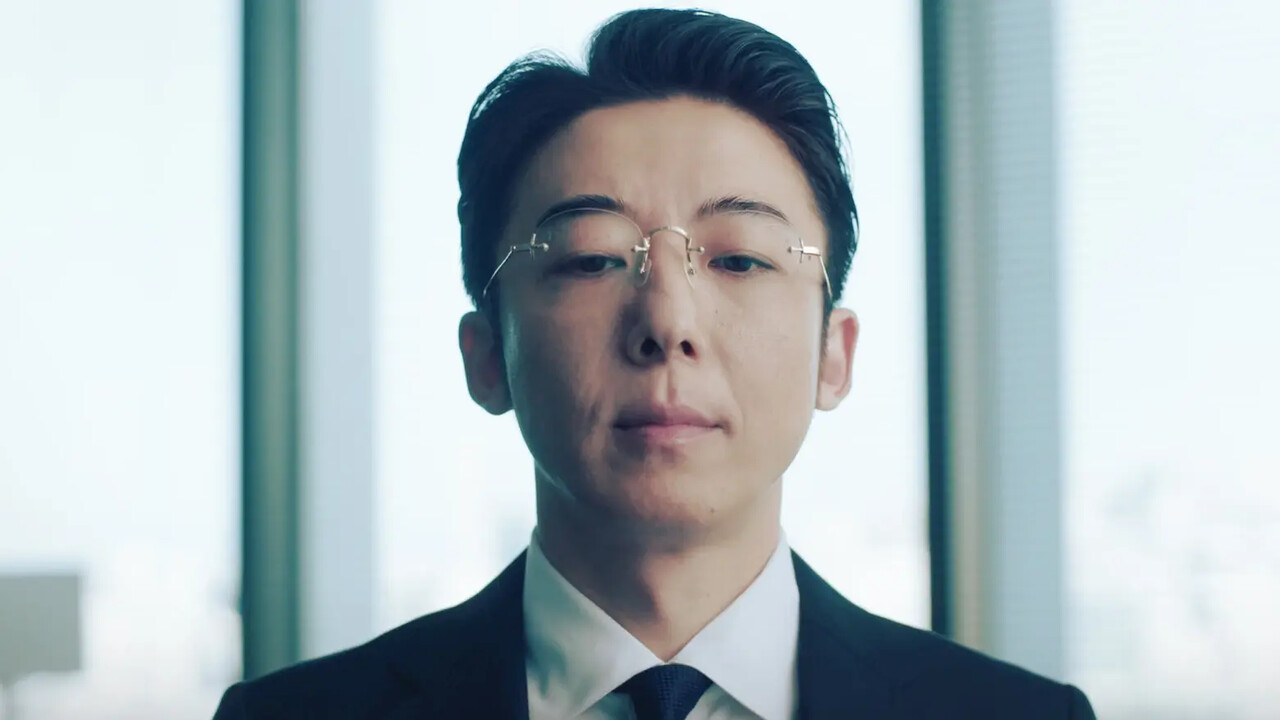
I went into the first episode of Reborn expecting a familiar reincarnation setup, but what I got instead was something more controlled and character-driven than most entries in this space. The premise is immediately compelling: Kosei Neo, a highly successful but deeply isolated tech CEO, is pushed down a staircase and killed, only to wake up years earlier in the body of Eito Nomoto, a struggling and kind-hearted dry cleaner. What follows isn’t just a revenge story or a puzzle to solve, but a quiet confrontation between two versions of what a life can look like.
The first episode takes its time establishing Kosei as a person before and after his death. In his original timeline, he’s portrayed as brilliant but emotionally cut off, someone who built an empire while steadily alienating everyone around him. That context matters because when he wakes up in Eito’s body, the contrast is immediate and uncomfortable. Eito’s life is modest, social, and grounded in everyday struggles, which forces Kosei into situations he clearly has no patience for. This tension becomes the emotional core of the episode.
What impressed me most was how the show avoids turning this into a gimmick. The body-swap element could have easily been played for shock or humor, but instead, it’s treated with restraint. Kosei doesn’t panic in exaggerated ways. He observes, calculates, and slowly tests the limits of his situation. That approach aligns well with his personality and makes the transition feel believable. It also allows the audience to focus on the implications rather than the mechanics.
The writing is particularly strong in how it handles dual identity. Kosei retains all his memories, which gives him an advantage in understanding the future, but he’s trapped in a life that doesn’t match his instincts. There’s a subtle but effective thread running through the episode where he begins to notice that Eito’s relationships might actually matter. These moments are small, often conveyed through pauses or reactions rather than dialogue, but they add depth without slowing the narrative.
Performance-wise, the lead carries the episode with precision. Playing both Kosei and Eito simultaneously isn’t about switching accents or mannerisms in obvious ways. Instead, the distinction comes through controlled shifts in behavior, how he speaks to customers, how he reacts to inconvenience, and how he processes information. There’s a constant sense that Kosei is present beneath the surface, even when he’s trying to blend into Eito’s life.
The direction complements this approach. The camera work is understated, often favoring medium shots and steady framing that keep the focus on performance rather than visual flair. The pacing is deliberate, but it rarely feels slow because there’s always a sense of progression, whether it’s Kosei piecing together the circumstances of his death or adjusting to his new environment. The episode builds tension not through action, but through awareness—what he knows, what he doesn’t, and what he’s starting to suspect. Visually, the show leans into contrast without overemphasizing it. Kosei’s original world is sleek and controlled, while Eito’s is more textured and imperfect. The shift isn’t dramatic, but it’s noticeable enough to reinforce the thematic divide between the two lives. It’s a smart choice that supports the story without drawing attention to itself.
The mystery element is introduced gradually. Kosei’s primary goal is clear: find out who killed him. But the episode doesn’t rush into suspects or elaborate setups. Instead, it plants early seeds—his business decisions, the people he cut off, the sense that he had more enemies than allies. This slow build works in its favor because it gives the audience time to understand the stakes before diving into the investigation. That said, the episode isn’t flawless. The biggest issue is that it occasionally leans too heavily on internalization. Kosei spends a lot of time thinking, observing, and processing, which fits the character but can create stretches where the narrative feels slightly static. A bit more external conflict in the first episode could have helped balance that introspection.
There’s also a mild unevenness in how secondary characters are introduced. Some feel immediately distinct, while others come across as placeholders for future development. Given the premise, these relationships are likely to become important, so a stronger initial impression would have added more weight to Kosei’s interactions. Another small drawback is that the episode withholds certain emotional beats that might have strengthened the hook. We understand that Kosei was isolated, but we don’t fully feel the consequences until later hints begin to emerge. A slightly deeper dive into his pre-death relationships could have made his situation more impactful from the start.
Despite these minor issues, the first episode succeeds in setting a clear tone and direction. It’s not trying to overwhelm the viewer with twists or high-concept explanations. Instead, it builds a foundation that prioritizes character and consequence. The idea of reliving life in someone else’s body is not new, but the way Reborn approaches it—through restraint, performance, and careful writing—makes it feel fresh. By the end of the episode, I found myself less focused on the mechanics of the time shift and more interested in what Kosei will do with this second chance. Will he simply use it to solve his own murder, or will he start to question the life he originally built? That tension between revenge and reflection is what gives the series its edge.
Overall, this is a strong opening that trusts its audience and its material. It doesn’t rush, it doesn’t overexplain, and it doesn’t rely on spectacle. Instead, it offers a thoughtful, controlled start to a story that has both emotional and narrative potential. If the series continues to build on this foundation while gradually expanding its scope, it could turn into something genuinely compelling.
Final Score- [8/10]
Reviewed by - Anjali Sharma
Follow @AnjaliS54769166 on Twitter
Publisher at Midgard Times



Hi Everyone, after a due consideration, we have decided that we will be open for donations to help us in managing our website. We will be greatful for any kind of amount we receive. Thanks!
— Midgard Times 🎬 (@Moviesr_net) January 4, 2026
PayPal- [email protected] pic.twitter.com/DlNNz5Npm5
Get all latest content delivered to your email a few times a month.
Bringing Pop Culture News from Every Realm, Get All the Latest Movie, TV News, Reviews & Trailers
Got Any questions? Drop an email to [email protected]



 © Copyrights MOVIESR.NET All rights reserved