

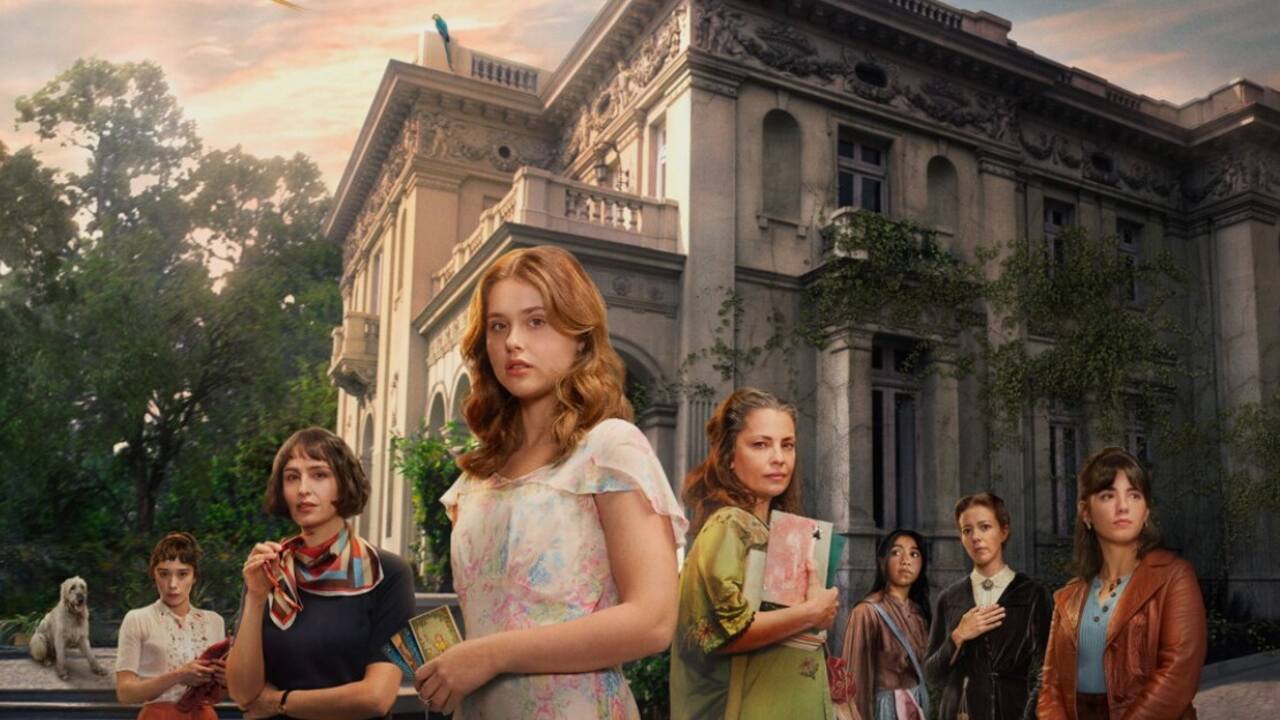
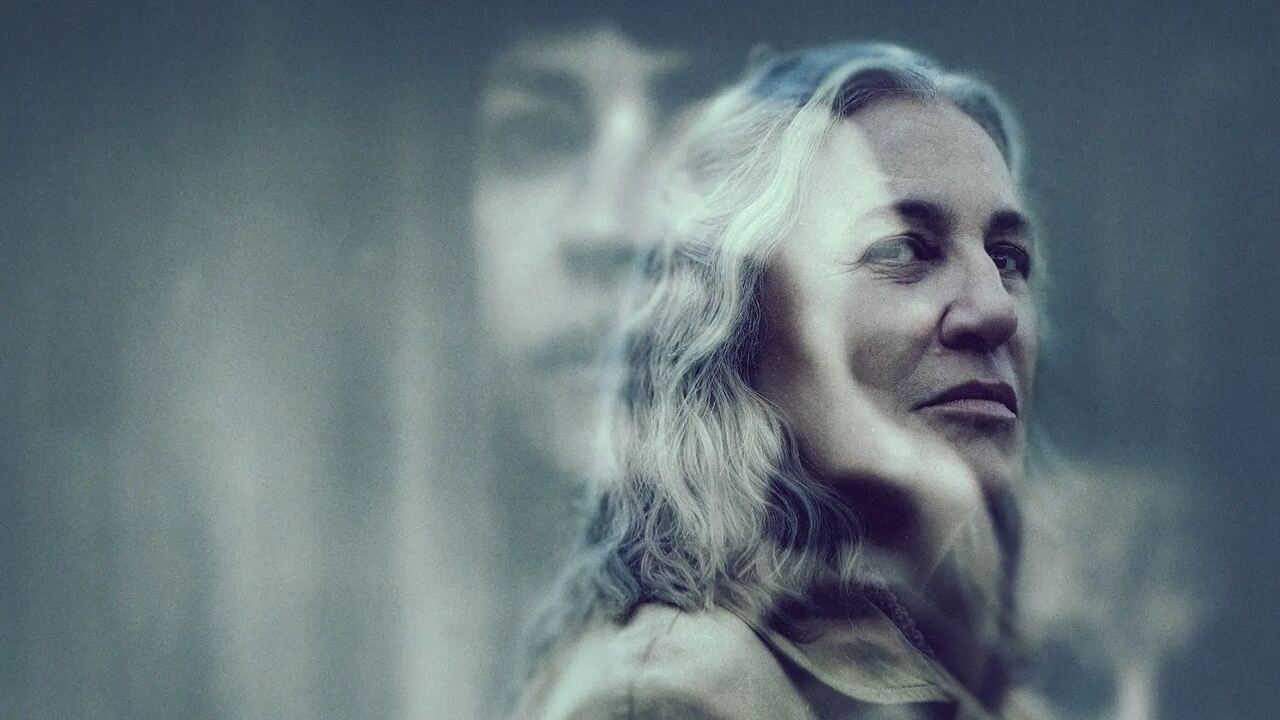
What should one make of the fact that in a show so firmly pro-women—a show that sharply examines male violence and its consequences—the most fascinating, complex character is a man? I am referring to Esteban Trueba, whom Alfonso Herrera plays convincingly, passionately, even when his old-age makeup proves to be a distraction. Here is a man who, after the death of a woman he loved dearly, makes so many terrible choices that he becomes a curse to everyone in his vicinity, whether the workers at his farm, Las Tres Marias, or Clara (Nicole Wallace when young; Dolores Fonzi when older), his wife. After Rosa's (Chiara Parravicini) death, something deep inside Esteban perishes. It is as if his heart turns almost to stone, and this transformation is reflected in his hardened expressions. He exploits his workers; he beats and rapes women. Was Esteban always like this, or was this evil born only after Rosa's death?
And yet, Esteban is not painted as a complete villain. Those familiar with Isabel Allende's novel will know what Esteban does not only to Pancha (Noelia Coñuenao) but also to young Blanca (Sara Becker), his daughter, and Férula (Fernanda Castillo), his sister (I must remain vague to avoid a long list of spoilers). At the same time, there is that regretful face that suggests Esteban knows what he has done is unforgivable, and there is also the detail of the money he continues sending to someone who has suffered his extreme wrath. Esteban simply cannot stop sabotaging himself and others. His wickedness seems born less from pure malice than from helplessness—an inability to choose rightly. He accumulates so much bad karma that he becomes a magnet for misfortune. Stay close to him, and you too will suffer. Alba (Rochi Hernández), after all, suffers largely because she opts to remain close to Esteban, her grandfather.
There is much to unpack in Esteban's character. If the others pale in comparison, blame the writing, which renders them simplistic. I have not read Allende's novel, but in this Prime Video adaptation, nearly everyone else is treated like a stock character. One glance is enough to sort them neatly into good or bad. You immediately understand who is kind and who is dangerous. Unlike Esteban, they are denied complex moral shading. There is little to interpret—the characters do exactly what your first impressions suggest they will do. This means there are few surprises beyond those generated by plot mechanics. The loudest sound in The House of the Spirits, which feels like Prime Video's answer to Netflix's One Hundred Years of Solitude, is the exuberant clacking of the keyboard as writers relish the screenplay's twists and turns.
The magical element is neatly integrated into natural events, but the visual direction is disappointingly bland. The images merely inform you that something happened; they rarely depict events with genuine fantastical or melodramatic fervor. Compare an earth-shattering moment of affection here with the earth-shattering moment of affection in Tere Ishk Mein. In Aanand L. Rai's romantic drama, when Shankar leaps to protect Mukti during a thunderous explosion, the blast itself feels like an extension of the fire raging within them. Here, when an earthquake strikes while a couple has sex, it merely resembles a literal reproduction of a scene described on the page. It feels less like cinematic imagination than exposition in bold letters—which is how much of this adaptation's imagery and dialogue function. Even as a blend of fantasy and reality, The House of the Spirits cannot stand beside masterworks like Raam Reddy's miraculous Jugnuma: The Fable (also on Prime Video). In Jugnuma, Reddy creates emotionally evocative, richly textured images that seamlessly merge the ordinary with the unreal to the point that the distinction practically disappears. Dev's literal flights of fancy—strapping on wings and flying—appear mundane and otherworldly at once.
In The House of the Spirits, by contrast, when a teardrop falls onto desert ground and evaporates from the heat, the effect is unintentionally humorous. The lighting is often flat, especially in the sunlit early episodes, giving parts of the setting an artificial, plastic appearance. Nevertheless, if the show remains engaging, credit belongs largely to the story itself, which wrestles with the oppression of women and their emancipation, male ego, cycles of revenge, left-wing and right-wing politics, dictatorship, and the devastating national consequences of authoritarianism. Much of it remains painfully relevant. In today's turbulent times, The House of the Spirits can at least function as a cautionary tale: do not squander your freedom by elevating dictators to power. The story Allende tells is powerful enough on its own that you will likely watch all eight episodes to the end. One simply wishes her writing had been transformed into something more cinematically inventive, aesthetically daring, and emotionally transporting as well.
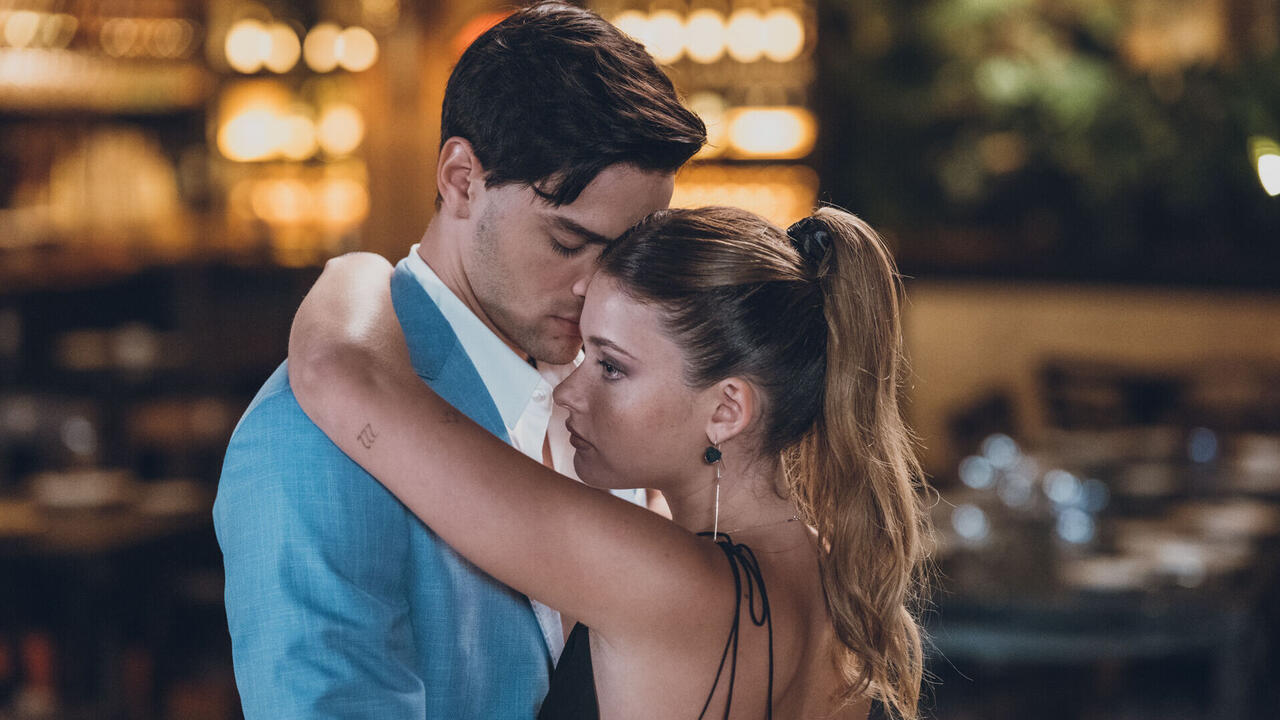
It apparently takes only one conversation for someone to accept a man as her father. Even more difficult to digest is Blanca's decision to take a major wedding-related step out of anger. The series does not adequately build toward this choice. It does not guide us through Blanca's inner emotions; instead, the act is presented as rebellion against the patriarch, even though it feels psychologically unconvincing—especially when she has Clara encouraging her not to succumb to pressure or obedience. Blanca's madness, ennui, and isolation are similarly rendered through plain voiceovers, simplistic shots of peeling walls, and histrionic laughter. There is little psychological interiority here; the presentation remains external. The show's conception of love is similarly thin. Young Blanca and Pedro (Nicolás Contreras) never seem to discuss his musical passions or her ceramic artistry. Alba and her college lover likewise rarely engage in political or intellectual exchange, nor do they meaningfully discuss career ambitions. What these romances primarily generate is sex—sex becomes the central force through which romantic relationships are developed and preserved.
If I had to guess, as someone unfamiliar with the original source material, I would say this version of The House of the Spirits is designed for easy consumption. It is filled with recognizable patterns and clear signals so audiences never feel lost or challenged. Thanks to the inherent potency of its story, the show is undeniably watchable. Yet it lacks that ineffable touch of wizardry found in great fantasies like Jugnuma: The Fable, Masthishka Maranam, Chi-Raq, or the films of Wes Anderson. The creators of The House of the Spirits do not conjure a world into existence; they merely strive, earnestly, to honor the novel. That is the adaptation's central flaw—it is too servile, too safe, and too aesthetically risk-averse to leave a lasting mark. It feels less like the product of artistic imagination than the careful fulfillment of a corporate obligation.
Final Score- [5/10]
Reviewed by - Vikas Yadav
Follow @vikasonorous on Twitter
Publisher at Midgard Times
Note: All 8 episodes are screened for this review.
Premiere Date: April 29, 2026, on Prime Video
Hi Everyone, after a due consideration, we have decided that we will be open for donations to help us in managing our website. We will be greatful for any kind of amount we receive. Thanks!
— Midgard Times 🎬 (@Moviesr_net) January 4, 2026
PayPal- [email protected] pic.twitter.com/DlNNz5Npm5
Get all latest content delivered to your email a few times a month.
Bringing Pop Culture News from Every Realm, Get All the Latest Movie, TV News, Reviews & Trailers
Got Any questions? Drop an email to [email protected]
 © Copyrights MOVIESR.NET All rights reserved