

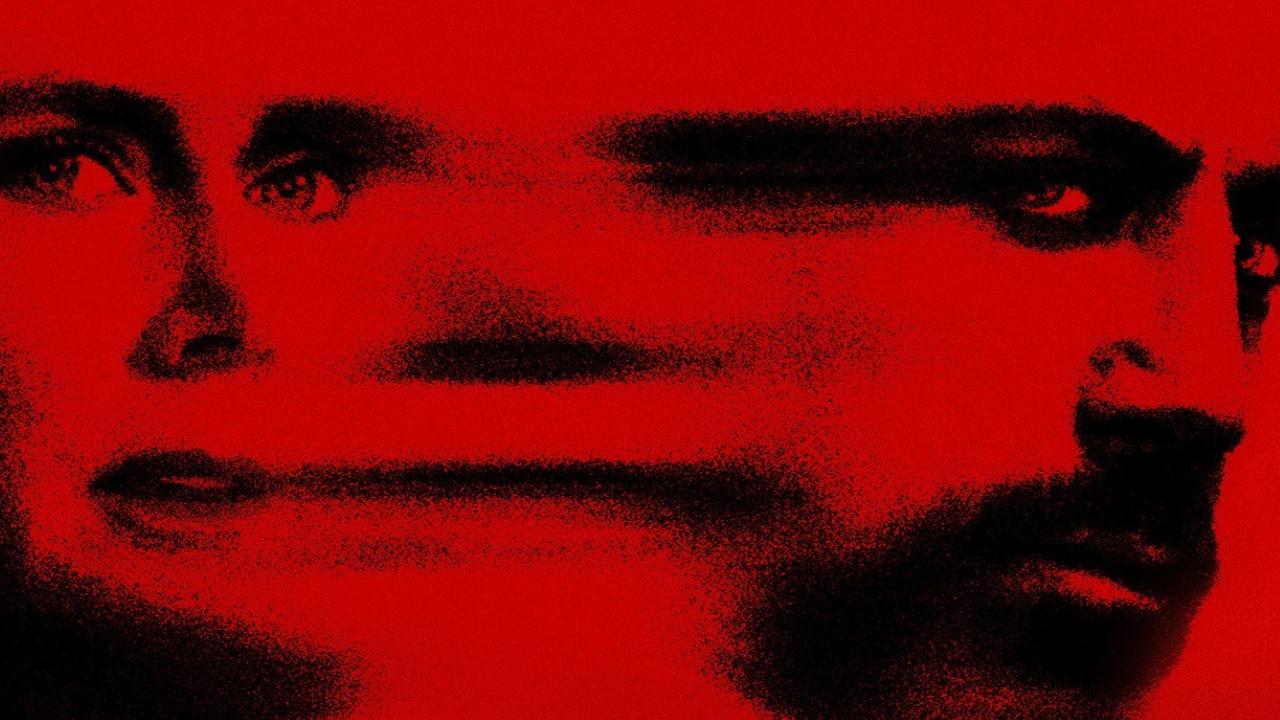
Created by Nick Antosca, the new Cape Fear on Apple TV+ significantly expands the story you saw in J. Lee Thompson's and Martin Scorsese's film adaptations of John D. MacDonald's The Executioners. In this version, both the husband, Tom Bowden (Patrick Wilson), and the wife, Anna Bowden (Amy Adams), are lawyers, and they don't just have a daughter, Natalie (Lily Collias), but also a son, Zack (Joe Anders). Unlike the movies, the couple here has a social life and friends, and their children, too, have lives of their own and their own troubles. The ten-episode format, eight episodes of which were provided for review, allows the filmmakers to add more details to the story and distinguish it from the movie adaptations. This Cape Fear makes some interesting changes to Max Cady's (Javier Bardem) character as well. For starters, he isn't sent to prison for attempted rape but for the murder of his pregnant wife, a false accusation that ultimately leads to his release after 17 years. It was Anna who defended him in court years earlier, and if you've seen the movies, you know what happens next: Max starts taking revenge on the family, especially Anna, for destroying his life by failing to defend him well.
What Anna actually does is not revealed immediately. In the 1962 film, Sam Bowden testifies against Max, and in the 1991 version, Sam suppresses a police report stating that Max's victim was promiscuous. What does Anna do here? The series treats it as a mystery, which doesn't work too well in its favor, given that it reduces Max's attack on the family and the couple's counterattack to a game of emotionally weightless revenge. Why should we root for the Bowdens if, according to the news reports, Anna found her life partner in Tom and consequently failed to do her job well enough to keep Max out of prison? It's admirable that the couple feels some guilt and tries to at least be friendly toward this ex-convict, with Anna even helping him secure a legal deal at one point. Nonetheless, these decisions don't add complex layers to Cape Fear—they don't threaten to change the characters' preconceived notions about one another. Max, meanwhile, isn't worth rooting for either, since he has his own evil intentions. As far as the kids are concerned, they remind you of that common cliché affecting most recent prestige dramas: the depiction of children as unlikable obstacles—the human equivalent of friendly fire. Both Zack and Natalie do certain things in the series that end up putting the family in even greater trouble. Yes, the series provides reasons for their behavior. Zack feels isolated after a photo-related incident, leading to psychological distress, which prompts Anna and Tom to give him their full attention. Because of this, Natalie thinks her parents are ignoring her; she doesn't feel loved.
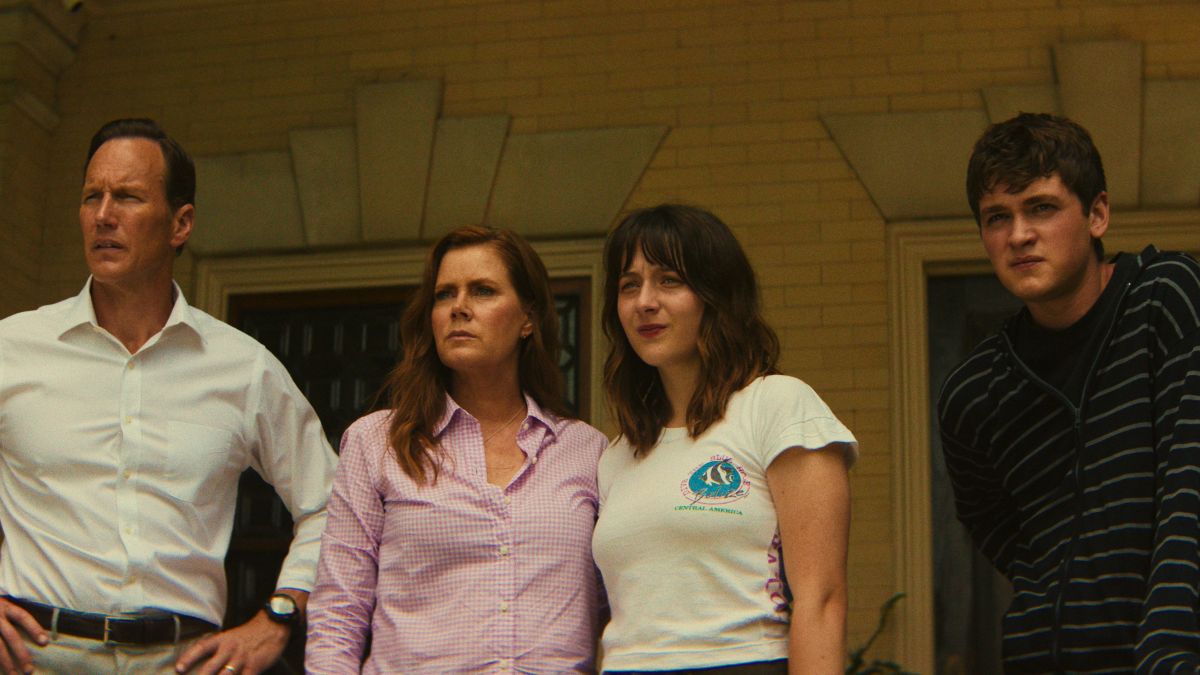
Still, Cape Fear presents them as ignorant. While Natalie often swings between Team Cady and Team Bowden, Zack comes across as a lost cause who can only spell trouble. Thanks to them, you find yourself further distanced from the Bowdens in much the same way you were detached from the family in the Scorsese version. The eighth episode reveals more crucial details regarding Anna's past, suggesting that you were probably not meant to remain indifferent to the family's situation, but by then, you don't care enough to become emotionally invested. This revelation, combined with Max's other manipulative tactics, turns Natalie and Zack into the basis for a children's-book moral lesson: Always listen to your parents. They know what's right and wrong for everyone.
By transporting the story into a modern-day setting, Cape Fear throws AI, video games, home security features, and CCTV cameras into the mix as tools for Max to exploit. Bardem's Max is certainly more twisted and clever than the previous incarnations of the character, but this story also contains other twisted people. We are introduced to Max's family, who seem to have a strong psychological hold over him, and his childhood is disclosed through brief flashbacks featuring the repetitive image of him being baptized by his father. There is nothing especially expansive about these flashbacks. They simply tell us that Max had a troubled childhood, which sufficiently serves the narrative, but if the show had greater ambition, it would have delved deeper into his history, showing how he interacted with the world around him as a child living under oppressive influences. What's more, this Max apparently has a crazy stalker, though after her initial appearances, she disappears for so long that you almost forget about her. Bardem's Max, I think, is used more for commentary purposes. Here is a man who becomes a heroic figure to many Americans—the man who survived the "unfair justice system." Is the show trying to comment on our inability to seek out good role models? Is it criticizing the public's lack of sound judgment, given that no one in the show, apart from Tom and Anna, finds it strange that Max chooses to become the Bowdens' neighbor?
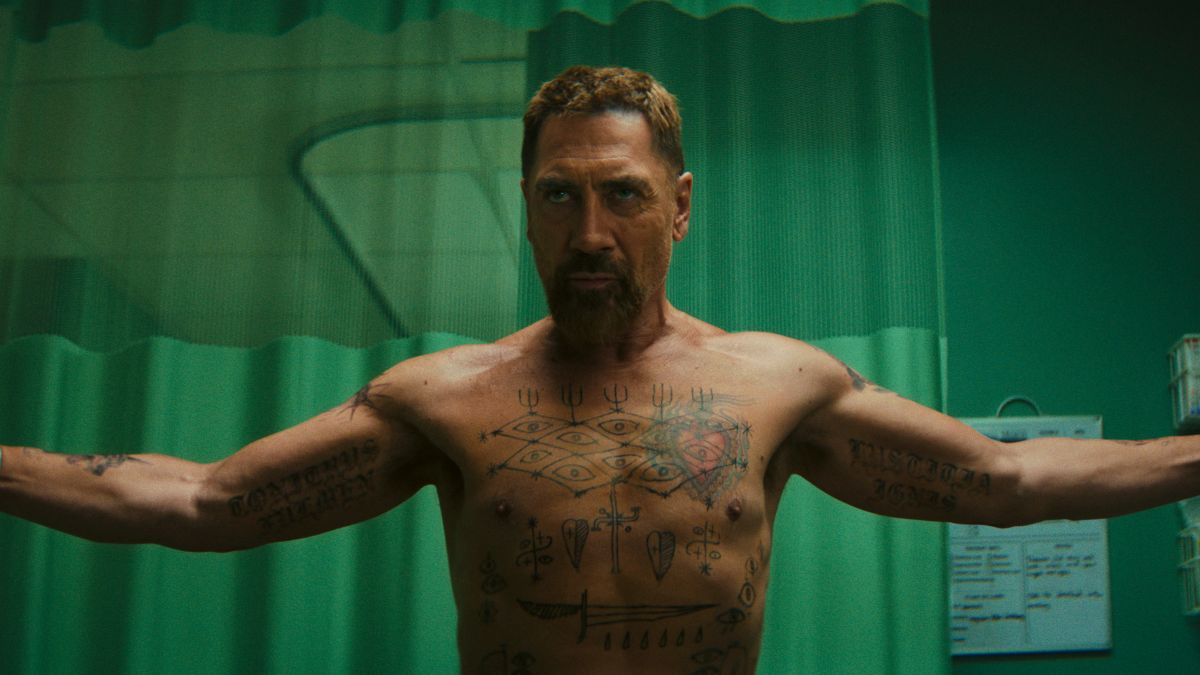
In the role of a cunning antagonist, Bardem is suitably bulked up and arrogant. However, he isn't as creepy as Robert Mitchum's Max or as intimidating and brutish as Robert De Niro's version of the character. He sings the right tunes; he speaks the right lines. In one scene, he even wears snakes around his neck as though they were pieces of jewelry. Yet I wasn't particularly frightened by him. I found Bardem's performance somewhat performative. He never seems to slip into the dirty skin of the character. Rather, he appears to be putting on a show—remaining visibly aware of his actions, calculating in real time how intensely he should smile or laugh or stare to create the desired effect for the camera and the audience. It's a nice change that this Max is not a pedophile, a pervert obsessed with sexual penetration. The focus is more on psychological games and familial destruction, but everything is executed with so much "good taste" that the ugly stench generated by every action and every decision never reaches the surface and is therefore never fully felt. With heavy themes like childhood trauma, marital conflict, mental health, and loneliness, Cape Fear resembles a prestige drama trapped in the body of an enjoyable psychological thriller. There is a clash between these two modes, and the result does justice to neither. The prestige-drama impulses suck the fun out of the thriller, while the thriller elements feel oddly out of place in such an expensive package.
Both Anna and Tom are lawyers, yet they are never seen intellectually discussing their profession, seeking each other's input, or talking about their respective cases. At one point, a video of Natalie gets leaked online, but all it yields are a few remarks and giggles. She has a best friend who stops talking to her after the incident, which makes you wonder how close they really were and whether the character exists merely to hint at Natalie's sexual orientation. What about Zack? Apart from apologizing to a girl, doesn't he have a best friend with whom he wants to reconnect? In this Cape Fear, the Bowdens may be connected to the wider world through parties, friendships, and their profession. Still, the outside world doesn't impinge on their personal lives unless doing so somehow advances the plot, as when two women start filming Tom the moment he begins punching Max, or when passersby record Anna confronting a girl outside a theater (both husband and wife become Internet memes). What's more, when Natalie fires a gun inside the house, no neighbor knocks on the door or calls the police to check on them. Granted, it's a hallucinatory sequence, and things may not be exactly as they appear, but later developments suggest that the family may not be imagining certain objects entirely because of a drug.
Cape Fear, through additional flashbacks, shows Max in prison. We see how he became a rage-fueled monster. The problem is that he is presented as a violent fighter from the very beginning, so the transformation doesn't disturb you; it leaves no impact. Then again, you can apply this criticism to the entire adaptation: it leaves no impact. Antosca's creation wants to be classy, stylish, and a premium drama. Some of its editing choices, such as match cuts and color shifts, are borrowed from both Scorsese's film and giddy B-movie thrillers. However, the surface of the series is so polished that these choices never come across as exciting or vertiginous. In the end, Cape Fear serves as a case study demonstrating that not every work becomes inherently better through additions and reinterpretations. It suffers from an excess of sophistication—a sophistication that gives rise to spit-shined images where even dismembered body parts seem artfully assembled. Because of this, the new Cape Fear fails to rattle your nerves with primal fears. Watching it is akin to witnessing a family's tasteful disintegration from a comfy suite with a glass of red wine in hand. This Cape Fear works neither as a drama nor as a thriller.
Final Score - [5/10]
Reviewed by - Vikas Yadav
Follow @vikasonorous on Twitter
Publisher at Midgard Times
Note: First 8 episodes are screened for this review.
Premiere Date: June 5, 2026, on Apple TV+, with the first two episodes followed by a new episode every Friday.
Hi Everyone, after a due consideration, we have decided that we will be open for donations to help us in managing our website. We will be greatful for any kind of amount we receive. Thanks!
— Midgard Times 🎬 (@Moviesr_net) January 4, 2026
PayPal- [email protected] pic.twitter.com/DlNNz5Npm5
Get all latest content delivered to your email a few times a month.
Bringing Pop Culture News from Every Realm, Get All the Latest Movie, TV News, Reviews & Trailers
Got Any questions? Drop an email to [email protected]
 © Copyrights MOVIESR.NET All rights reserved