


I’ll admit it right away: The Rhythm of Revenge got me with the title alone. I saw “Thai musical revenge crime drama” and immediately thought, “This is either going to be incredible… or I’m about to watch someone sing a breakup ballad while standing over a crime scene.” As it turns out, the answer is yes. It’s both. And somehow, that’s exactly why I had such a good time with it.
Netflix has been leaning harder into Southeast Asian originals lately, and this one feels like a very deliberate attempt to combine mainstream melodrama, old-school lakorn intensity, music-industry glamour, crime thriller tension, and enough emotional whiplash to make your evening disappear without warning. I started the first episode planning to “just sample twenty minutes.” Three episodes later, I was fully invested in murder conspiracies, suspicious record producers, emotional duets, and one particularly dramatic staircase confrontation that absolutely did not need to be that intense… which, naturally, made it perfect.
At the center of the story is Poona, played by Saranya Chunhasart, and honestly, she carries this show with remarkable confidence. Poona starts as a dreamer, a talented singer chasing recognition in an industry that smiles at you while quietly calculating your market value. She wants fame, yes, but more importantly, she wants answers. Her parents’ deaths hang over everything she does, and what initially looks like a straightforward “small-town girl wants to make it big” arc quickly turns into something much darker.
I really appreciated how the series doesn’t rush her transformation. Poona doesn’t suddenly become some fearless revenge machine after one emotional montage and a dramatic haircut. She remains vulnerable, impulsive, sometimes frustratingly naïve, and occasionally makes choices that made me physically point at my screen and say, “No. Don’t trust that man. He has villain eyebrows.” She trusts him. Of course she does. And somehow, that makes her feel more human.
Saranya’s performance is genuinely strong because she understands that Poona isn’t just driven by grief or ambition—she’s driven by curiosity, guilt, anger, and that dangerous belief that if she just digs one layer deeper, everything will make sense. It’s a complicated emotional space, and she plays it with real conviction. She also has the difficult job of making the musical performances feel organic in a story involving police investigations and family betrayal, and somehow she pulls that off.
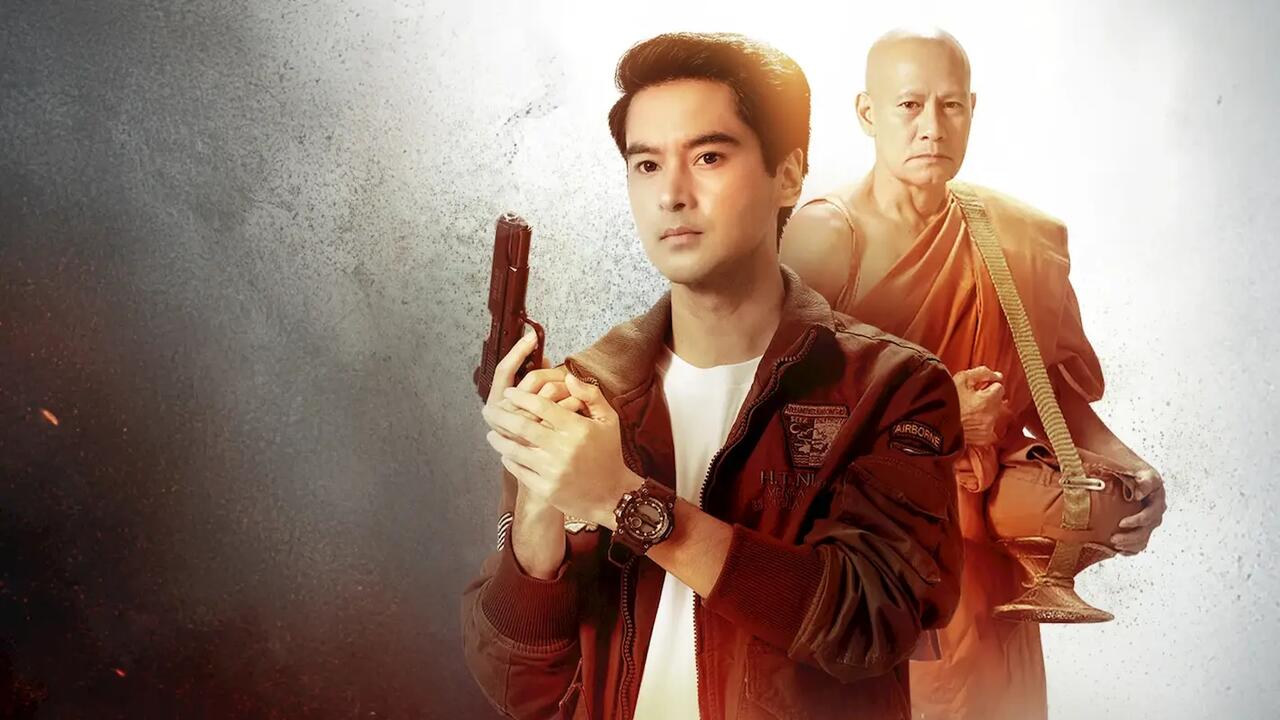
Opposite her is Manus, played by Witchayaphong Iamsaard, the police officer who becomes her ally, protector, occasional emotional support system, and—because this is a Thai drama—obvious romantic complication who spends half the series looking concerned in expensive lighting. I liked Manus a lot, mostly because he doesn’t come in acting like the standard brooding action hero. He’s intelligent, cautious, emotionally guarded, and often looks like he knows exactly how bad an idea Poona’s latest plan is. He’s always right. He’s also always ignored. I felt for him. Their chemistry works because it’s built through shared danger rather than manufactured flirting. There’s tension, but it grows naturally. They bond over clues, lies, betrayals, and near-death experiences, which is honestly one of the more efficient relationship-building strategies television has ever invented.
Then there’s Chaiya, played by Santiraj Kulnoppakiet, and wow… what a wonderfully slippery character. Chaiya is one of those men who walks into a room smiling, saying all the right things, helping everyone, and immediately makes you think, “This man absolutely has access to offshore accounts.” Whether he’s a mentor, a manipulator, a father figure, or something far more dangerous becomes one of the show’s strongest long-running mysteries. And credit where it’s due—the series is very good at keeping you suspicious. Not confused. Suspicious. That’s harder than it sounds.
Visually, this show looks fantastic. The concert scenes have energy, the nightclub performances are staged with real style, and the lighting throughout is consistently strong. Even quieter conversations feel cinematic. There’s a lot of contrast between Poona’s public performances and her private investigations, and, directorially, that split works really well. Fame looks glamorous. Revenge looks exhausting.
The music itself deserves praise, too. I was worried the songs would feel like interruptions, but they’re surprisingly integrated into character development. Poona’s performances often reveal emotional states she isn’t verbally expressing, and while that sounds like something every musical drama claims, here it actually works. A couple of tracks genuinely stayed with me after the episodes ended. Which, annoyingly, meant I found myself humming revenge songs while making coffee. Not ideal. But effective.
The writing is strongest when it leans into character conflict instead of plot mechanics. Conversations between Poona and Manus feel layered. Family confrontations carry emotional weight. Even secondary players usually have motives beyond “I’m here to create episode seven tension.” That said… the show definitely has lakorn DNA, and with that comes a certain… commitment to drama. Sometimes a little too much commitment. There are scenes where someone could simply tell the truth and save everyone three episodes of suffering. They do not. Instead, they stare silently. Then someone cries. Then somebody else overhears half a conversation. Then a car drives away dramatically. Then there’s rain. I’m not saying I disliked it. I’m saying I recognized the formula, laughed at it, and still kept watching.
The pacing is another mixed bag. The first half is excellent—tight, focused, emotionally engaging. Around the middle episodes, though, the story starts adding extra betrayals, secrets, and side plots, and at one point, I genuinely wondered if every adult in Poona’s life had committed at least one crime. Statistically, it seemed possible. Some of those subplots pay off beautifully. Others feel like narrative seasoning that got left on the stove a little too long. There are moments where the momentum slows because the series becomes slightly too interested in preserving mystery instead of delivering answers.
A few reveals also feel more theatrical than logical. Not bad. Just… conveniently timed in the way only television secrets can be. You know the kind. The truth comes out exactly when someone is standing on a balcony, during a storm, emotionally unstable, and somehow wearing perfect makeup. Still, I never stopped caring. And that matters more than perfect plotting. By the final episodes, The Rhythm of Revenge becomes less about solving a murder and more about what revenge actually costs. Poona changes in believable ways. Manus is forced to choose between duty and loyalty. Chaiya becomes even more fascinating. And the emotional consequences actually stick, which I deeply appreciated. Too many revenge dramas act like trauma disappears once the villain gets exposed. This one understands that truth can be satisfying and devastating at the same time.
By the end, I felt entertained, emotionally invested, occasionally manipulated, and honestly pretty impressed. The Rhythm of Revenge isn’t flawless. It gets melodramatic, it occasionally stretches its mysteries longer than necessary, and some side arcs could have been trimmed without anyone filing a complaint. But when it works—and most of the time, it really does—it’s sharp, stylish, emotionally committed television with strong performances, memorable music, and enough twists to keep you saying, “Okay, one more episode,” until suddenly it’s 2 a.m. and you’re deeply invested in Thai music-industry crime politics. Which, to be fair, is not how I expected my week to go.
Final Score- [7/10]
Reviewed by - Anjali Sharma
Follow @AnjaliS54769166 on Twitter
Publisher at Midgard Times




Hi Everyone, after a due consideration, we have decided that we will be open for donations to help us in managing our website. We will be greatful for any kind of amount we receive. Thanks!
— Midgard Times 🎬 (@Moviesr_net) January 4, 2026
PayPal- [email protected] pic.twitter.com/DlNNz5Npm5
Get all latest content delivered to your email a few times a month.
Bringing Pop Culture News from Every Realm, Get All the Latest Movie, TV News, Reviews & Trailers
Got Any questions? Drop an email to [email protected]



 © Copyrights MOVIESR.NET All rights reserved