

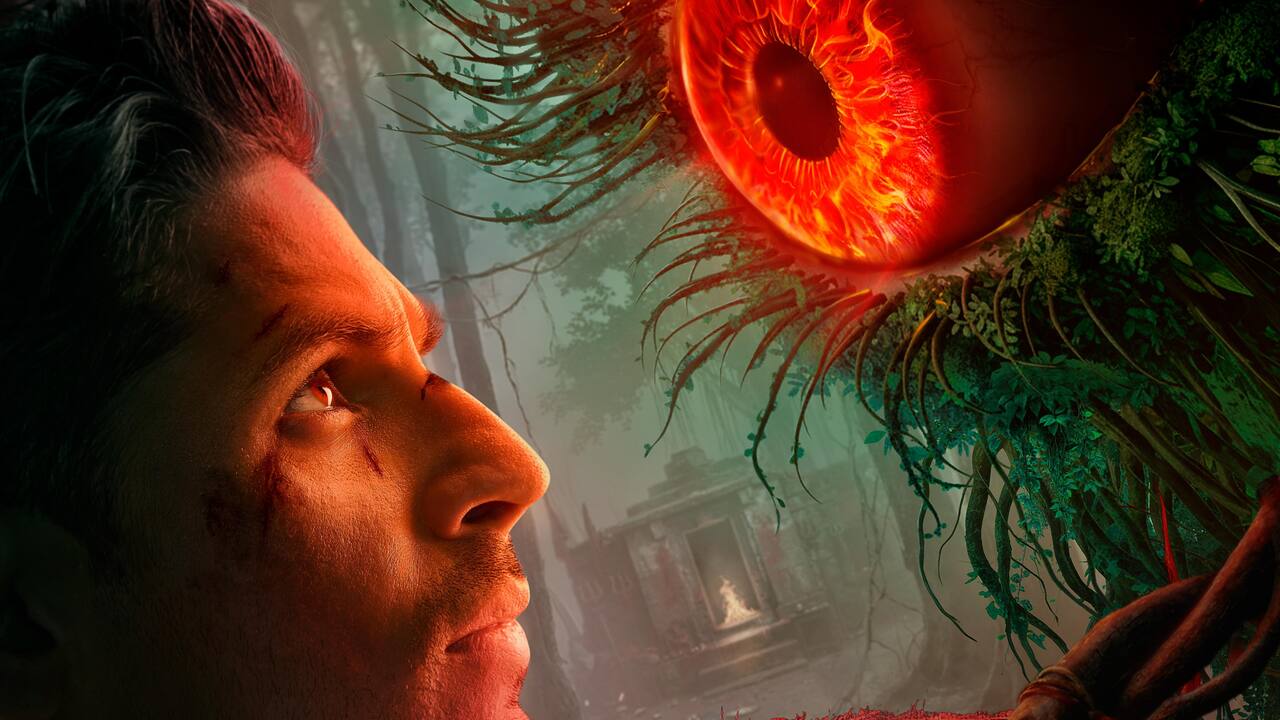
The real meaning of Chhath Puja, in which the Sun is worshipped over four days, has less to do with the mechanical completion of certain rituals and more to do with understanding the Sun as a manifestation of nature and the puja as an opportunity to form a meaningful connection with the environment. In that sense, its spirit is incompatible with the poisoning of air, pollution of water, deforestation, and exploitation of the earth. It is a deeply spiritual occasion precisely because it can encourage a relationship between human beings and the natural world that benefits both. Deepak Kumar Mishra's The Vvaan: Force of the Forrest understands this man-nature relationship to a limited extent. The story essentially deals with the protection of a forest from destructive development: someone wants to cut down trees to build a road through a sacred jungle. But this noble core is submerged in comic-book philosophy, pseudoscience, and idiotic superstition, all of which combine to create a slipshod fantasy thriller that plays less like a movie than an act of euthanasia.
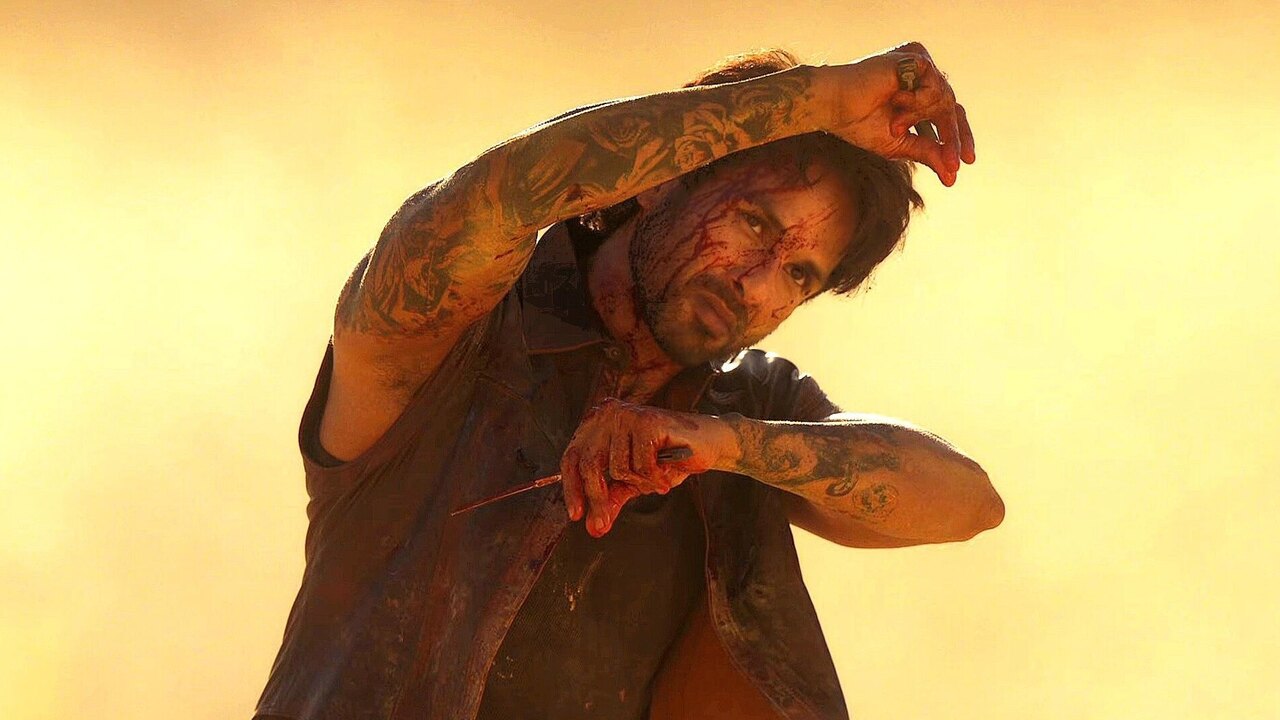
There is so much wrong with The Vvaan, both on the macro and micro levels. Forget its third-rate graphics, fifth-rate performances, and tenth-rate jokes; its fifteenth-rate psychology and worldview should be enough to send you spiralling into a pit of second-hand embarrassment. Rishi (Sidharth Malhotra)—an architect, I guess—is gunning for a loan, which should tell you something about his current financial situation, and yet he and Mamta (Tamannaah Bhatia) want to have a child through IVF. There is an odd disconnect here. In a movie that invokes Chhath as a spiritual framework for protecting nature, the protagonists' desire for a child is treated as the most straightforward route to happiness without any thought given to the larger responsibilities—social, economic, or environmental—that parenthood entails. Of course, wanting a child is not inherently incompatible with caring about the environment, but The Vvaan's simplistic treatment of reproduction as the answer to existential unhappiness sits awkwardly beside its supposed ecological consciousness.
More troubling is the film's reduction of Chhathi Maiya to a wish-granting genie. Rishi and Mamta, who receive normal results in their medical tests yet remain unable to conceive, are eventually blessed with a daughter after he embraces Chhath and she dutifully performs the rituals. The film thus turns a complex religious tradition into a transactional arrangement: perform the rituals, demonstrate faith, receive the desired reward. The problem isn't that a religious film contains a miracle; it is that The Vvaan appears to substitute ritual fulfillment for any deeper engagement with what Chhath might mean.
The suggestion—or rather, the declaration—that Mishra and writer Arunabh Kumar make is that science becomes powerless in the face of superstition. By portraying the goddess as a comic-book superhero, Mishra and Kumar also give a platform to the problematic Chosen One narrative, in which the deity explicitly declares that she has selected Rishi herself as her soldier to fight the evil forces. What's wrong with that? The Chosen One framework concentrates power and responsibility in one "special" individual, often reducing everyone else to spectators waiting for salvation. Why should I rebel against injustice? I will fold my hands, close my eyes, and wait for a savior.
If the film really wanted to dramatize the collective struggle to preserve the jungle, it could have extended its supernatural logic to the people fighting alongside Rishi as well. Characters such as Shashi (Anup Soni), VP (Maniesh Paul), and the other villagers are also fighting for the preservation of the forest. Why, then, does only Rishi receive the status of the divinely selected warrior? The answer appears to lie in his special lineage—his genes, his blood, his royal and historical connection to the place. But this only replaces collective responsibility with hereditary exceptionalism. It is difficult not to notice the uncomfortable logic at work here: some people are presented as inherently special because of where they come from, while everyone else is left to accept their supposedly lesser position. How is this meaningfully different from the kind of thinking that treats birth into a particular caste as evidence of some predetermined spiritual merit or status?
Nevertheless, expecting sanity and rationality from a film that treats science and superstition as two sides of the same coin is probably asking too much. Mishra and Kumar also seem to regard religious scriptures as valuable primarily because some of their descriptions can be retrofitted into demonstrations of scientific knowledge—for instance, measurements concerning the distances between celestial bodies. In doing so, they miss the very qualities that make scriptures culturally and philosophically valuable. A religious text does not become meaningful because it accidentally anticipates a scientific measurement; its value can lie in the ethical, philosophical, cultural, and spiritual questions it has preserved and transmitted.
The Vvaan's larger problem, then, isn't that it brings religion into a fantasy story. It is that it repeatedly mistakes the most superficial manifestations of faith—miracles, divine selection, ritual reward, supernatural powers—for the substance of religious thought. The film wants the cultural authority of religion without demonstrating much curiosity about what the religion actually asks of its followers.
Perhaps this helps explain why a film built around such simplistic ideas can still find an audience. If The Vvaan performs strongly at the box office, the studios and filmmakers may understandably regard that commercial response as a validation of their approach. They may even interpret it, within the film's own worldview, as a sign of Chhathi Maiya's blessing. I wouldn't be surprised if the extra "r" in "Forrest" is itself a product of some superstitious calculation. Whatever the explanation, there is a depressing possibility here: Bollywood can continue to turn people's pop-philosophical understanding of religion into commercial entertainment while avoiding the much harder task of actually engaging with that religion.
Even beyond its muddled spirituality, The Vvaan is a victim of uninspired filmmaking. Almost every scene tries to be serious and hilarious at the same time, and Mishra is unable to generate any sustained sense of supernatural excitement. The forest never looks mysterious; the evil forces resemble second cousins of "scary" Snapchat filters. The film has no coherent tonal identity and little sense of how to build dread, wonder, or even basic dramatic tension. Without a coherent tone or a distinctive visual imagination, The Vvaan comes across as an amateur's approximation of a fantasy thriller.
The best way to watch the film is by putting a cloth over your eyes—which is precisely how a king is asked to enter the forest. If you want to experience this fantasy about blind faith, get yourself blindfolded.
Final Score - [1/10]
Reviewed by - Vikas Yadav
Follow @vikasonorous on Twitter
Publisher at Midgard Times
Hi Everyone, after a due consideration, we have decided that we will be open for donations to help us in managing our website. We will be greatful for any kind of amount we receive. Thanks!
— Midgard Times 🎬 (@Moviesr_net) January 4, 2026
PayPal- [email protected] pic.twitter.com/DlNNz5Npm5
Get all latest content delivered to your email a few times a month.
Bringing Pop Culture News from Every Realm, Get All the Latest Movie, TV News, Reviews & Trailers
Got Any questions? Drop an email to [email protected]

 © Copyrights MOVIESR.NET All rights reserved